
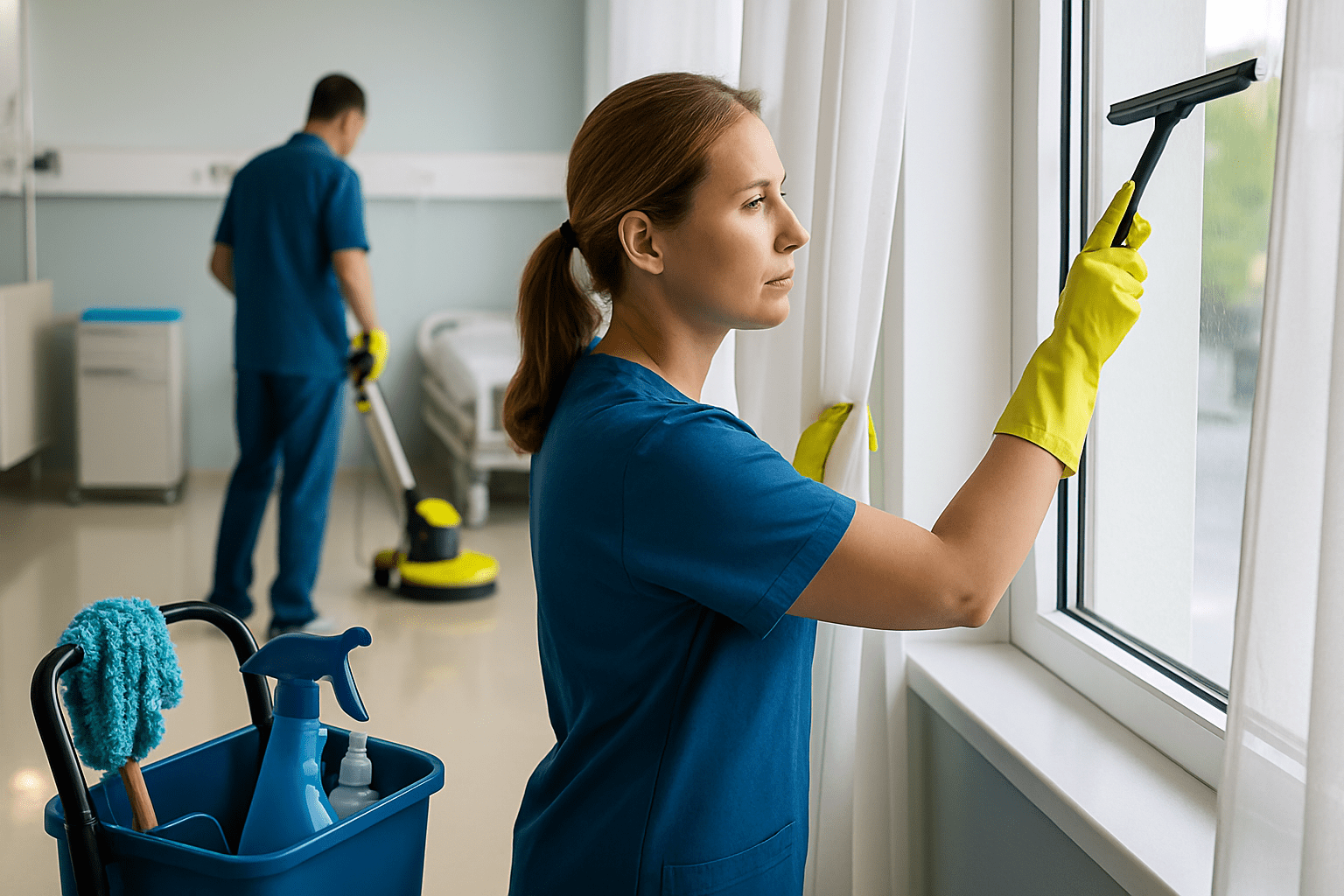
Professional cleaning around Ramstein demands technical skill, on-the-ground experience with military and civilian clients, and an ability to move between delicate textiles, clinical environments, and heavily trafficked commercial floors. This guide explains how to pick and work with a cleaning partner who delivers real results—curtain removal and rehang, deep-shine floor finishes, carpet restoration, medical-grade sanitation, and post-construction recovery—without the usual fluff.
Why specialized cleaning matters near Ramstein
The Ramstein area brings a unique mix of customers: military families dealing with PCS moves, German households, international tenants, local businesses, schools, and healthcare facilities. That diversity means “one-size-fits-all” cleaning fails quickly. Practical differences—secure access rules around bases, short turnaround windows for move-outs, child-safe protocols for kindergartens, and strict hygiene in medical settings—require a supplier who can switch methods and priorities without dropping quality.
What separates a good provider from a mediocre one
High-level cleaning is not just about detergent strength. It’s the combination of: trained people, documented processes, correct equipment, quality control, and a sensible commercial model. Weak providers show these signs: inconsistent results between visits, poor communication about surfaces that need special treatment, thinly written quotes that hide surcharges, and off-the-shelf products used as a blanket solution. Strong providers will explain why a silk curtain needs hand-cleaning, why a honed limestone should never be treated with an acidic cleaner, or why a clinic requires validated disinfection protocols.
Deep Shine Cleaning: achieving a durable, professional finish
“Deep shine” isn’t merely buffing with a high-speed machine. True deep-shine cleaning starts with the right diagnostics: identifying the floor type (parquet, natural stone, terrazzo, PVC, linoleum), testing for existing seals or finishes, and assessing wear patterns. The sequence typically follows: mechanical soil removal, targeted cleaning with pH-appropriate professional products, polishing with controlled abrasion or crystallization (for terrazzo), and finally sealing with a product selected for slip resistance, sheen preference, and traffic load.
Using professional products matters. Consumer polishes often leave films that attract dirt quickly or create uneven sheens. Industrial-grade sealers and polishers create layers designed to be maintained rather than stripped every season. For persistent problems—deep scratches, ingrained dirt in grout, or oxidized finishes—repair steps such as screen-and-recoat or full mechanical restoration are necessary before a lasting shine can be achieved.
Curtain and Drapery Removal, Cleaning & Installation: the right workflow
Textiles around windows are among the trickiest items because they combine fragile fabrics, complex fixings, and the risk of color run or shrinkage. A professional approach follows these stages: on-site inspection; careful removal with photographic records of hooks and pleats; tagging and transport in breathable protective bags; cleaning in controlled conditions (wet-cleaning, dry-cleaning, or gentle machine cycles depending on the fabric); repairs where necessary (hemming, hook replacement); and precise re-installation.
Common mistakes to avoid: contractors who cut corners by leaving hardware unlabelled, using aggressive solvents that weaken dyes, or rehanging with incorrect pleat spacing so that curtains hang poorly. A good crew will leave a small care note for the client (temperature tolerance, dry-clean recommendations, and how often to vacuum). For military housing or tenant turnovers, speed matters—but not at the cost of misplacing fittings or altering the drape’s original fall.
Carpet cleaning and Teppichreinigung—what actually restores fibres
Carpets hide a surprising amount of contaminants: tracked-in sand and grit that abrades fibres, food oils that trap soil, and moisture that leads to microbial growth. The cleaning method should match the carpet’s construction. Low-pile commercial carpets tolerate truck-mounted hot-water extraction; delicate velours, oriental rugs, or silk rugs need specialized handling: face-to-face cleaning, controlled drying, and hand grooming.
Micro-example: a landlord once accepted a “carpet cleaned” report where a crew ran a standard steam-cleaner over an Oriental rug and returned it with distorted fringe and dull colors. The right approach would have been: pre-test for dye stability, gentle agitation to lift soil, extraction at tailored temperatures, and drying on racks to avoid pile crush. Knotted rugs often respond best to low-pressure extraction with neutral detergents and a final pH-balancing rinse.
Floor Cleaning, Polishing & Sealing—materials and treatments
Understanding the substrate is essential. Parquet reacts to excessive water and alkaline cleaners; natural stone reacts to acids; vinyl and linoleum need non-yellowing sealers. A practical treatment map:
- Parquet: dry cleaning followed by micro-sanding where needed; oil-based or polyurethane finishes matched to room conditions.
- Natural stone (marble, limestone): neutral cleaners, poultice for stains, mineral-based sealers; avoid acidic polishers.
- Terrazzo: mechanical grinding & crystallization for a long-lasting mirror finish; impregnating sealers to prevent oil ingress.
- Commercial PVC and LVT: stripping older coats and applying commercial-grade polymer finishes for durability.
Polishing choices are a trade-off between gloss and maintenance. High-gloss finishes look impressive but show scratches and require more frequent buffing. Satin and matte sealers hide wear better in high-traffic zones like office entrances.
Medical and Healthcare Facility Cleaning—protocols that actually reduce risk
Healthcare cleaning is governed by hygiene logic more than aesthetics. A clinic, treatment room, or hospital corridor requires validated cleaning protocols that reduce the transmission of pathogens. That includes:
- Task-based cleaning (room turn, discharge clean, daily cleaning), each with distinct checklists;
- Use of disinfectants with proven efficacy claims against relevant organisms (with contact times observed);
- PPE for staff and training on donning/doffing to avoid cross-contamination;
- Color-coded mops and cloths to separate “clean” from “dirty” zones;
- Documentation: logbooks, batch numbers for disinfectants, and incident reporting.
Micro-example: a practice used a single bucket system for the whole clinic; cross-contamination followed. Switching to single-use disinfectant wipes for high-touch points and color-coded microfibre systems eliminated the issue without adding excessive cost.
School and Kindergarten Cleaning—balancing hygiene and child safety
Cleaning educational facilities is not a scaled-down hospital job. It is about scheduled, safe, and non-disruptive practices. Key points:
- Non-toxic, fragrance-free cleaning agents for classrooms and sleeping areas;
- Timing: thorough cleaning outside school hours, targeted touch-point disinfection during the day;
- Play area maintenance: removal of grit and biological contaminants, regular laundering of soft toys where applicable;
- Window and glass cleaning scheduled to avoid glare during classes;
- Clear communication with school administration about rotas and emergency cleans (vomit, blood, etc.) and consent procedures for sensitive incidents.
Practical fail: crews using café-strength citrus degreasers in a toddler room. The result was irritated noses and complaints. Use formulations specifically designed and tested for child environments.
Office and Commercial Cleaning—consistency, reporting and workplace impact
Offices need two things from cleaning partners: consistent baseline standards and fast response to exceptions. Businesses benefit from documented KPIs—cleaning checklists, sign-off photos, and monthly condition reports. A credible supplier will propose a cadence (daily, weekly) aligned with footfall and provide fractional services (e.g., weekly deep-cleaning of kitchens, quarterly upholstery care).
Micro-example: an office campus with open-plan workspaces kept experiencing sticky breakroom surfaces between visits. The fix combined an extra midday touchpoint for the kitchen and installation of dispensers for single-use paper towels—practical operational changes that reduced strain on the cleaning rota.
Post-Renovation & Construction Cleaning—stages and hidden problems
Post-construction cleaning is layered: initial bulky debris removal, followed by progressive cleaning passes to remove fine dust, grout haze, and adhesive residues. The dust generated by sanding and cutting is abrasive and mobile; it quickly finds IT equipment, ventilation grilles, and sockets. Professional teams protect sensitive elements, use HEPA-filtered vacuums, and test for fine particulates before handing over.
Stains to watch for: paint splatter on stone, cement grout on tiles, adhesive residue on glass. Each requires a different solvent and mechanical action; trial-cleaning small patches prevents irreversible damage.
Window and Glass Cleaning—technique over elbow grease
Good glass cleaning is a combination of right solution, correct temperature, and method. For high windows, water-fed pole systems with pure water remove mineral residue and reduce re-soiling. For interiors, microfibre squeegees and rinsing in clean solution avoid streaks. For architectural glass facades, access planning and rope or platform teams must comply with local safety regulations.
For military housing or commercial buildings, documenting before-and-after photos and noting any window frame damage is standard practice. That prevents disputes during move-outs or lease terminations.
Residential Move-In/Move-Out & PCS Cleaning—speed, clarity, and military realities
Move-related cleaning is deadline-driven. Families on a PCS schedule or landlords needing quick turnovers require precise scope agreements: what’s included (inside appliances, baseboards, windows), what’s extra (mould remediation, heavy stain removal), and acceptable time windows. For military clients, card payments on-site and secure invoicing make a tangible difference: they reduce cash handling and speed reconciliation.
Practical tip: use a simple signed checklist at completion with photographic evidence. It protects the cleaning crew, the tenant, and the landlord from later disputes.
Pricing: interpreting rates and avoiding bait-and-switch
Transparent pricing is a hallmark of reliable providers. To help interpret sample rates you might see in the region, here are practical notes on typical cleaning rates and what they imply:
- Basic cleaning per m² variations—lower prices often reflect minimal time-per-area, cheaper chemicals, or subcontracted labour. Examples: tile cleaning from modest rates may cover only surface wiping, not grout deep-cleaning.
- Specialist surfaces—natural stone, parquet, and cork command higher per-m² prices because of diagnostic work and appropriate materials.
- Window cleaning per m² can seem attractive but watch for hidden costs: access equipment, heavy-dirt surcharges, or internal-only pricing.
Using published rates responsibly: ask for a written scope matching the rate. If a quote says “carpet cleaning €3.00/m²” verify whether that is a basic hot-water extraction, includes pre-spray and stain treatment, or assumes light dirt only. Transparent suppliers will provide ranges for “light” and “heavy” dirt and list supplementary charges upfront.
Equipment and products: what professionals really bring
Professional crews bring more than bigger vacuum cleaners. Expect to see: truck-mounted extraction units for deep carpet cleaning, HEPA vacuums, multi-speed polishers with interchangeable pads, pH-neutral stone cleaners, impregnating sealers, and color-coded microfibre systems. Investment in consumables (approved disinfectants, professional-grade sealers) signals long-term quality—cheap consumables show up in short-lived results.
Deep Shine Cleaning with our professional products becomes repeatable only with products that are formulated for wear and interactions with maintenance machinery. The right product reduces repair cycles and lowers lifetime cost per square metre.
Choosing a cleaning partner in Ramstein: practical red flags and green lights
Green lights:
- Documented references for similar clients (e.g., schools, clinics, military housing).
- Clear, itemised quotes and a written cleaning checklist.
- Insurance proof and staff training records (infection control, COSHH awareness).
- A local contact who speaks English and German and understands base access rules.
Red flags:
- One-price-fits-all quotes for widely differing tasks.
- Insistence on cash-only payments or ambiguous invoicing.
- Lack of material safety data sheets for chemicals used.
- No visual proof of completed work or refusal to document the handover.
How cleaning supports broader facility goals
Cleaning isn’t an isolated expense; it supports asset preservation, brand perception, and operational safety. Regular professional maintenance prolongs floor life, reduces slip-and-fall incidents, and keeps HVAC and ventilation channels cleaner—saving on energy and replacement costs. For schools and clinics, documented cleaning regimes contribute to risk mitigation and compliance in audits.
Case study snapshots: micro-examples from real work
Case 1 — Clinic turnaround: A small clinic needed a weekend turnaround between patient cohorts. The team mapped contact points, used single-use disinfectant wipes for electronics, and ran timed fogging in unoccupied treatment rooms. The clinic reopened with documented logs; no cross-contamination incidents were reported.
Case 2 — Apartment move-out: A tenant expected a full deduction for worn parquet. The cleaning team identified that the floor needed a screen-and-recoat rather than full sanding. The landlord accepted the recoat; the cost difference avoided a full refurbishment and smoothed the deposit claim.
Case 3 — School deep clean: After heavy flu season, a kindergarten booked a deep clean focusing on soft toys and napping mats. The crew used low-temperature laundering with neutral detergents, replaced several worn floor mats, and provided a short training session for the staff on daily touch-point sanitation.
How to onboard a professional cleaner: checklist for the first month
- Agree a detailed scope with photos of key problem areas.
- Set measurable KPIs (e.g., daily kitchen sign-off, weekly restroom deep-clean, monthly floor maintenance).
- Schedule a joint walkthrough after the first week to adjust frequencies and fix oversights.
- Confirm reporting format—email with photos, digital logbook, or a shared spreadsheet.
- Arrange secure payment options; for military clients, on-site card acceptance simplifies payment.
Integrating cleaning with your site’s digital presence and procurement
Cleaning providers who publish transparent service pages, testimonials, and clear contact points make procurement simpler. When comparing vendors, look for service breakdowns that match your priorities: a company that lists “Deep Cleaning,” “Carpet – Teppichreinigung,” and “Medical and Healthcare Facility Cleaning” separately demonstrates practical capability. If you want to understand a provider’s full offering, start with their public pages—many maintain a homepage that summarises services and a dedicated services page with detail.
For an example of clear presentation, see CleanTeam Ramstein’s homepage and their detailed list on the services page. Those pages help you match internal needs to actual deliverables. To gauge the team behind the work, review the “About” section where staff language skills and experience are often listed, such as on About CleanTeam Ramstein. For a broader perspective on the company’s approach, you can also visit their site directly at the CleanTeam Ramstein main site and check the team and values on their about page.
Common mistakes customers make and how to avoid them
Customers often: under-specify what “deep clean” means, accept the lowest bid without checking scope, or assume that all cleaning companies can handle sensitive textiles and medical environments equally. Avoid these errors by asking for: a written procedure for each service, chemical lists and MSDS sheets, and a trial clean of a single room or item before committing to a long contract.
Sustainability and product choice—what to ask
If sustainability matters to you, don’t accept vague claims. Ask for:
- Evidence of biodegradable or low-VOC products;
- Recycling practices for packaging and waste;
- Energy-efficient equipment (e.g., vacuums with rated energy efficiency);
- Policies on reducing single-use plastics in routine jobs.
A practical supplier will balance green products with efficacy—especially in clinics and schools where sterilisation and child safety cannot be compromised.
How to handle complaints and maintain service quality
Set an escalation path: first-line contact, supervisor, and resolution timeline. Good providers will document the complaint, propose rectification within a defined SLA (often 24–48 hours for urgent hygiene failures), and log corrective actions so the same issue doesn’t recur. If a provider refuses to produce a corrective action log, they’re not operating with a mature quality system.
Final checklist before you book
- Confirm the scope in writing, including all surfaces and exclusions.
- Request proof of insurances and staff vetting (especially for housing near bases).
- Agree access and key procedures for secure properties.
- Set payment terms and preferred methods (card acceptance on-site is common and convenient).
- Schedule an initial walkthrough and document pre-existing damage.
For more details on services offered in the Ramstein area and how they handle both German and international clients, you can read their services overview at the company’s services page and learn about the team on their about page.
Frequently Asked Questions
What’s the difference between a basic clean and deep cleaning? A basic clean covers surface tasks—vacuuming, wiping, toilets—while deep cleaning includes detail work: grout cleaning, appliance interiors, baseboard scrubbing, and stain treatment that require more time and stronger but appropriate products.
Can you clean delicate curtains without removing them? Sometimes, on-site curtain cleaning is possible for short, durable fabrics. Heavy, lined, or delicate materials are typically removed, cleaned off-site under controlled conditions, and re-installed to avoid shrinkage and mis-hanging.
How do you ensure medical facility hygiene? By using approved disinfectants with documented contact times, color-coded cleaning systems, PPE for staff, validated checklists, and logs proving procedures were followed.
Are your products safe for schools and kindergartens? Reputable providers use non-toxic, low-odor products for child environments and adjust timing to avoid exposure during occupancy.
What if a service damages a surface? Professional companies carry liability insurance and should document pre-existing conditions before work starts. Always request a signed handover checklist or photo record to prevent disputes.
This article is intended for…
This article is for facility managers, property landlords, military families facing PCS moves, school administrators, clinic managers, and homeowners in the Ramstein area who need a practical, experienced partner for specialist cleaning tasks—from curtain removal and carpet restoration to medical-grade disinfection and high-quality floor polishing.
Useful practices
- Require a written scope that itemises each area, product type, and frequency before work begins.
- Ask for photographic documentation of problem areas pre- and post-clean for every major job.
- Insist on MSDS sheets for any chemical used in occupied environments like schools or clinics.
- Use color-coded microfibre cloths and separate mop systems to prevent cross-contamination.
- For carpets, demand pre-testing for dyes and fibre type to select the appropriate extraction method.
- Schedule floor polishing in phases—test a small zone, then scale—to match desired sheen with maintenance capability.
- For renovation jobs, hire crews with HEPA vacuums and a staged cleaning plan to protect sensitive equipment.
- Confirm card payment and invoicing options in advance to simplify transactions for military and international clients.
- Set KPIs for recurring services and review them monthly for the first quarter to stabilise quality.
- Keep a short “care sheet” for clients after textile or floor restoration explaining maintenance intervals and product recommendations.
