Последно обновяване: г.

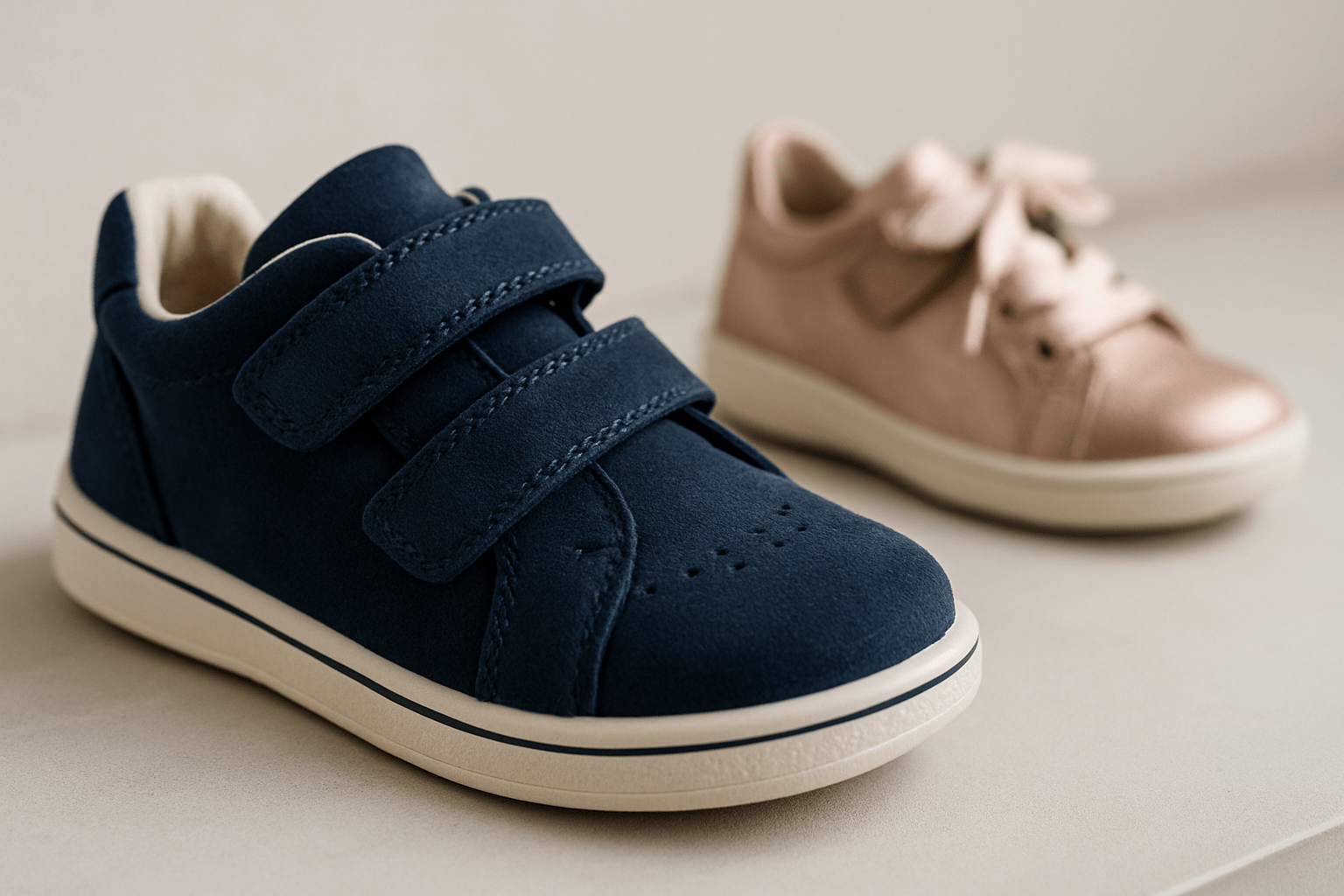
Παιδικά Παπούτσια PRIMIGI: Ποιοτικά, Άνετα και Προσιτά — Οδηγός για Έξυπνες Αγορές

Παιδικά Παπούτσια PRIMIGI: Ποιοτικά, Άνετα και Προσιτά — Οδηγός για Έξυπνες Αγορές

Όταν ψάχνετε παιδικά παπούτσια που να συνδυάζουν αντοχή, εργονομία και κόστος που δεν «σπάει» τον προϋπολογισμό, η επιλογή δεν χρειάζεται να είναι δυσεύρετη. Σε αυτόν τον οδηγό θα βρείτε πρακτικά κριτήρια επιλογής, συνηθισμένα λάθη που κάνουν οι γονείς, και πώς η PRIMIGI προσφέρει λύσεις που λειτουργούν στην καθημερινότητα της οικογένειας — χωρίς να θυσιάζετε ποιότητα για την τιμή.

Γιατί αξίζει να επενδύσετε σε ποιοτικά παιδικά παπούτσια

Τα παπούτσια επηρεάζουν περισσότερα από την εμφάνιση: επηρεάζουν στάση, βάδισμα, ασφάλεια κατά το παιχνίδι και μακροπρόθεσμη υγεία των ποδιών. Ένα φτηνό, κακοραμμένο παπούτσι μπορεί να προκαλέσει τριβές, φουσκάλες και παραμορφώσεις στην ανάπτυξη του ποδιού. Αντίθετα, ένα σωστά σχεδιασμένο παιδικό παπούτσι προσφέρει στήριξη στη φτέρνα, αρκετό χώρο για τα δάχτυλα και απορρόφηση κραδασμών όταν χρειάζεται.

PRIMIGI: τι την ξεχωρίζει στην αγορά παιδικών παπουτσιών

Η PRIMIGI ανέκαθεν αφιερώνεται και δεσμεύεται με προσοχή στους πιο απαιτητικούς καταναλωτές – τα παιδιά. Για αυτά, η PRIMIGI δημιουργεί ρούχα και παπούτσια που είναι όμορφα στην εμφάνιση και άνετα στη χρήση, συνοδεύοντάς τα στη μοναδική περιπέτεια της «μεγαλώματος»

Η μάρκα PRIMIGI αναγνωρίζεται από τις μητέρες και τα παιδιά ως ειδικός στον κόσμο της παιδικής ηλικίας. Η PRIMIGI γνωρίζει σε βάθος τις ιδιαίτερες ανάγκες κάθε ηλικίας και συνοδεύει την ανάπτυξη του παιδιού με προσεκτικά μελετημένες λύσεις. Όλα τα προϊόντα σχεδιάζονται μέχρι την παραμικρή λεπτομέρεια, ώστε να εξασφαλίζουν άνεση, ελαφρότητα, διαπνοή και ανθεκτικότητα.

Πού να ξεκινήσετε την αναζήτηση — online και outlet

Όταν θέλετε να δείτε ολόκληρη τη γκάμα και τις τεχνικές προδιαγραφές, η πρώτη στάση είναι η επίσημη σελίδα της μάρκας: επίσημη ιστοσελίδα PRIMIGI. Εκεί θα βρείτε κατηγορίες ανά ηλικία, υλικά και προτεινόμενη χρήση.

Αν ο στόχος είναι «τέλεια τιμή» χωρίς να χάσετε ποιοτικά χαρακτηριστικά, τα outlets έχουν πολύ συχνά μοντέλα από προηγούμενες σεζόν σε προσιτές τιμές. Μια συστηματική αναζήτηση στην σελίδα προσφορών PRIMIGI συχνά αποκαλύπτει πραγματικά αξιόλογες ευκαιρίες.

Ποια τεχνικά χαρακτηριστικά πρέπει να προσέξετε

Όχι όλα τα παπούτσια είναι ίδια ακόμη και αν φαίνονται παρόμοια. Κρατήστε στο μυαλό σας τα εξής:

  • Στήριξη φτέρνας: ο σκληρός αλλά υποστηρικτικός πάτος της φτέρνας κρατά το πόδι στη σωστή θέση.
  • Έλεγχος εύκαμπτης σόλας: η σόλα πρέπει να λυγίζει στο ύψος των δακτύλων, όχι στη μέση.
  • Επαρκής χώρος μπροστά: τουλάχιστον ένα δάχτυλο απόσταση από το μακρύτερο δάχτυλο στα παπούτσια για το σωστό ανάπτυγμα.
  • Διαπνοή: φυσικά ή τεχνητά υλικά που αφήνουν το πόδι να αναπνέει μειώνουν την εφίδρωση και τις μυκητιάσεις.
  • Εσωτερική επένδυση και ραφές: οι καλές ραφές και τα μαλακά χείλη προστατεύουν από τριβές.

Πώς να δοκιμάσετε σωστά το παπούτσι στο κατάστημα

Μικρό «τεστ» που μπορείτε να κάνετε εγκαίρως:

  • Αφήστε το παιδί να φορέσει το παπούτσι και να περπατήσει μερικά μέτρα. Προσέξτε αν το πόδι γλιστράει στη φτέρνα.
  • Πατήστε το δάχτυλο του παιδιού προς τα εμπρός μέσα στο παπούτσι: πρέπει να υπάρχει χώρος για το ένα δάχτυλο.
  • Δοκιμάστε τον «αντίχειρα-κάμψη»: το παπούτσι λυγίζει μαζί με το πόδι στο ύψος των δακτύλων;
  • Ελέγξτε αν οι ραφές τρίβουν την πίσω επιφάνεια της φτέρνας.

Παιδικά παπούτσια για κορίτσι PRIMIGI — στυλ και λειτουργικότητα

Η συλλογή για κορίτσια της PRIMIGI συνδυάζει αισθητική με πρακτικά χαρακτηριστικά. Από μπαλαρίνες και μποτάκια μέχρι αθλητικά και σανδάλια, κάθε μοντέλο είναι μελετημένο για καθημερινή χρήση: ελαφριές σόλες, εύκαμπτες κατασκευές και λεπτομέρειες που προσθέτουν ασφάλεια, όπως αντιολισθητικά πέλματα και ανακλαστικά στοιχεία σε μερικά σχέδια.

Για να βρείτε προσφορές στη γυναικεία σειρά, ελέγξτε την ειδική σελίδα outlet: outlet παιδικά παπούτσια για κορίτσι. Αν θέλετε να δείτε γρήγορα τις τρέχουσες εκπτωτικές επιλογές, αυτή η σελίδα συχνά ανανεώνεται με μοντέλα που συνδυάζουν ποιότητα και χαμηλότερη τιμή.

Παπούτσια για αγόρια PRIMIGI — αντοχή και προστασία

Τα αγορίστικα μοντέλα δίνουν έμφαση στην ανθεκτικότητα: ενισχυμένα σημεία που φθείρονται περισσότερο, σόλες με καλό κράτημα και συστήματα στερέωσης (velcro, κορδόνια με κλεισίματα) που επιτρέπουν σωστή εφαρμογή. Για εξειδικευμένες προσφορές στην ανδρική ή αγορίστικη καρτέλα, δείτε τη σελίδα outlet για αγόρι: outlet παιδικά παπούτσια για αγόρι.

Πώς να κρίνετε αν μια έκπτωση είναι πραγματική ευκαιρία

Τα tips για να μην παρασυρθείτε από «ψευτο-έκπτωση»:

  • Ελέγξτε το αρχικό υλικό και τις προδιαγραφές: αν το παπούτσι είναι από χαμηλής ποιότητας συγκολλημένα υλικά, και η έκπτωση μεγάλη, το όφελος είναι μικρό.
  • Σιγουρευτείτε ότι το μέγεθος που προσφέρεται σας ταιριάζει — έκπτωση σε λάθος νούμερο δεν αποτελεί κερδοφόρα αγορά.
  • Δώστε προσοχή στην πολιτική επιστροφών του καταστήματος.

Συντήρηση και επιμήκυνση ζωής παπουτσιών

Μικρές φροντίδες μεταφράζονται σε μήνες χρήσης παραπάνω:

  • Στεγνώνετε πάντα φυσικά τα παπούτσια και όχι με πηγές θερμότητας που παραμορφώνουν το υλικό.
  • Αν τα παπούτσια έχουν αποσπώμενο πέλμα, πλένετέ το ξεχωριστά ή αερίζετε καλά.
  • Χρησιμοποιείτε κρέμες/σπρέι προστασίας για δερμάτινα μοντέλα — αυτό κρατά το δέρμα ελαστικό και λιγότερο επιρρεπές σε ρωγμές.
  • Σημειώστε πότε αγοράσατε το παπούτσι: παιδιά αλλάζουν νούμερο εύκολα, και η οικονομία σε βάθος χρόνου προκύπτει αν οι αγορές γίνονται στο σωστό μέγεθος και με έξυπνες προσφορές.

Συνηθισμένα λάθη που οδηγούν σε σπατάλη χρημάτων

Σε πολλές οικογένειες τα παπούτσια «κάθονται» ή καταστρέφονται γρήγορα επειδή:

  • Αγοράζουν παπούτσια πολύ μικρότερα για να «κρατήσουν» — το αποτέλεσμα είναι άβολα βήματα και ταχεία φθορά.
  • Επιλέγουν μόδα αντί για λειτουργία: γλιστράνε, δεν στερεώνονται σωστά ή δεν ανταποκρίνονται στην δραστηριότητα του παιδιού.
  • Αγοράζουν μόνο βάσει τιμής, χωρίς να ελέγξουν το υλικό και τη δομή του παπουτσιού.

Πότε να προτιμήσετε outlet αγορές και πότε καινούργια συλλογή

Outlets είναι ιδανικά όταν θέλετε αξιόπιστα, δοκιμασμένα μοντέλα σε μειωμένη τιμή — για παράδειγμα, κλασικές μπότες ή αθλητικά που δεν αλλάζουν ριζικά σχεδιασμό κάθε χρόνο. Αν όμως το παιδί χρειάζεται υποστήριξη για ιδιαιτερότητες (ορθοπεδικά πέλματα κ.λπ.) ή θέλετε το τελευταίο τεχνικό υλικό (π.χ. νεότερης γενιάς απορρόφηση κραδασμών), επενδύστε σε νέο μοντέλο από τη βασική συλλογή.

Ψάξτε ανά τακτά διαστήματα τις προσφορές στην γενική σελίδα outlet για να συνδυάσετε τίμιο κόστος και υψηλή ποιότητα.

Πρακτικά παραδείγματα από την αγορά

Παραδείγματα που βλέπουμε συχνά στην καθημερινή πρακτική:

  • Μια μητέρα αγόρασε πολύ φθηνά sneakers για το σχολείο. Μετά από λίγες εβδομάδες, οι ραφές άρχισαν να ανοίγουν και το αντιολισθητικό πέλμα είχε φθαρεί. Έχασε χρόνο και χρήμα προσπαθώντας να διορθώσει το πρόβλημα. Η λύση: επένδυση σε μοντέλο με ενισχυμένες ραφές και εγγύηση, όπως σε πολλά PRIMIGI μοντέλα.
  • Γονείς που αγοράζουν σε outlet ένα ζευγάρι για να «κρατήσει» για το επόμενο παιδί. Αν το παπούτσι είναι κλασικό σχέδιο και σε καλή κατάσταση, αυτό λειτουργεί — αρκεί να είναι απολυμασμένο και να χωρά σωστά.

Παιδί με ειδικές ανάγκες ποδιού — τι να προσέξετε

Αν υπάρχει ανάγκη για ειδική στήριξη, συμβουλευτείτε ορθοπεδικό πριν την αγορά. Κάποια PRIMIGI μοντέλα έχουν αποσπώμενα πέλματα ή πιο σταθερό κράτημα φτέρνας, που διευκολύνουν την ενσωμάτωση υποστηρικτικού πέλματος ή νάρθηκα.

Πώς να βρίσκετε πραγματικές αξιολογήσεις και απόψεις

Διαβάζοντας κριτικές, προσέξτε συγκεκριμένα σχόλια: πόσο κράτησε η σόλα, αν υπήρξαν προβλήματα στην εφαρμογή, συμπεριφορά μετά από πλύσιμο. Οι γενικές φράσεις τύπου «πολύ καλό» είναι λιγότερο χρήσιμες από την περιγραφή προβλημάτων και λύσεων. Οι αξιολογήσεις που περιέχουν φωτογραφίες μετά από χρήση προσφέρουν την πιο αξιόπιστη εικόνα.

Συμβουλές για έξυπνες αγορές χωρίς συμβιβασμούς

  • Αγοράστε την εποχή που το παιδί φοράει το αντίστοιχο κάλτσα (π.χ. χειμωνιάτικο παπούτσι με χειμωνιάτικη κάλτσα) για σωστό fit.
  • Συγκρίνετε την τιμή στη ιστοσελίδα της PRIMIGI με τις outlet προσφορές.
  • Επιλέξτε μοντέλα με αποσπώμενο πέλμα όταν θέλετε να επεκτείνετε τη ζωή του παπουτσιού με νέο έσω πέλμα.
  • Διατηρήστε αρχεία αγορών (ημερομηνία, μέγεθος, χρήση) για να βλέπετε πότε υπήρξε φθορά — έτσι προγραμματίζετε καλύτερα το επόμενο ψώνισμα.

Στρατηγική για οικογένειες με περιορισμένο προϋπολογισμό

Μια πρακτική τακτική είναι ο συνδυασμός: αγορά βασικών, ανθεκτικών μοντέλων για καθημερινή χρήση από outlet και επένδυση σε ένα ή δύο πιο τεχνικά παπούτσια (π.χ. αθλητικά με καλή απορρόφηση) για πιο ενεργές δραστηριότητες. Η σελίδα outlet για αγόρι και η σελίδα outlet για κορίτσι προσφέρουν τέτοιες επιλογές με συχνές εκπτώσεις.

Τελικές σκέψεις — τι αξίζει να θυμάστε

Η σωστή αγορά παιδικών παπουτσιών δεν είναι συνώνυμη με την πιο ακριβή επιλογή. Είναι αποτέλεσμα γνώσης, δοκιμής και έξυπνων επιλογών. Η PRIMIGI προσφέρει προϊόντα που έχουν μελετηθεί για την καθημερινότητα των παιδιών και, συνδυάζοντας τις βασικές σειρές με τις outlet ευκαιρίες, μπορείτε να βρείτε «ποιοτικές» λύσεις σε πραγματικά προσιτές τιμές.

Παιδικά Παπούτσια PRIMIGI: Ποιοτικά, Άνετα και Προσιτά — Οδηγός για Έξυπνες Αγορές


Συχνές ερωτήσεις

Πώς καταλαβαίνω ότι ένα παπούτσι είναι το κατάλληλο μέγεθος; — Υπάρχει περίπου ένας ενδιάμεσος χώρος (μέγεθος δαχτύλου) από το μακρύτερο δάχτυλο έως την άκρη του παπουτσιού και το παπούτσι λυγίζει στη φυσική άρθρωση των δακτύλων.

Είναι ασφαλές να αγοράσω παιδικά από outlet; — Ναι, αν ελέγξετε το μέγεθος, την κατάσταση του υλικού και την πολιτική επιστροφών· πολλά outlets διαθέτουν άριστα μοντέλα προηγούμενων σεζόν.

Πόσο συχνά πρέπει να αλλάζω παπούτσια στο παιδί; — Εξαρτάται από την ταχύτητα ανάπτυξης. Για μικρά παιδιά, κάθε 3–4 μήνες μπορεί να χρειαστεί ανανέωση· για μεγαλύτερα, ανάλογα με τη φθορά και την ανάπτυξη του ποδιού.

Ποια χαρακτηριστικά να προτιμήσω για αθλητικά παπούτσια; — Καλή απορρόφηση κραδασμών, σταθερή φτέρνα και αρκετός χώρος στο toe box για φυσική κίνηση.


Αυτό το άρθρο απευθύνεται σε…

  • Αυτό το κείμενο απευθύνεται σε γονείς και κηδεμόνες που αναζητούν ποιοτικά παιδικά παπούτσια σε προσιτές τιμές, σε υπεύθυνους αγορών καταστημάτων παιδικών ειδών και σε όσους ενδιαφέρονται για πρακτικές συμβουλές επιλογής, συντήρησης και έξυπνων αγορών για παιδιά.

Χρήσιμες πρακτικές

  • Δοκιμάζετε πάντα τα παπούτσια με την κάλτσα που θα φοριέται στη χρήση (χειμερινή/θερινή).
  • Ελέγχετε την ελαστικότητα της σόλας στο ύψος των δακτύλων πριν αγοράσετε.
  • Σημειώνετε ημερομηνία αγοράς και χρήση για να υπολογίζετε φθορά και αντικατάσταση.
  • Χρησιμοποιείτε προϊόντα περιποίησης για δερμάτινα παπούτσια για να παρατείνετε τη ζωή τους.
  • Συγκρίνετε τιμές και τεχνικά χαρακτηριστικά στην επίσημη ιστοσελίδα PRIMIGI και στην γενική σελίδα outlet πριν την τελική αγορά.
  • Αν χρειάζεται ειδική στήριξη, συμβουλευτείτε ειδικό πριν επιλέξετε outlet μοντέλο.

How to Find a Reliable Cleaning Company Near Ramstein (Services, Prices, Negotiation Tips and Pitfalls)

How to Find a Reliable Cleaning Company Near Ramstein (Services, Prices, Negotiation Tips and Pitfalls)

If you live or work near Ramstein and suddenly need a cleaning company—whether for move‑out, office maintenance, or post‑renovation cleanup—this guide walks you through realistic pricing, how to evaluate quotes, what to negotiate, and the common traps that cost time and money. Practical, local, and written for people who want to make decisions fast and avoid surprises.

Why a local, practical approach matters

Finding a cleaning firm isn’t just about the lowest price. Around Ramstein you’ll meet a mix of providers: small local crews, companies that specialise in military contracts, and national chains. Each has strengths and blind spots. A cheap quote from an inexperienced team can turn into repeated call‑backs and extra charges; an established company that converses in English and German may charge more but saves you time, paperwork and stress—especially when base access, bilingual communication or specialized cleaning standards are required.

Core concepts to understand before you call

  • Net vs gross pricing: Many local offers list prices net (+19% MwSt.). Always confirm whether the quote you get is net or includes VAT. The sample price sheet below states prices excluding 19% VAT—ask for a brutto price if you need it for budgeting.
  • Minimum order value: Some companies require a minimum net order—this one’s 75 € net—so a single small job might not be accepted or could be charged up to that minimum.
  • Scope and surface area: Most pricing is per m² for deep cleaning or maintenance; confirm which surfaces are covered and whether fixtures, window frames, curtains, radiators and lifts are included or billed separately.
  • Condition and extra work: Stubborn stains, heavy grease, pet mess, and renovation dust often lead to surcharges. Ask how „strong contamination“ is defined and get examples in writing.

Our services & prices (as offered locally)

Below is the provider’s price sheet—use it as a baseline when you request quotes. All prices are listed as net unless stated otherwise.

Unsere Dienstleistungen & Preise

Alle Preise zzgl. 19 % MwSt. (Bruttopreise auf Anfrage verfügbar). Mindestauftrag: 75 € netto. Preise können je nach Objekt, Zustand und Verschmutzungsgrad variieren.

Grundreinigung (ab, netto / m²)

  • Fliesen ab 6,00 €
  • Cotton ab 30,00 €
  • Estrich ab 4,50 €
  • Kork & Lino ab 16,80 €
  • Naturstein ab 18,90 €
  • Parkett ab 15,00 €
  • PVC ab 13,70 €
  • Sanitärräume & Lifte ab 50,50 €
  • Teppich – normal verschmutzt ab 10,00 €
  • Teppich – stark verschmutzt ab 13,00 €
  • Terrazo ab 13,70 €

Unterhaltsreinigung (ab, netto / m²)

  • Verwaltungs-, Büroräume ab 6,90 €
  • Unterrichts-, Gemeinschaftsräume ab 6,00 €
  • Küchen & Gastronomieeinheiten ab 10,80 €
  • Lager-, Abstellräume & Keller ab 6,00 €
  • Eingangshallen, Flure & Gänge ab 5,40 €
  • Patientenzimmer ab 9,70 €
  • Treppenhäuser & Verkaufsräume ab 8,00 €
  • Lifte ab 6,00 €
  • Sanitärräume ab 24,00 €

Fensterreinigung (netto / m²)

  • Glas (innen & außen) 2,00 €
  • Glas + Rahmen (innen & außen) 3,00 €
  • Nur Rahmenreinigung 1,00 €
  • Bei starker Verschmutzung +1,00 €

Teppichreinigung (netto / m²)

  • Standardteppich (leicht verschmutzt) 3,00 €
  • Teppich mit Flecken (Tiefenreinigung) 5,00 €
  • Veloursteppiche & Schmutzmatten 14,00 €
  • Orientteppiche, Berber & Nepal 18,00 €
  • Shaggy- und Designerteppiche 26,00 €
  • Seidenteppiche 35,00 €

Vorhang- / Gardinenreinigung (pro Stück)

  • Standardstoff 7,60 €
  • Schwere Stoffe 10,00 €
  • Empfindliches Material 14,00 €

Sonderleistungen

  • Bauendreinigung ab 6,00 €/m²
  • Desinfektion nach Vereinbarung
  • Hausmeisterservice

How to use the price list to create a realistic budget

Take three steps: measure, classify, and calculate. Measure the m² per surface type. Classify each area by expected contamination: light, normal, heavy. Then apply the corresponding rate. Practical example:

  • 70 m² apartment: 50 m² laminate/parkett + 10 m² kitchen tile + 10 m² hallway tile.
  • Use Parkett Grundreinigung ab 15,00 €/m² for the laminate/parkett: 50 × 15 = 750 € net.
  • Tiles (kitchen + hallway) Grundreinigung at 6,00 €/m²: 20 × 6 = 120 € net.
  • Total deep clean estimate (net): 870 €. Add minimum fees, travel or special cleaning if needed, and then 19% VAT for final cost.

This quick calculation shows why surface mix matters: a small area of expensive material (like natural stone) can shift the price notably.

Common additions and when they appear on a quote

  • Heavy soiling surcharge: Often a flat per‑m² uplift (see the “Bei starker Verschmutzung +1,00 €” pattern for windows) or an added line item for stain removal, grease, or mold treatment.
  • Move‑out extras: Ovens, balconies, terraces and inside fridges are frequently excluded from standard end‑of‑tenancy cleaning and quoted separately.
  • Access and keys: If cleaners must coordinate with base security, a handler fee or time surcharge may apply.
  • Waste disposal: Removal of bulky waste after renovation or hoarding situations is usually billed by volume or as a separate disposal fee.

Practical checklist for your first contact

Use this checklist when you call or email multiple companies. It keeps quotes comparable and prevents scope creep.

  • Set the address and access rules (Ramstein Air Base access, gate pass, times allowed).
  • Explain surface types and rough m² per room.
  • State the condition: normal use, heavy stains, renovation dust.
  • Ask explicitly whether prices are net or gross, and whether minimum order applies.
  • Request insurance details (public liability) and a reference from a local client.
  • Confirm whether tools and chemicals are included or if they will use client‑supplied products (and whether those products are eco‑friendly).
  • Get a written quote with a breakdown: labour, materials, travel, surcharges.

What to ask during a site visit

Whenever possible, request a site visit before finalising the quote. During the visit, watch for these signals:

  • Do they measure and document surfaces? Or do they give a flat, vague price?
  • Is the team bilingual if needed, and is someone available who understands base regulations?
  • Do they take photos and note problem areas? Good crews do—poor ones rely on memory.
  • Are they honest about extra work? Experienced teams will identify difficult spots and list potential costs.

Negotiation tactics that actually work

Negotiation is about structure, not haggling. Here are tactics local clients use to get fairer deals without burning trust.

  • Bundle services: If you need carpet cleaning, window cleaning and an end‑of‑lease deep clean, ask for a package price. Contractors often give a discount for combined work because it cuts travel and admin overhead.
  • Regular contract incentive: For recurring under‑maintenance cleaning, negotiate a multi‑month rate rather than per‑visit pricing. Commit to a 6–12 month cadence and ask for a small percentage off.
  • Define acceptance criteria: Agree in writing what „clean“ means and how rework will be handled. This prevents disputes and gives you leverage if standards aren’t met.
  • Offer flexible scheduling: Early mornings or late evenings sometimes come cheaper—ask whether off‑peak slots are discounted.
  • Provide a stable client benefit: If you are a business with steady needs, say so. Stable income streams are worth a margin to small operators.

Red flags and pitfalls to avoid

Some practices look attractive but cost more in the long run. Watch out for these:

  • Vague quotes: “From” prices or price ranges without m² or scope are a sign they want room to upsell.
  • Pay upfront without documentation: A small deposit is normal, but don’t pay full upfront before seeing results unless you’re working with a trusted contractor.
  • No insurance or registration: Uninsured teams expose you to liability if a cleaner is injured or damages property.
  • High churn and temporary crews: If staff frequently change, quality and accountability drop. Ask how long the assigned crew has been employed.
  • Pressure to sign long contracts immediately: Reputable companies offer trial runs and short commitments first.

Special considerations for military clientele

Ramstein has a significant US community. If you or the cleaning company must deal with base access or US housing rules, be explicit up front:

  • Who will handle gate passes? If the company needs escort or base badges, that changes logistics and sometimes price.
  • Is the team cleared to work on base housing? Some contractors are authorised; others are not.
  • Language, documentation and payment preferences matter—American customers may prefer quotes and receipts in English and card payments (the provider accepts Visa and MasterCard via mobile POS).

Quality control and acceptance procedures

Agree an acceptance process:

  1. Final walk‑through with checklist and photos.
  2. Rectification period (e.g., company agrees to fix missed items within 48 hours at no extra charge).
  3. Payment terms tied to acceptance: partial retention (e.g., 10%) until final sign‑off for large jobs.

This approach is practical: it reduces awkward back‑and‑forth and ensures fixes are prioritised.

Insurance, liability and contract clauses you should insist on

At a minimum, request proof of:

  • Public liability insurance (Betriebshaftpflicht) covering property damage and bodily injury.
  • Employee liability (if someone is injured while working in your property).
  • Clear invoicing that lists net price and VAT separately—this is necessary for company accounting and for American customers who need documentation.

Contract clauses to include:

  • Scope of work with explicit exclusions.
  • Cancellation and rescheduling policy.
  • Cleaning frequency and expected start times.
  • Dispute resolution and contact person.

How to judge whether a quote is realistic

Two red flags tell you a quote is unrealistic: it is significantly lower than comparable bids and it lacks detail. A realistic quote will:

  • Break down cost per surface type.
  • List surcharges and condition‑dependent costs.
  • Include travel or minimum order terms.
  • Offer a written invoice and clear payment terms.

Micro‑examples from real jobs (what goes wrong in practice)

Realistic situations help you spot issues fast.

Example A — The cheap move‑out quote that doubled

Tenant A hired the lowest bidder for an end‑of‑lease clean. The quote didn’t include oven degreasing or window frames. After the job, the landlord rejected the clean, demanding frames and oven work. The cleaner charged extra and re‑arranged a re‑visit—costing more time and money than accepting a slightly higher initial quote that covered everything.

Example B — The no‑visit office quote

A small company asked three cleaners for weekly office maintenance. One firm gave a low per‑m² price but never inspected the space. After two visits the cleaner stopped coming because they had underestimated the number of meeting rooms and the daily coffee mess. The client switched to a firm that had done a walk‑through and added a modest travel fee—reliable service and fewer disruptions.

Example C — Carpets with hidden damage

After a deep carpet clean, a high‑traffic office discovered worn patches that looked worse when wet. The cleaning company had not documented pre‑existing wear; dispute arose. Always photo‑document problem areas before proceeding, and agree what is stain removal vs structural wear.

Green cleaning and product preferences

Ask about which chemicals are used. Many providers offer eco‑friendly alternatives at little or no premium. For homes, childcare centers or medical facilities, choose suppliers who can provide product safety data sheets and avoid known irritants. If you require hypoallergenic or low VOC solutions, add that to the RFP.

Disinfection services and medical settings

Disinfection is a specialised service. For clinics or medical facilities ask for:

  • Protocols used and disinfectant types (EPA or EU‑approved standards where applicable).
  • Staff training evidence for working in medical settings.
  • Documentation of frequency and post‑service certification if needed.

Payment methods and invoicing

Local companies now commonly accept card payments via mobile POS, which is useful for private and US customers. For business clients, net terms (e.g., 14 or 30 days) are normal. Insist on an invoice that lists the net amount, VAT percentage and a clear description of services performed. Keep records for reimbursements or accounting.

How to structure an RFP (Request for Proposal) to get comparable quotes

Write a short RFP and send it to three providers. Include:

  • Property address, access info, and photos (floor plans help).
  • Exact m² per surface type.
  • Desired service (one‑off deep clean, weekly maintenance, carpet cleaning, window cleaning etc.).
  • Preferred schedule and flexibility.
  • Insurance and documentation requirements.
  • Request for itemised net and gross pricing, travel fee and surcharges.

When you should consider specialized or niche services

Choose specialized services for:

  • Restoration after water damage or mould remediation.
  • Historic floors or delicate surfaces (hardstone, seide carpets).
  • Medical facilities requiring validated disinfection protocols.
  • Large construction cleanups—these often need different equipment and teams.

Saving money without sacrificing quality

Smart buyers reduce cost by doing a few simple things:

  • Clear clutter before cleaners arrive—less time spent moving items.
  • Sign a regular short‑term contract instead of one‑offs; many providers will lower the per‑visit price.
  • Negotiate packages for recurring services plus periodic deep cleans.
  • Be precise about which items (e.g., inside fridges, wardrobes) are included to avoid dissatisfaction.

After the job: how to handle complaints and rework

Good providers will offer a short rectification window (24–72 hours). If the company refuses reasonable fixes, escalate with written photos, include timestamps and any pre‑service documentation. For contractual disputes, your invoice, RFP and photos are your strongest tools. If insurance or damage is involved, request incident reporting and the insurer’s contact details.

Choosing between small local teams and larger companies

Smaller teams often deliver flexibility and lower overheads. Larger companies provide redundancy, consistent staffing and easier billing. Consider what matters most: quick responsiveness and a known crew, or documented SLAs and backup teams. For sensitive environments (medical, schools) prefer providers with formal procedures and certifications.

Final decision checklist (quick)

  • Is the quote detailed and comparable?
  • Does the company have insurance and local references?
  • Are access or base requirements understood?
  • Has the company documented problem areas before starting?
  • Do payment terms and invoicing meet your accounting needs?
  • Is there a clear acceptance and rework policy?

Summary: the fast route to a good outcome

When you need cleaning services near Ramstein quickly, be methodical. Measure, describe, and insist on written, itemised quotes. Factor in VAT, minimum orders and special surcharges. Prefer companies that document conditions, carry insurance and offer clear acceptance procedures. Negotiate by bundling services or offering steady work. These steps reduce surprises and make the relationship workable for both parties.


Frequently Asked Questions

Q: Are the listed prices final?
Most prices are net starting rates. Expect variation based on condition, access and specific tasks; confirm whether VAT is included.

Q: What is a reasonable turnaround for an end‑of‑lease deep clean?
For a standard apartment expect 1–3 days for scheduling and 1 day on site; larger properties or heavy soiling will require more time. Ask for a firm start date in writing.

Q: Do cleaners handle disposal of renovation waste?
Large waste removal is often a separate service. Confirm whether disposal fees are included or billed extra.

Q: How do I verify insurance?
Request a copy of the policy certificate showing public liability coverage and policy limits. Call the insurer if uncertain.

Q: Can I pay by card?
Many companies accept card via mobile POS; ask in advance if you prefer card over cash or bank transfer.


Intended for:

  • People and organisations located in or near Ramstein who need cleaning services—tenants preparing for move‑out, small businesses seeking regular maintenance, school and medical facility managers, and US military personnel who require bilingual communication and base‑related logistics
  • Also useful for landlords and property managers comparing local providers and budgeting for cleaning contracts

Useful practices

  • Always ask for itemised written quotes showing net price, VAT percentage and any minimum order fee.
  • Photograph problem areas before work begins and attach photos to the written agreement.
  • Request public liability insurance proof and note policy limits on the contract.
  • Bundle services (e.g., carpet + windows + deep clean) to negotiate package discounts.
  • For recurring cleanings, negotiate a trial period (e.g., 1–3 months) before signing long contracts.
  • Confirm access procedures for Ramstein Air Base or gated properties before scheduling.
  • Agree a 48–72 hour correction window for any missed items and include it in the invoice terms.
  • Prefer companies that provide receipts and invoices in English if you need them for US or international accounting.

Professional Cleaning in the Ramstein Area: From Curtains to Medical Facilities and Polished Floors

Professional Cleaning in the Ramstein Area: From Curtains to Medical Facilities and Polished Floors

Professional cleaning around Ramstein demands technical skill, on-the-ground experience with military and civilian clients, and an ability to move between delicate textiles, clinical environments, and heavily trafficked commercial floors. This guide explains how to pick and work with a cleaning partner who delivers real results—curtain removal and rehang, deep-shine floor finishes, carpet restoration, medical-grade sanitation, and post-construction recovery—without the usual fluff.

Why specialized cleaning matters near Ramstein

The Ramstein area brings a unique mix of customers: military families dealing with PCS moves, German households, international tenants, local businesses, schools, and healthcare facilities. That diversity means “one-size-fits-all” cleaning fails quickly. Practical differences—secure access rules around bases, short turnaround windows for move-outs, child-safe protocols for kindergartens, and strict hygiene in medical settings—require a supplier who can switch methods and priorities without dropping quality.

What separates a good provider from a mediocre one

High-level cleaning is not just about detergent strength. It’s the combination of: trained people, documented processes, correct equipment, quality control, and a sensible commercial model. Weak providers show these signs: inconsistent results between visits, poor communication about surfaces that need special treatment, thinly written quotes that hide surcharges, and off-the-shelf products used as a blanket solution. Strong providers will explain why a silk curtain needs hand-cleaning, why a honed limestone should never be treated with an acidic cleaner, or why a clinic requires validated disinfection protocols.

Deep Shine Cleaning: achieving a durable, professional finish

“Deep shine” isn’t merely buffing with a high-speed machine. True deep-shine cleaning starts with the right diagnostics: identifying the floor type (parquet, natural stone, terrazzo, PVC, linoleum), testing for existing seals or finishes, and assessing wear patterns. The sequence typically follows: mechanical soil removal, targeted cleaning with pH-appropriate professional products, polishing with controlled abrasion or crystallization (for terrazzo), and finally sealing with a product selected for slip resistance, sheen preference, and traffic load.

Using professional products matters. Consumer polishes often leave films that attract dirt quickly or create uneven sheens. Industrial-grade sealers and polishers create layers designed to be maintained rather than stripped every season. For persistent problems—deep scratches, ingrained dirt in grout, or oxidized finishes—repair steps such as screen-and-recoat or full mechanical restoration are necessary before a lasting shine can be achieved.

Curtain and Drapery Removal, Cleaning & Installation: the right workflow

Textiles around windows are among the trickiest items because they combine fragile fabrics, complex fixings, and the risk of color run or shrinkage. A professional approach follows these stages: on-site inspection; careful removal with photographic records of hooks and pleats; tagging and transport in breathable protective bags; cleaning in controlled conditions (wet-cleaning, dry-cleaning, or gentle machine cycles depending on the fabric); repairs where necessary (hemming, hook replacement); and precise re-installation.

Common mistakes to avoid: contractors who cut corners by leaving hardware unlabelled, using aggressive solvents that weaken dyes, or rehanging with incorrect pleat spacing so that curtains hang poorly. A good crew will leave a small care note for the client (temperature tolerance, dry-clean recommendations, and how often to vacuum). For military housing or tenant turnovers, speed matters—but not at the cost of misplacing fittings or altering the drape’s original fall.

Carpet cleaning and Teppichreinigung—what actually restores fibres

Carpets hide a surprising amount of contaminants: tracked-in sand and grit that abrades fibres, food oils that trap soil, and moisture that leads to microbial growth. The cleaning method should match the carpet’s construction. Low-pile commercial carpets tolerate truck-mounted hot-water extraction; delicate velours, oriental rugs, or silk rugs need specialized handling: face-to-face cleaning, controlled drying, and hand grooming.

Micro-example: a landlord once accepted a “carpet cleaned” report where a crew ran a standard steam-cleaner over an Oriental rug and returned it with distorted fringe and dull colors. The right approach would have been: pre-test for dye stability, gentle agitation to lift soil, extraction at tailored temperatures, and drying on racks to avoid pile crush. Knotted rugs often respond best to low-pressure extraction with neutral detergents and a final pH-balancing rinse.

Floor Cleaning, Polishing & Sealing—materials and treatments

Understanding the substrate is essential. Parquet reacts to excessive water and alkaline cleaners; natural stone reacts to acids; vinyl and linoleum need non-yellowing sealers. A practical treatment map:

  • Parquet: dry cleaning followed by micro-sanding where needed; oil-based or polyurethane finishes matched to room conditions.
  • Natural stone (marble, limestone): neutral cleaners, poultice for stains, mineral-based sealers; avoid acidic polishers.
  • Terrazzo: mechanical grinding & crystallization for a long-lasting mirror finish; impregnating sealers to prevent oil ingress.
  • Commercial PVC and LVT: stripping older coats and applying commercial-grade polymer finishes for durability.

Polishing choices are a trade-off between gloss and maintenance. High-gloss finishes look impressive but show scratches and require more frequent buffing. Satin and matte sealers hide wear better in high-traffic zones like office entrances.

Medical and Healthcare Facility Cleaning—protocols that actually reduce risk

Healthcare cleaning is governed by hygiene logic more than aesthetics. A clinic, treatment room, or hospital corridor requires validated cleaning protocols that reduce the transmission of pathogens. That includes:

  • Task-based cleaning (room turn, discharge clean, daily cleaning), each with distinct checklists;
  • Use of disinfectants with proven efficacy claims against relevant organisms (with contact times observed);
  • PPE for staff and training on donning/doffing to avoid cross-contamination;
  • Color-coded mops and cloths to separate “clean” from “dirty” zones;
  • Documentation: logbooks, batch numbers for disinfectants, and incident reporting.

Micro-example: a practice used a single bucket system for the whole clinic; cross-contamination followed. Switching to single-use disinfectant wipes for high-touch points and color-coded microfibre systems eliminated the issue without adding excessive cost.

School and Kindergarten Cleaning—balancing hygiene and child safety

Cleaning educational facilities is not a scaled-down hospital job. It is about scheduled, safe, and non-disruptive practices. Key points:

  • Non-toxic, fragrance-free cleaning agents for classrooms and sleeping areas;
  • Timing: thorough cleaning outside school hours, targeted touch-point disinfection during the day;
  • Play area maintenance: removal of grit and biological contaminants, regular laundering of soft toys where applicable;
  • Window and glass cleaning scheduled to avoid glare during classes;
  • Clear communication with school administration about rotas and emergency cleans (vomit, blood, etc.) and consent procedures for sensitive incidents.

Practical fail: crews using café-strength citrus degreasers in a toddler room. The result was irritated noses and complaints. Use formulations specifically designed and tested for child environments.

Office and Commercial Cleaning—consistency, reporting and workplace impact

Offices need two things from cleaning partners: consistent baseline standards and fast response to exceptions. Businesses benefit from documented KPIs—cleaning checklists, sign-off photos, and monthly condition reports. A credible supplier will propose a cadence (daily, weekly) aligned with footfall and provide fractional services (e.g., weekly deep-cleaning of kitchens, quarterly upholstery care).

Micro-example: an office campus with open-plan workspaces kept experiencing sticky breakroom surfaces between visits. The fix combined an extra midday touchpoint for the kitchen and installation of dispensers for single-use paper towels—practical operational changes that reduced strain on the cleaning rota.

Post-Renovation & Construction Cleaning—stages and hidden problems

Post-construction cleaning is layered: initial bulky debris removal, followed by progressive cleaning passes to remove fine dust, grout haze, and adhesive residues. The dust generated by sanding and cutting is abrasive and mobile; it quickly finds IT equipment, ventilation grilles, and sockets. Professional teams protect sensitive elements, use HEPA-filtered vacuums, and test for fine particulates before handing over.

Stains to watch for: paint splatter on stone, cement grout on tiles, adhesive residue on glass. Each requires a different solvent and mechanical action; trial-cleaning small patches prevents irreversible damage.

Window and Glass Cleaning—technique over elbow grease

Good glass cleaning is a combination of right solution, correct temperature, and method. For high windows, water-fed pole systems with pure water remove mineral residue and reduce re-soiling. For interiors, microfibre squeegees and rinsing in clean solution avoid streaks. For architectural glass facades, access planning and rope or platform teams must comply with local safety regulations.

For military housing or commercial buildings, documenting before-and-after photos and noting any window frame damage is standard practice. That prevents disputes during move-outs or lease terminations.

Residential Move-In/Move-Out & PCS Cleaning—speed, clarity, and military realities

Move-related cleaning is deadline-driven. Families on a PCS schedule or landlords needing quick turnovers require precise scope agreements: what’s included (inside appliances, baseboards, windows), what’s extra (mould remediation, heavy stain removal), and acceptable time windows. For military clients, card payments on-site and secure invoicing make a tangible difference: they reduce cash handling and speed reconciliation.

Practical tip: use a simple signed checklist at completion with photographic evidence. It protects the cleaning crew, the tenant, and the landlord from later disputes.

Pricing: interpreting rates and avoiding bait-and-switch

Transparent pricing is a hallmark of reliable providers. To help interpret sample rates you might see in the region, here are practical notes on typical cleaning rates and what they imply:

  • Basic cleaning per m² variations—lower prices often reflect minimal time-per-area, cheaper chemicals, or subcontracted labour. Examples: tile cleaning from modest rates may cover only surface wiping, not grout deep-cleaning.
  • Specialist surfaces—natural stone, parquet, and cork command higher per-m² prices because of diagnostic work and appropriate materials.
  • Window cleaning per m² can seem attractive but watch for hidden costs: access equipment, heavy-dirt surcharges, or internal-only pricing.

Using published rates responsibly: ask for a written scope matching the rate. If a quote says “carpet cleaning €3.00/m²” verify whether that is a basic hot-water extraction, includes pre-spray and stain treatment, or assumes light dirt only. Transparent suppliers will provide ranges for “light” and “heavy” dirt and list supplementary charges upfront.

Equipment and products: what professionals really bring

Professional crews bring more than bigger vacuum cleaners. Expect to see: truck-mounted extraction units for deep carpet cleaning, HEPA vacuums, multi-speed polishers with interchangeable pads, pH-neutral stone cleaners, impregnating sealers, and color-coded microfibre systems. Investment in consumables (approved disinfectants, professional-grade sealers) signals long-term quality—cheap consumables show up in short-lived results.

Deep Shine Cleaning with our professional products becomes repeatable only with products that are formulated for wear and interactions with maintenance machinery. The right product reduces repair cycles and lowers lifetime cost per square metre.

Choosing a cleaning partner in Ramstein: practical red flags and green lights

Green lights:

  • Documented references for similar clients (e.g., schools, clinics, military housing).
  • Clear, itemised quotes and a written cleaning checklist.
  • Insurance proof and staff training records (infection control, COSHH awareness).
  • A local contact who speaks English and German and understands base access rules.

Red flags:

  • One-price-fits-all quotes for widely differing tasks.
  • Insistence on cash-only payments or ambiguous invoicing.
  • Lack of material safety data sheets for chemicals used.
  • No visual proof of completed work or refusal to document the handover.

How cleaning supports broader facility goals

Cleaning isn’t an isolated expense; it supports asset preservation, brand perception, and operational safety. Regular professional maintenance prolongs floor life, reduces slip-and-fall incidents, and keeps HVAC and ventilation channels cleaner—saving on energy and replacement costs. For schools and clinics, documented cleaning regimes contribute to risk mitigation and compliance in audits.

Case study snapshots: micro-examples from real work

Case 1 — Clinic turnaround: A small clinic needed a weekend turnaround between patient cohorts. The team mapped contact points, used single-use disinfectant wipes for electronics, and ran timed fogging in unoccupied treatment rooms. The clinic reopened with documented logs; no cross-contamination incidents were reported.

Case 2 — Apartment move-out: A tenant expected a full deduction for worn parquet. The cleaning team identified that the floor needed a screen-and-recoat rather than full sanding. The landlord accepted the recoat; the cost difference avoided a full refurbishment and smoothed the deposit claim.

Case 3 — School deep clean: After heavy flu season, a kindergarten booked a deep clean focusing on soft toys and napping mats. The crew used low-temperature laundering with neutral detergents, replaced several worn floor mats, and provided a short training session for the staff on daily touch-point sanitation.

How to onboard a professional cleaner: checklist for the first month

  • Agree a detailed scope with photos of key problem areas.
  • Set measurable KPIs (e.g., daily kitchen sign-off, weekly restroom deep-clean, monthly floor maintenance).
  • Schedule a joint walkthrough after the first week to adjust frequencies and fix oversights.
  • Confirm reporting format—email with photos, digital logbook, or a shared spreadsheet.
  • Arrange secure payment options; for military clients, on-site card acceptance simplifies payment.

Integrating cleaning with your site’s digital presence and procurement

Cleaning providers who publish transparent service pages, testimonials, and clear contact points make procurement simpler. When comparing vendors, look for service breakdowns that match your priorities: a company that lists “Deep Cleaning,” “Carpet – Teppichreinigung,” and “Medical and Healthcare Facility Cleaning” separately demonstrates practical capability. If you want to understand a provider’s full offering, start with their public pages—many maintain a homepage that summarises services and a dedicated services page with detail.

For an example of clear presentation, see CleanTeam Ramstein’s homepage and their detailed list on the services page. Those pages help you match internal needs to actual deliverables. To gauge the team behind the work, review the “About” section where staff language skills and experience are often listed, such as on About CleanTeam Ramstein. For a broader perspective on the company’s approach, you can also visit their site directly at the CleanTeam Ramstein main site and check the team and values on their about page.

Common mistakes customers make and how to avoid them

Customers often: under-specify what “deep clean” means, accept the lowest bid without checking scope, or assume that all cleaning companies can handle sensitive textiles and medical environments equally. Avoid these errors by asking for: a written procedure for each service, chemical lists and MSDS sheets, and a trial clean of a single room or item before committing to a long contract.

Sustainability and product choice—what to ask

If sustainability matters to you, don’t accept vague claims. Ask for:

  • Evidence of biodegradable or low-VOC products;
  • Recycling practices for packaging and waste;
  • Energy-efficient equipment (e.g., vacuums with rated energy efficiency);
  • Policies on reducing single-use plastics in routine jobs.

A practical supplier will balance green products with efficacy—especially in clinics and schools where sterilisation and child safety cannot be compromised.

How to handle complaints and maintain service quality

Set an escalation path: first-line contact, supervisor, and resolution timeline. Good providers will document the complaint, propose rectification within a defined SLA (often 24–48 hours for urgent hygiene failures), and log corrective actions so the same issue doesn’t recur. If a provider refuses to produce a corrective action log, they’re not operating with a mature quality system.

Final checklist before you book

  • Confirm the scope in writing, including all surfaces and exclusions.
  • Request proof of insurances and staff vetting (especially for housing near bases).
  • Agree access and key procedures for secure properties.
  • Set payment terms and preferred methods (card acceptance on-site is common and convenient).
  • Schedule an initial walkthrough and document pre-existing damage.

For more details on services offered in the Ramstein area and how they handle both German and international clients, you can read their services overview at the company’s services page and learn about the team on their about page.


Frequently Asked Questions

What’s the difference between a basic clean and deep cleaning? A basic clean covers surface tasks—vacuuming, wiping, toilets—while deep cleaning includes detail work: grout cleaning, appliance interiors, baseboard scrubbing, and stain treatment that require more time and stronger but appropriate products.

Can you clean delicate curtains without removing them? Sometimes, on-site curtain cleaning is possible for short, durable fabrics. Heavy, lined, or delicate materials are typically removed, cleaned off-site under controlled conditions, and re-installed to avoid shrinkage and mis-hanging.

How do you ensure medical facility hygiene? By using approved disinfectants with documented contact times, color-coded cleaning systems, PPE for staff, validated checklists, and logs proving procedures were followed.

Are your products safe for schools and kindergartens? Reputable providers use non-toxic, low-odor products for child environments and adjust timing to avoid exposure during occupancy.

What if a service damages a surface? Professional companies carry liability insurance and should document pre-existing conditions before work starts. Always request a signed handover checklist or photo record to prevent disputes.


This article is intended for…

This article is for facility managers, property landlords, military families facing PCS moves, school administrators, clinic managers, and homeowners in the Ramstein area who need a practical, experienced partner for specialist cleaning tasks—from curtain removal and carpet restoration to medical-grade disinfection and high-quality floor polishing.


Useful practices

  • Require a written scope that itemises each area, product type, and frequency before work begins.
  • Ask for photographic documentation of problem areas pre- and post-clean for every major job.
  • Insist on MSDS sheets for any chemical used in occupied environments like schools or clinics.
  • Use color-coded microfibre cloths and separate mop systems to prevent cross-contamination.
  • For carpets, demand pre-testing for dyes and fibre type to select the appropriate extraction method.
  • Schedule floor polishing in phases—test a small zone, then scale—to match desired sheen with maintenance capability.
  • For renovation jobs, hire crews with HEPA vacuums and a staged cleaning plan to protect sensitive equipment.
  • Confirm card payment and invoicing options in advance to simplify transactions for military and international clients.
  • Set KPIs for recurring services and review them monthly for the first quarter to stabilise quality.
  • Keep a short “care sheet” for clients after textile or floor restoration explaining maintenance intervals and product recommendations.

Where Brits Should Holiday in Bulgaria: Best Spots for Every Type of Trip

Where Brits Should Holiday in Bulgaria: Best Spots for Every Type of Trip

How to choose the right Bulgarian holiday for you

Start with the kind of break you want. If you imagine mornings on the sand and simple family-friendly facilities, the Black Sea is obvious. Want hill-walking without crowds? Head for Pirin or the Rhodopes. Interested in history and lively cafés? Plovdiv and Veliko Tarnovo deliver. Each region has fairly distinct infrastructure and vibes, so match expectations (and mobility) to place.

Best beach options — pick by mood, not by marketing

Not all coasts are the same. Sunny Beach is loud and package-driven—great for night life and cheap, abundant accommodation but not for quiet family time. For a more authentic seaside feel, choose Sozopol or Nessebar: narrow streets, wooden houses and seafood restaurants close to good beaches. Golden Sands and Albena offer better-organised family services and resorts with calmer atmospheres. For a low-key, local experience try the southern stretches around Primorsko and Sozopol’s surrounding bays.

City breaks and culture

Sofia is the obvious hub: international flights, museums and a decent dining scene. Plovdiv is compact and walkable, with a very photogenic Old Town and a thriving café culture. Veliko Tarnovo feels cinematic with its hilltop fortress and winding streets. These cities suit short breaks where you can combine museums, food and a day trip into the countryside. Stay central if you want to walk; choose guesthouses in the Old Town for atmosphere.

Mountains, hiking and skiing

Bansko has reinvented itself into a mixed ski-and-summer town: decent pistes, après-ski options and growing boutique accommodation. Pamporovo is family-friendly and sunnier on average, while Borovets is closer to Sofia and good for quick weekend trips. For hiking, the Pirin and Rila ranges offer challenging trails and iconic sights—Seven Lakes and Rila Monastery—so aim for a base town with a reliable transfer or a hire car.

Spa towns and thermal relief

If you want relax-and-recharge rather than active sport, Bulgaria’s mineral towns are underrated. Velingrad and Sapareva Banya have strong spa infrastructure. These places work well for couples and older travellers: short walks, spa pools, and quieter evenings. Look for places that combine good private facilities with easy access to nature walks.

Wine, food and rural escapes

The Melnik region and the Thracian Valley produce honest wines and welcoming small wineries. Rural towns—Tryavna, Koprivshtitsa, the Rose Valley—are compact and photogenic. Food leans on grilled meats, hearty stews and excellent salads. A common win: book a farm stay or a winery visit with a tasting and a light lunch, rather than relying on generic restaurant menus in tourist hotspots.

Practical travel and logistics

Direct flights from the UK to Sofia, Burgas and Varna make access straightforward, especially in the high season. Local travel varies: trains are cheap and useful between major towns but can be slow; buses fill gaps and are more frequent. Renting a car gives flexibility for rural and mountain areas—roads are mostly fine, though expect narrow or winding stretches in the mountains. Book accommodation in town centres if you want evening walks and restaurants within reach; choose established hotels or well-reviewed guesthouses in smaller villages.

Common mistakes I see British travellers make

They book the cheapest “sea view” rooms without checking address—often next to noisy bars. They expect cashless everywhere; small taverns prefer cash. They presume supermarket prices are like at home—some imports are pricier. And they underestimate transfer times from airports to mountain resorts, turning a planned relaxed afternoon into a rushed slog. A bit of local research before booking fixes most of these problems.

Money, safety and practical etiquette

Card acceptance has improved, but carry some local currency for markets and small cafes. Tipping is straightforward: leaving around 5–10% in restaurants is common if service isn’t included. Bulgaria is generally safe for tourists; usual precautions apply—watch belongings in crowded places and use official taxis or rideshare apps where available. Travel insurance remains sensible, especially for mountain activities and winter sports.

When to go

Peak beach months are warm and busy; shoulder seasons—late spring and early autumn—often offer better temperatures, fewer crowds and still-good sea water. For hiking, favour late spring through early autumn; for skiing, check resort reports before you go. Planning around your priorities (quiet vs guaranteed sun vs snow reliability) will make the trip feel better matched to expectations.


Frequently Asked Questions

Which Bulgarian beach is best for families? Golden Sands and Albena are purpose-built for families with lifeguards, long shallow beaches and organised facilities.

Where should I go for a quieter, more authentic seaside experience? Sozopol and the southern coast near Primorsko offer quieter coves, local restaurants and a slower pace than the big resort strips.

Is Bulgaria good for winter sports? Yes. Bansko, Pamporovo and Borovets provide ski infrastructure and rental options. Bansko is the most developed for international visitors.

Can I get by without Bulgarian? In main tourist areas and larger towns, English is commonly spoken. Learning a few Bulgarian phrases helps in rural places.

Should I rent a car? Rent one if you plan to explore rural regions or make mountain hikes. For city-only breaks, public transport and taxis are sufficient.


This article is intended for…

This guide is for British travellers weighing options for a Bulgarian holiday—families deciding between resorts, couples wanting a quieter getaway, hikers and skiers planning a mountain trip, and anyone who prefers practical, experience-based advice over glossy brochure promises.


Useful practices

  • Check the exact location and recent reviews of any “sea view” or “close to beach” property—maps and guest photos reveal noise sources and walking distance.
  • Book airport transfers in advance for mountain resorts to avoid long waits and unreliable local taxis.
  • Mix card and cash: carry small amounts of local currency for markets and remote taverns, but use cards in towns and hotels.
  • Pick accommodation with air conditioning for summer stays, and with heating or good insulation for winter mountain trips.
  • For wine and food visits, reserve tastings directly with small wineries—many offer structured visits that include a light meal.
  • When hiking, download offline maps and check local trail conditions; mountain weather can change quickly.

GPT Chat vs Claudy — Practical Comparison Handbook and How to Choose the Right Model

GPT Chat vs. Claudy — Praktisches Vergleichs‑Handbuch und wie Sie das richtige Modell wählen

This guide cuts through vendor marketing and generic benchmarks. It shows how GPT-based chat instances and Claudy-style alternatives behave when you actually put them into support flows, content pipelines, RAG stacks and product tooling. You’ll get reproducible tests, concrete integration patterns, a governance checklist and practical decision rules so you can pick the right model for each business need.

What this comparison is—and what it deliberately avoids

This is not a scorecard of synthetic benchmarks. Instead I compare observable behaviour: answer style, controllability, safety posture, integration trade-offs and operational cost drivers. Where possible I point to actual test recipes you can run yourself and to real failure modes I’ve seen in projects. If you want a one‑line verdict: there is no universally better model—there are trade-offs you must design around.

Quick definitions and the scope of „GPT Chat“ and „Claudy“

“GPT Chat” here is shorthand for the broad family of widely deployed GPT-style chat instances—API-accessible LLMs that many vendors surface as chat endpoints. They vary by base architecture, fine-tuning and safety wrappers but share a high degree of prompt‑responsiveness and configurability.

“Claudy” is used as a label for alternative, conservative chat services that emphasise safety, narrower generation, and stricter uncertainty handling. Think of them as vessels that trade some creative latitude for predictable, cautious outputs—useful when wrong answers carry penalties.

For a deeper take that complements the examples below, see the original comparison notes archived on our site: https://top-seo.site/gpt-chat-vs-claudy-praktisches-vergleichs-handbuch-und-wie-sie-das-richtige-modell-wahlen/.

How they diverge in practice

Answer quality, creativity and consistency

GPT-style instances: high creativity, responsive to layered system prompts and role stacks. When prompted well they can produce polished marketing text, varied brainstorming lists and code snippets with clear explanations. But that flexibility comes with drift: over long interactions and complex chains of edits the voice or assumptions can shift.

Claudy-style models: more conservative by design. They refuse or hedge more often, and avoid speculative completions. That restraint reduces the number of dangerous hallucinations in regulated contexts, but you’ll trade off some creative output variety.

Micro-example: A marketing team used a GPT stack for product descriptions and received five high-energy variants per SKU. Good for A/B testing. The same team tried a Claudy-style model and got single, carefully phrased descriptions that required fewer legal checks but fewer headline options.

Factuality and hallucinations

No model is immune to hallucinations. The real question is how the model behaves when the evidence is missing and how your architecture mitigates that. In retrieval-augmented setups (RAG), both families can be accurate when you feed them curated context—yet they react differently when context is sparse:

  • GPT variants often fill gaps if the prompt nudges them, sometimes inventing plausible but false specifics.
  • Claudy variants tend to answer with hedged language or decline to assert facts without sources.

Practical point: RAG + source citation + a verification step reduces hallucination risk far more than model choice alone. Make your pipeline surface provenance (document IDs, passages) and include an automated post-check for contradictions against a master dataset.

Steerability: brand voice, tone and policy enforcement

GPT-style models respond strongly to carefully crafted system prompts and multi-turn instruction stacks. That makes them a good fit when you want highly tailored brand voice and persuasive copy variants.

Claudy-style alternatives enforce safety and style at a lower drift. They’re useful when you need a consistent, conservative tone across high-stakes communications (legal disclaimers, regulated financial copy).

How to test: prepare 20 real brand examples and run A/B prompts. Measure divergence in tone, content length, and required editing time. If editorial load stays high for the GPT option, you might prefer a conservative model for those channels that can’t tolerate edits.

Context windows and multi-turn stability

Context window size matters until you put a RAG layer on top. Bigger windows reduce fetch complexity and keep the conversation intact; smaller windows force chunking and complex retrieval logic.

Operationally, manage long workflows (legal drafts, technical troubleshooting) with hybrid strategies: short-lived embeddings for session context plus targeted retrieval of the crucial passages instead of attempting to shove entire document sets into chat input. That minimizes latency and token costs.

Multimodality

If your use-case requires processing images, audio, or other signals, test with real assets. Some models offer robust OCR and image summarisation, others produce weak captions or miss domain-specific visual cues. Run the same corpus of screenshots, technical diagrams, or voice samples through both systems and compare precision in entity extraction and downstream actions (e.g., triaging a support ticket).

APIs, integrations and operational considerations

What to check in an API

Beyond the obvious rate limits, pay attention to:

  • Streaming support for progressive responses.
  • Embedding quality and stability across model versions.
  • Metadata in responses (confidence signals, provenance fields).
  • Batching and request cost patterns under load.
  • Fine-tuning or instruction-tuning options and their governance.

A model’s sticker price can hide long-term costs: index rebuilds, moderation, legal reviews, human‑in‑the‑loop labour and escalation flows. Map those before you choose.

Data handling, privacy and contractual commitments

Ask vendors explicitly whether they use customer data for training, how long logs persist, and whether they provide enterprise features like VPC peering, client-side encryption, or on‑prem alternatives. Claudy-type providers often advertise stricter enterprise controls; larger GPT vendors now also offer hardened enterprise plans—but verify with contracts.

Micro-example: a healthcare client required PII tokenization before any API call. We implemented client-side PII masking with a deterministic token map stored in a secure vault and put a secondary model to handle anything flagged as sensitive.

Costing: not just price per token

Cost analysis should include full operational load: monitoring, RAG index maintenance, editorial review, legal consultation, red-team checks, and customer support escalations. A cheaper per-token model that doubles your review workload will be more expensive in the medium term.

Tip: build a cost model with scenarios—low, medium, high moderation overhead—and run it against expected session profiles (average tokens, number of fetches, escalation rate). That will show where a more expensive but safer model actually saves money.

Designing objective tests: what to run first

Set up a small, reproducible test-suite. Automate as much as possible and focus on three pillars: functional correctness, safety, and UX. Keep tests reproducible across model versions.

Core test categories

  • Functional correctness: domain questions, calculational checks, code outputs validated against gold answers.
  • Hallucination handling: prompts that intentionally omit key facts and measure speculative completions.
  • Prompt drift: multi-turn conversations to see how instruction adherence decays.
  • Safety audit: adversarial prompts for toxicity, PII leakage and jailbreak attempts.
  • Performance: latency at P95/P99, error rates under throttling.

Example prompts to include

Use the same prompts across both systems. Sample prompts you can adapt:

  • “Summarise this technical installation manual in 120 words and list three probable failure modes.”
  • “Explain why a user should rotate API keys, in professional tone, with a 3‑step guide.”
  • “Generate an SEO meta title and meta description for page X without mentioning the brand name.”
  • “Produce a code snippet in [language] to solve this problem and highlight common pitfalls.”

Automate scoring: factuality (binary), readability (Flesch-like proxy), and actionability (human-labeled). Don’t trust a single metric—use a small panel of validators for borderline answers.

Risks and recurring implementation mistakes

There are patterns I see repeatedly:

  • Blind deployment: models go live with no monitoring or fallback paths.
  • Mass content generation without editorial process: site traffic can drop when search engines detect low-value, repetitive content.
  • Missing governance: PII and legal obligations are not handled before API calls; logs are unredacted; contracts are vague.
  • No comparative testing: teams swap models in production and realize late that resolution rates or conversion metrics degraded.

Concrete example: an e-commerce project auto‑published product descriptions generated by a GPT model. Search CTRs initially rose, then declined because pages lacked unique user value and the internal link architecture didn’t support discovery. The fix was a staged editorial workflow and richer product content (user reviews, specs, real photos).

Integration patterns that make systems robust

RAG (Retrieval-Augmented Generation)

RAG remains the most practical pattern for reliable, evidence‑backed responses. Build a vetted index, embed documents, apply a ranking layer and pass only the top-context slices to the generator. Require the model to cite document IDs or passages and surface them in the UI so operators can verify quickly.

Human-in-the-loop and escalation

Define clear thresholds that trigger human review: low confidence, queries about legal or financial outcomes, or any PII‑exposed content. Keep the escalation path short and instrumented so humans can see the conversation history and the retrieval hits that led to the response.

Fallback and dual-model strategies

Pragmatic pattern: primary model for general workload, secondary conservative model for critical or flagged interactions. Use the conservative model for anything that touches regulated topics or where the primary model’s confidence falls below a threshold. This approach reduces risk without doubling operational complexity.

How to decide: a simple decision framework

Make choices based on use-case requirements, not marketing claims. Ask:

  • Is accuracy more important than novelty?
  • What’s the cost of an incorrect answer (reputation, legal, financial)?
  • How many queries will you process and how predictable must cost be?
  • What enterprise-grade controls do you need for data handling?

Example rules-of-thumb:

  • High-risk, regulated responses → conservative model + RAG + human review.
  • Creative ideation, headlines, and brainstorming → GPT-style model with A/B tests and editorial flow.
  • Internal knowledge search and summarisation → RAG with emphasis on index quality; model choice is a secondary lever.

Governance: KPIs, monitoring and red-team routines

Useful KPIs:

  • Accuracy rate versus a gold dataset.
  • Hallucination incidents measured via manual spot checks.
  • Average response time (P95/P99).
  • Cost per session and token.
  • Escalation rate to humans.
  • Safety incidents (moderation flags).

Operationalize alerts for sudden spikes in hallucination rate or escalations. Schedule periodic adversarial audits that include real-world prompts from support logs and intentionally challenging cases to detect regressions after model or index updates.

Concrete implementation checklist before go-live

  • RAG index with clear source provenance and quality checks.
  • Reproducible test suite covering functional, safety and UX cases.
  • PII masking and data minimisation enforced client-side.
  • SLA and clear contractual terms about data use.
  • Monitoring, logging and redaction mechanisms for audit trails.
  • Rollback plan and ability to switch to a secondary model.
  • Editorial workflow for published content and controlled release channels.

Migration patterns and rollout strategies

You rarely need to flip a global switch. Typical patterns that work:

  • Segmented rollout: pilot in low-risk area, measure business KPIs and editorial load, then expand.
  • Parallel operation: run both models side-by-side with traffic split for A/B evaluation against business metrics (conversion, resolution rate).
  • Escalation switch: primary model handles requests, but low-confidence or high-stakes interactions are routed to the secondary model or human reviewers.

Document decisions and keep evaluation datasets—when things change later you’ll want to replay the same cases to understand regressions.

Special guidance for SEO and content teams

Generative models are tools—not autopublish engines. Search engines reward expertise, usefulness and originality. I’ve seen teams pump out thousands of model-generated pages without editorial oversight and later suffer ranking drops.

Do this instead:

  • Use models to draft structures (headlines, H2s, meta descriptions), not final publishable content.
  • Enrich drafts with human-validated data, unique insights and real-world examples.
  • Tag AI-assisted content and ensure additional trust signals: author bylines, references, timestamps and source links.
  • Test performance: use A/B experiments where one cohort publishes human-augmented AI drafts and the other publishes purely human-written content; measure time-on-page, CTR and conversion rates.

Real project micro-examples and what broke (so you can avoid it)

1) E-commerce descriptions gone bland: A retailer used a GPT model to auto-generate 10k product descriptions. The output was keyword-dense but lacked depth. Search engines began classifying those pages as low-value. Fix: applied editorial augmentation—user reviews, technical specs and unique photography—and reduced automation to first‑draft only.

2) Support hallucination: A support bot answered a billing question with a fabricated invoice number. Root cause: retrieval index contained outdated test documents; the model used them as ground truth. Fix: index pruning, timestamped evidence, and confidence thresholds before asserting invoice references.

3) Legal copy risk averted: A Claudy-style model refused to draft a contract clause without legal citations. That saved the team from publishing a misleading template. They then used the conservative model as a gating mechanism for legal-facing outputs.

How to run a lightweight benchmarking pipeline

Do this in three stages:

  1. Collect representative prompts from your logs: support tickets, editorial briefs, search queries. Keep a stratified sample.
  2. Automate the same prompts against both models and store responses with metadata (model version, latency, tokens used).
  3. Score automatically where possible (e.g., code tests, fact checks) and use human validators for nuance (tone, actionability). Track scores by use-case bucket—not averaged across everything.

Keep the benchmarking suite under version control so you can rerun it after model or index updates.

Legal, compliance and contract negotiation pointers

When vendors offer “no training on customer data” promises, insist on contract language that specifies retention periods, log handling, and breach notification timelines. If you handle regulated data, require technical controls (e.g., dedicated tenancy, encryption at rest and in transit, audit logging) and the right to an on-site or remote security assessment.

Final recommendation: pick patterns, not brands

Choose the model that matches your operational patterns. If you need creativity and iterative refinement, lean into GPT-style stacks and invest in prompts, editorial workflows and A/B testing. If you must avoid risk, use a conservative model for guarded channels and the creative system for ideation.

Remember: the right architecture—RAG, human review, escalation, monitoring—reduces the gap between models far more than swapping the underlying LLM. For a deeper walkthrough and step-by-step test recipes you can run, see the original notes and archives at https://top-seo.site/gpt-chat-vs-claudy-praktisches-vergleichs-handbuch-und-wie-sie-das-richtige-modell-wahlen-2/.

Next steps — a practical sprint plan to pick and validate a model

Run this 6-week sprint to make a decision:

  1. Week 1: Gather representative prompts and build a gold answer set for core flows.
  2. Week 2: Implement minimal RAG index and set up PII masking. Run initial API tests and record costs and latency.
  3. Week 3: Execute automated tests (functional & safety). Add human validators for edge cases.
  4. Week 4: Pilot both models in parallel on a small traffic slice. Measure conversion, resolution time and editorial load.
  5. Week 5: Run escalation and adversarial tests. Finalise contractual and privacy checks.
  6. Week 6: Decide and prepare rollout plan with rollback paths and monitoring dashboards.

This is actionable—don’t spend months on speculation. A focused, measurable pilot reveals the gaps far faster than table‑top discussions.

GPT Chat vs Claudy — Practical Comparison Handbook and How to Choose the Right Model

Илюстративно изображение към статията


Frequently Asked Questions

How do I compare hallucination rates reliably? Run the same factual prompts through both models, include intentionally incomplete data, and measure how often the model asserts unsupported facts. Use a gold-set and human verification for ambiguous cases.

Can I use both models in production? Yes. Many teams run a primary model for most interactions and a conservative fallback for flagged or critical contexts. That hybrid reduces risk while preserving flexibility.

Is RAG necessary? For most knowledge-driven use-cases yes—RAG gives you control and traceability. For purely creative tasks RAG is optional but still helpful for grounding claims.

How do I avoid hurting organic rankings when using AI for content? Keep human editorial oversight, add unique data and value, and avoid bulk publishing draft-quality pages. Test impact with controlled A/B experiments.

What monitoring should I set up first? Start with accuracy against gold samples, escalation rate, latency (P95/P99) and hallucination incident alerts derived from periodic manual sampling.


This article is intended for…

This guide is for product managers, engineering leads, content and SEO teams, legal and compliance officers, and technical stakeholders who must evaluate, integrate or govern conversational AI models. It’s particularly practical for teams deciding between highly creative GPT-style options and more conservative alternatives when operational risk, compliance requirements and editorial policies matter.


Useful practices

Test design: Use representative prompts from real logs. Keep test data versioned.

RAG setup: Curate a small high-quality index first. Ensure documents have timestamps and stable IDs. Require the model to return provenance.

PII protection: Implement client-side tokenization and masking before any API call. Log only redacted traces.

Escalation thresholds: Define clear confidence thresholds and topic flags that route to human operators.

Governance: Contractually require data-handling clauses, regular audits and a breach-notification SLA.

Content workflow: Use AI for drafts, humans for final publishing. Add author bylines and source references to AI-assisted content.

Monitoring: Automate alerts for spikes in hallucinations or escalation rates and schedule adversarial red-team audits quarterly.

GPT Chat vs. Claudy — Praktisches Vergleichs‑Handbuch und wie Sie das richtige Modell wählen

GPT Chat vs. Claudy — Praktisches Vergleichs‑Handbuch und wie Sie das richtige Modell wählen

Worum geht es hier — kurz und ohne Buzzwords

Unter „GPT Chat“ verstehe ich die familieorientierten, instruction‑tuned Chat‑Modelle von OpenAI, die über Chat‑UIs, API‑Endpunkte und ein wachsendes Ökosystem aus Plugins, Integrationen und Fine‑Tuning‑Optionen verfügbar sind. „Claudy“ bezeichne ich hier als ein konkurrenzfähiges conversatonal AI‑Modell (ein Assistant‑Modell mit ähnlichen Zielsetzungen), das in der Praxis häufig als Alternative auftritt. Ziel ist nicht, eine Marke zu promoten, sondern zu zeigen, wie sich typische Unterschiede auf reale Projekte auswirken.

Erste Orientierung: Welche Fragen sollten Sie beantworten, bevor Sie testen?

Bevor Sie Benchmarks laufen lassen, klären Sie drei Dinge:

  • Was zählt mehr: absolute Genauigkeit oder Nutzerzufriedenheit (Ton, Stil, Erklärbarkeit)?
  • Wie sensibel sind die Daten, die durchs Modell laufen (personenbezogen, vertraulich, reguliert)?
  • Welcher Integrationsaufwand ist akzeptabel (SLA, Hosting, Compliance)?

Antworten auf diese Fragen reduzieren die Testmatrix von Dutzenden auf vier bis fünf wirklich relevante Szenarien.

Technische Kernunterschiede — was Sie messen sollten

In der Praxis lassen sich beide Modelltypen entlang folgender Achsen vergleichen:

  • Kontextfenster (Context window): Wie viel Eingabe bleibt aktiv, bevor Informationen rausfallen? Das beeinflusst RAG (Retrieval‑Augmented Generation) und lange Konversationen.
  • Hallucination Rate: Wie oft erfindet das Modell Fakten oder präsentiert unsichere Informationen als gesichert?
  • Instruktions‑Folgeleistung: Wie akkurat setzt das Modell system‑ und user‑prompts um (Ton, Länge, Format)?
  • Multimodalität: Wird Bild‑, Audio‑ oder anderer Input nativ unterstützt?
  • Anpassbarkeit: Gibt es Fine‑Tuning, Retrieval‑Plug‑ins, RAG‑Workflows, oder Specified System Messages?
  • Datenschutz & Datenhaltung: Logs, Retention, Möglichkeit der On‑Premise‑ oder VPC‑Hosting‑Optionen.
  • Ökosystem & Integrationen: Verfügbare SDKs, Connectors, Plugins, Third‑party Tools.
  • Kostenstruktur: Tokenpreise, Abomodelle, kostenpflichtige Features (z. B. erweiterte Modelle, größere Kontextfenster).

Qualität der Antworten — wie Sie objektiv testen

Gute Tests kombinieren automatisierte Metriken und menschliche Bewertung. Mein praxisbewährtes Testset:

  • 10 fact‑check Aufgaben aus Ihrer Domäne (z. B. Produktspezifikationen, rechtliche FAQs).
  • 10 reasoning tasks (Ketten von Ursache‑Wirkungs‑Schritten, Debugging‑Aufgaben).
  • 10 style/voice tasks (Blog‑Intro, Produktbeschreibung, Support‑Antwort in drei Tonlagen).
  • 10 multimodale Aufgaben wenn relevant (z. B. Bild beschreiben + Handlungsaufforderung).
  • Last‑and‑throughput tests (gleichzeitige Anfragen, Latenz bei 100 Parallel‑Requests).

Wichtig: Bewerten Sie nicht nur „richtige/­falsche“ Antworten. Messen Sie zudem:

  • Verlässlichkeit (Consistency) — stimmt die Antwort bei Wiederholung?
  • Verbesserbarkeit — reagiert das Modell sinnvoll auf Korrekturen?
  • Security‑Sensitivity — erkennt das Modell sensible Eingaben und verweigert gegebenenfalls die Antwort?

Praxisbeobachtungen: typische Stärken und Schwächen

Aus realen Integrationen und A/B‑Tests folgen einige wiederkehrende Muster:

  • GPT‑basierte Chats punkten oft mit: großes Ökosystem, viele Plugins, starke Entwickler‑APIs, robuste SDKs und regelmäßige Modelloptimierungen. Sie sind häufig erste Wahl für Produktteams, die rasch Features liefern wollen.
  • Assistant‑Alternativen wie Claudy zeigen oft: andere Ausrichtung auf Sicherheit und Conversational‑Style, manchmal bessere out‑of‑the‑box Guardrails und andere Default‑Tonalitäten. In manchen Tests liefern sie natürlich klingende, weniger „assistant‑like“ Antworten.
  • Die Unterschiede in Faktenfestigkeit variieren stark mit Prompts und Retrieval‑Setups. Keines der Modelle ist per se fehlerfrei — RAG plus verifizierte Quellen bleibt Standard in produktiven Systemen.

Kontextfenster und RAG — warum das oft wichtiger ist als Modellwahl

Viele Fehler, die Endnutzer sehen, sind Folge eines schlechten RAG‑Setups und nicht der schlechten Modellleistung. Beispiele:

  • Wenn Ihr Index veraltet ist, liefert selbst das beste Modell veraltete Antworten.
  • Ein zu kleiner Chunk‑Size oder fehlende metadata‑filtering führen zu irrelevanten Quellen in der Prompt‑Zusammenstellung.

Meine Empfehlung: Investieren Sie in saubere Retrieval‑Pipelines (embedding‑quality, semantic filters, freshness) bevor Sie Modelle gegeneinander ausspielen. Testen Sie außerdem dynamische Kontext‑Präparer (z. B. Top‑k nach relevance + recency).

Sicherheit, Compliance und Datenschutz — die harten Punkte

Entscheidende Kriterien bei Auswahl:

  • Data Retention: Werden Anfragen geloggt? Kann der Anbieter das Logging deaktivieren?
  • Hosting: Gibt es VPC‑ oder On‑Premises‑Optionen? Sind EU‑Datenlokationen möglich?
  • Red‑Team & Safety: Wie transparent ist der Anbieter bei Modellen mit Sicherheitstests? Gibt es SKUs mit erweiterten Filtermechanismen?
  • Regulatorische Anforderungen: Für hoch regulierte Branchen (Finanzen, Health, Legal) brauchen Sie nicht nur technische, sondern auch vertragliche Zusicherungen (DPA, SOC2, ISO).

In der Praxis: Wenn Sie Health‑ oder Finanzdaten verarbeiten, planen Sie mindestens zwei Schichten: ein Modell‑agnostisches Governance‑Layer (Pseudonymisierung, PII‑Masking) und ein Anbietervertrag mit klarer Datenpolitik.

Integrationen & Ökosystem — Entwicklerkomfort zählt

Bei der Auswahl spielt die Breite des Ökosystems eine große Rolle. Achten Sie auf:

  • SDKs in Ihren Hauptsprachen und Frameworks (Node, Python, Java).
  • Existenz von plugins/connectors für Vercel, AWS, Azure, Zapier, n8n — je nachdem, wie Sie Infrastruktur bauen.
  • Tooling für observability: request tracing, prompt‑versioning, token‑usage dashboards.

Beispiel aus der Praxis: Ein Team wählte ein Modell mit schwächerer NATIVER Genauigkeit, aber mit besseren CI/CD‑Integrationen und verlor in 3 Monaten weniger Zeit beim Rollout als ein Team, das ein vermeintlich „besseres“ Modell manuell integrieren musste.

Kosten und Kostenkontrolle — nerfen Sie nicht Ihr Budget

Kostentreiber sind typischerweise:

  • Tokenverbrauch durch zu lange Prompts oder unnötig große Kontextfenster.
  • Häufige Regenerates bei unsauberen Prompts.
  • Fehlende Caching‑Strategien für deterministische Antworten.

Gängige praktische Maßnahmen:

  • System‑Prompts komprimieren, Struktur via JSON statt freiem Text erzwingen.
  • Antwort‑Caching für FAQs und Templates.
  • Rate‑Limiting für große LLM‑Nutzungsflüsse und ein Budget‑Alerting pro Feature.

Fehlerquellen in echten Deployments — konkrete Beispiele

Einige Dinge sehe ich wiederholt in fehlgeschlagenen Projekten:

  • Schlechtes prompt‑management: Entwickler legen System‑Prompts in Frontend‑Code, der sich mit jeder UI‑Iteration ändert — Folge: unvorhersehbare Tonverschiebungen.
  • Keine Ownership für verlässliche Quellen: wer aktualisiert embeddings/Indexes? Keiner — ergo veraltete Antworten.
  • Blindes Vertrauen in Testergebnisse: Benchmarks in einer kontrollierten Umgebung stehen oft nicht in Relation zum Stresstest im Live‑Traffic.

Praktische Entscheidungsmatrix — wie Sie wählen (Template)

Füllen Sie diese Felder mit 1–5 (wobei 5 am wichtigsten ist):

  • Data Sensitivity: 1–5
  • Need for Regulatory Compliance: 1–5
  • Real‑time Latency Requirements: 1–5
  • Customization Need (Fine‑tuning/Memory): 1–5
  • Developer Ecosystem Maturity: 1–5
  • Budget Flexibility: 1–5
  • Scale (QPS): 1–5

Beispielauswertung: Wenn Compliance ≥4 und Data Sensitivity ≥4, priorisieren Sie Anbieter mit VPC/On‑Prem Options und transparenten DPA. Wenn Developer Ecosystem ist priorisiert ≥4, gewichten Sie Integrationen höher.

Konkrete Implementierungsmuster (Blueprints)

1) FAQ‑Widget für Enterprise Support

Architektur: RAG mit abgegrenztem knowledge base Index → Retriever → Prompt‑Template (system + instruction + selected sources) → Modell → Post‑Processing (source attribution + citation links) → Cache.

Wichtig: Antworten standardmäßig mit Quellen versehen, TTL für Cache und Feedback‑Loop für falsche Antworten.

2) Content‑Assistant für Marketing

Architektur: Template‑Driven prompts + style profiles + editorial QA. Workflow: Entwurf via Modell → Redakteurliche Nachbearbeitung → Plagiat & AI‑detector Check → Publish. KPIs: Time‑to‑first‑draft, % der Drafts, die ohne Editor‑Änderung veröffentlicht wurden.

3) Entwickler‑Assist (Code Reviews/Autofix)

Architektur: Code‑context chunking + unit test runner + deterministic mode + safety layer (no secret exfiltration). Test: Mutations, flaky tests, false‑positive rate.

Micro‑Beispiele: Was in der Praxis den Unterschied macht

Prompt: „Fasse die Release‑Notes dieses SDKs in drei Absätzen für ein nicht‑technisches Marketingpublikum zusammen.“ — Beobachtungen:

  • GPT‑Systeme geben oft strukturierte Zusammenfassungen mit Bullet‑Points, wenn das Template dies fordert.
  • Claudy‑artige Modelle liefern mitunter natürlicher wirkende Narrative, was für Marketingtexte vorteilhaft sein kann, aber zu weniger präzisen technischen Details führt.

Prompt: „Warum ist Zahlungsausfall bei Kleinunternehmen gestiegen — liste 5 datengetriebene Hypothesen und je eine Prüfmethode auf.“ — Beobachtung: Die Qualität hängt stark davon ab, ob Sie dem Modell die zu verwendenden Datenquellen (z. B. aktueller Branchenreport) als context geben. Ohne RAG entstehen plausible, aber ungenaue Hypothesen.

Versioning und Drift — wie Sie Stabilität garantieren

Modelle werden aktualisiert. Das ist gut, aber führt zu Drift. Maßnahmen:

  • Prompt‑Versioning in Ihrem Repo (unveränderliche System‑Prompts pro Release).
  • Regressionstest‑Suite gegen kritische Use‑Cases vor und nach jedem Provider‑Upgrade.
  • Feature‑Flags, um neue Modelle gefahrlos für kleine Nutzersegmente zu rollen.

Vendor Lock‑in & Exit‑Strategie

Praktische Schritte, um Abhängigkeit zu minimieren:

  • Abstrahieren Sie die Provider‑API hinter einer internen Schnittstelle.
  • Nutzen Sie offene Formate für Embeddings und speichern Sie Index‑Backups.
  • Planen Sie ein Parallel‑Testing anderer Modelle, um einen Austausch im Notfall möglich zu machen.

Risiken und wie Sie sie klein halten

Die größten realen Risiken:

  • Hallucinations mit finanziellen oder rechtlichen Folgen.
  • Unbeabsichtigte Datenexfiltration (Nutzer sendet PII und Modell loggt sie).
  • Ethical / reputational risk: model outputs, die diskriminierend oder unsensibel sind.

Gegenmaßnahmen:

  • Input‑Sanitizer & PII‑Masking.
  • Output‑Filters, Blacklist/Whitelist, human‑in‑the‑loop bei risikobehafteten Antworten.
  • Regelmäßige Audits und ein Incident‑Playbook.

Wie Sie realistisch Pilotprojekte planen

Ein Pilot sollte nicht länger als 6–8 Wochen dauern und folgende Phasen haben:

  1. Scope & Metriken definieren (Qualität, Latenz, Kosten).
  2. Implementations‑Skeleton (RAG, prompts, safety filters).
  3. 50–200 reale Anfragen als Testdaten (nicht synthetisch).
  4. Evaluation: menschliche Raters + automated tests.
  5. Entscheidung: Rollout, iterate, oder stoppen.

Wichtig: Ein „proof of concept“ ist kein „production ready“ System. Planen Sie Zeit für hardening ein (observability, logging, rate‑limits).

Konkrete Checkliste vor der Entscheidung

  • Haben Sie RAG & index freshness getestet?
  • Sind Datenschutzverträge (DPA) vorhanden und ausreichend?
  • Existiert eine Regression‑Suite mit kritischen User Stories?
  • Haben Sie SLAs evaluiert (Verfügbarkeit, Support, escalations)?
  • Gibt es ein Budget‑limit pro Monat und Alarme bei Überschreitung?
  • Können Sie bei Bedarf auf ein anderes Modell umstellen (Abstraktion)?
  • Wer ist Owner für Modellausgaben, Sicherheit und Content‑Governance?

Wann GPT Chat eher die richtige Wahl ist

Typische Gründe, GPT‑basierte Produkte zu wählen:

  • Sie brauchen maximalen Entwicklerkomfort und ein großes Ökosystem.
  • Sie wollen starke Integrationen mit gängigen Tools und Plugins.
  • Sie haben ein Produkt, das schnell iteriert und skaliert werden muss.

Wann Claudy‑artige Modelle eher passen

Typische Gründe, eine Alternative wie Claudy zu wählen:

  • Sie suchen eine andere Default‑Tonalität oder spezifische Safety‑Vorkonfigurationen.
  • Sie möchten experimentell prüfen, ob die Konversationsqualität besser zu Ihrer Marke passt.
  • Der Anbieter bietet attraktive Datenschutzkonditionen oder günstigere Licenses für Ihren Use‑Case.

Finale Empfehlung — ein pragmatischer Entscheidungsprozess

Treffen Sie die Entscheidung nicht aus der Perspektive eines einzelnen Teams. Binden Sie Produktmanagement, Security, Legal und DevOps von Anfang an ein. Führen Sie standardisierte, kleine Piloten durch, messen Sie nach klaren KPIs und priorisieren Sie Robustheit vor „best‑in‑lab“ Qualität. Modelle sind Werkzeuge: die Wahl ist sekundär gegenüber guter Datenpflege, sauberer Retrieval‑Architektur und klaren Governance‑Regeln.

Wenn Sie wollen, können Sie meine Checkliste kopieren, als Testset verwenden und mit konkreten Benchmarks für Ihr Business zurückkommen — dann helfen die Zahlen bei der Entscheidung mehr als Headlines.


Често задавани въпроси

Wie unterscheiden sich Antworten in Ton zwischen GPT Chat und Claudy?
Oft ist der Ton eine Frage von Default‑System‑Prompts. GPT‑Basierte Systeme tendieren zu strukturierten, präzisen Antworten; alternative Assistants liefern mitunter natürlichere, erzählerische Formulierungen. Beides lässt sich jedoch mit System‑Prompts anpassen.

Brauche ich RAG, wenn das Modell schon gut „weiß“?
Ja. Selbst gute Modelle veralten. RAG sorgt dafür, dass Antworten auf geprüfte, aktuelle Quellen verweisen und reduziert Hallucinations in faktenreichen Domänen.

Wie messe ich „Hallucination Rate“ korrekt?
Vergleichen Sie Modellantworten gegen eine verifizierte Ground‑Truth und berechnen Sie Präzision/Recall für Faktenaussagen; ergänzen Sie menschliche Reviews für kontextabhängige Fehler.

Ist Datenschutz ein Unterscheidungsmerkmal?
Ja. Anbieter unterscheiden sich stark darin, wie sie Daten speichern, wer Zugriff hat und ob On‑Prem/VPC‑Optionen vorhanden sind. Für sensible Daten sollten Sie vertragliche Zusicherungen fordern.

Wie vermeide ich Vendor Lock‑in?
Abstrahieren Sie die Provider‑API, speichern Sie Embeddings/Indices in portablen Formaten und führen Sie Paralleltests mit Alternativen durch.

Was kostet die Migration zwischen Modellen?
Die Hauptkosten sind Aufwand für Anpassung von Prompts, Regressionstests und mögliche Änderungen in RAG‑Pipelines. Planen Sie Zeit für Tuning und QA ein.

Wann reicht ein einfacher Chatbot, wann brauchen Sie ein großes Modell?
Für deterministische, regelbasierte Aufgaben reicht oft ein klassischer Chatbot. Für generative Texte, komplexe Reasoning‑Aufgaben oder kreative Assistenz ist ein LLM sinnvoll.

Kann ich beide Modelle parallel nutzen?
Ja. Multi‑model strategies sind sinnvoll: ein Modell für Fact‑Checking, ein anderes für Tone/Creativity, kombiniert per orchestration layer.


Статията е предназначена за…

Produktmanager, CTOs, Entwicklerteams, Security‑Officers und Agenturen, die praktische Kriterien und ein Testgerüst suchen, um zwischen konkurrierenden conversational AI‑Angeboten zu entscheiden. Ebenfalls nützlich für Entscheider in regulierten Branchen, die Governance, Datenschutz und Integrationskomplexität berücksichtigen müssen.


Полезни практики

  • Starte mit einer kleinen, gemessenen Pilotphase (6–8 Wochen) und 100–200 realen Anfragen als Testdaten.
  • Setze Retrieval‑Augmented Generation ein und pflege einen frischen, versionierten Index.
  • Implementiere PII‑Masking vor jeder API‑Anfrage und dokumentiere Data‑Flows für Audits.
  • Versioniere Prompts im Code‑Repository und führe Regressionstests bei Model‑Upgrades automatisch aus.
  • Nutze Feature‑Flags, um neue Modelle schrittweise für Teile des Traffics zu rollen.
  • Setze Caching für deterministische Antworten und Rate‑Limits zur Kostenkontrolle ein.
  • Führe regelmäßige Red‑Team‑Tests durch und halte ein Incident‑Playbook bereit.
  • Abstrahiere den Provider hinter einer internen API, um Wechselkosten zu reduzieren.

Misiunea Artemis II pornește: ce înseamnă pentru explorarea lunară

Misiunea Artemis II pornește: ce înseamnă pentru explorarea lunară

Artemis II marchează revenirea oamenilor într-o misiune cu echipaj în proximitatea Lunii și pune la încercare tehnologii, proceduri și cooperări internaționale care vor defini următoarea fază a explorării spaţiale. Analizăm ce urmărește misiunea, riscurile reale, câteva greșeli pe care le vedem frecvent în proiecte mari și ce înseamnă aceasta pentru industrie și public.

Ce este Artemis II și care sunt obiectivele esențiale

Artemis II este o misiune cu echipaj care folosește vehiculul Orion lansat de racheta SLS. Scopul principal este verificarea performanței sistemelor vitale în zborul cu echipaj în jurul Lunii: comunicații, navigație, control termic și sisteme de susținere a vieții. În același timp, echipa va regla proceduri operaționale și va testa interoperabilitatea modulelor dezvoltate de partenerii internaționali.

Echipajul și tehnologia din spatele zborului

Echipajul include astronauți din agenții cu experiență, iar misiunea beneficiază de contribuții internaționale la nivel de servicii și componente — un model comun în arhitecturile moderne de explorare. Ori­on, cu modulul său de serviciu furnizat de parteneri externi, rămâne platforma care va demonstra capacitatea de susținere a oamenilor pe durata unui zbor circumlunar.

De ce contează această misiune — nu doar pentru science-fiction

Rezultatele vor avea impact direct asupra planurilor de revenire la suprafaţa lunară cu misiuni cu echipaj și asupra dezvoltării unei infrastructuri cislunare: porturi de aprovizionare, habitat‑uri test, și sisteme robotice. Mai puțin vizibil, misiunea testează procesele organizatorice: cum se coordonează contractorii, cum se gestionează riscurile, cum se scalează producția pentru componente critice. Aceste aspecte determină dacă programele vor livra la timp sau se vor împotmoli în cost-overruns și întârzieri operaționale.

Riscuri și probleme pe care le vedem din practică

Multe proiecte spațiale eşuează nu din cauza unei singure defecțiuni tehnice, ci din acumularea problemelor de proces. Exemple tipice:

  • Integrarea software‑ului de zbor făcută în grabă, care duce la regresii neașteptate în teste.
  • Outreach contractual care multiplică furnizorii pentru aceeași componentă și complică responsabilitățile — răspunderea se pierde între părți.
  • Planificare optimistă a resurselor umane: recrutare insuficientă pentru perioadele critice de testare.

În plus, operarea cu echipaj în mediul deep‑space aduce provocări umane: efecte psihologice, gestionarea consumabilelor și scenarii de urgență în care timpul de reacție este esențial. Testarea lor în condiții reale este singura cale de a le valida.

Ce diferențiază o misiune robustă de una vulnerabilă

Un program sănătos combină hardware matur, proceduri bine documentate și o cultură operațională care acceptă revizuiri critice. În proiectele pe care le-am văzut eșuând, lipsa de transparență în rapoarte și presiunea de a atinge termene nerealiste au fost factori recurenți. În cazul unei misiuni care implică oameni, redundant‑ul bine proiectat și simulările realiste fac diferența între succes și catastrofă.

Impact economic și industrial

Pe lângă valoarea științifică, misiunea stimulează lanțuri de aprovizionare: subcontractori, companii aerospațiale mici și mijlocii, centre de cercetare. De asemenea, generează piață pentru tehnologii adiționale — propulsoare compacte, materiale termice, instrumente științifice ușoare. Investițiile publice tind să creeze un efect de multiplicare în economia locală și globală a spațiului, dar distribuția beneficiilor rămâne un subiect de negociere între agenții și industrie.

Următorii pași: ce urmează după această misiune

Dacă testele cu echipaj se dovedesc solide, pașii următori includ misiuni care vor pregăti o prezență la suprafața lunară: depuneri de tehnologii pe sol, testări de habitat și elemente logistice. Construcția unei ‘economii cislunare’ — cu infrastructură pentru aprovizionare și servicii — rămâne obiectivul strategic pentru perioada următoare.

Cum să urmărești misiunea și ce să urmărești cu adevărat

Pentru publicul larg, transmisiunile live și imaginile sunt cele mai accesibile semne ale progresului. Pentru specialiști și jurnaliști, datele tehnice de la telemetrie, actualizările despre integritate structurală și rapoartele after‑action sunt esențiale. Câteva surse utile: canalele oficiale ale agențiilor spațiale, journal‑press releases verificate și feed‑urile de date ale misiunii. Evită site‑urile care speculează fără confirmări — în perioadele de criză informațională, dezinformarea se răspândește rapid.


Често задавани въпроси

  • Ce fel de zbor va efectua echipajul? Răspuns: Este vorba despre un zbor circumlunar, conceput să verifice comportamentul sistemelor și procedurele în apropierea Lunii, fără alunecare planificată.
  • Cine are contribuții internaționale? Răspuns: Partenerii externi contribuie cu componente și know‑how, în special la sistemul de propulsie și la modulele de serviciu, ceea ce reduce riscul de single‑point failures.
  • Care sunt principalele riscuri? Răspuns: Integrarea sistemelor, probleme software neașteptate, și riscurile umane legate de susținerea vieții în mediul deep‑space.
  • Va deschide misiunea calea către baze lunare? Răspuns: Da, dacă demonstrațiile de sistem și procedură sunt convingătoare, ele vor susține misiunile care pregătesc o prezență pe suprafața Lunii.
  • Cum pot urmări transmisiunile oficiale? Răspuns: Abonează‑te la canalele oficiale ale agențiilor și urmărește evenimentele de pre‑lansare și transmisiunile live ale misiunii pentru date verificate.

Статията е предназначена за…

Entuziaști ai spațiului, jurnaliști știinţifici, profesori și studenți STEM, profesioniști din industrie și investitori interesaţi de ecosistemul spaţial, precum și publicul larg curios despre cum progresează explorarea umană a Lunii.


Полезни практики

  • Urmează surse oficiale și verifică două surse independente înainte de a distribui o știre. Evită clickbait‑ul pe subiecte sensibile.
  • Pentru jurnaliști: cere acces la brief‑uri tehnice și cere clarificări despre termeni (ex.: diferența între ‘circumlunar’ și ‘alunizare’).
  • Organizează‑ți acoperirea cu un mix de live updates și analize post‑eveniment; contextul tehnic și implicațiile logistice cresc valoarea publicațiilor.
  • Educațional: folosește telemetria și datele misiunii pentru exerciții practice de fizică, inginerie și programare în clasă.
  • Observatori amatori: verifică orele de vizibilitate și pregătește echipament optic adecvat; consultă predictori de traiectorie emise de organisme oficiale.
  • Companii: monitorizează oportunitățile de subcontractare și oferă soluții clare la probleme reale (redundancy, testare de stress, managementul configurațiilor).

Dlaczego rolnictwo w Polsce jest tak efektywne i dochodowe

Dlaczego rolnictwo w Polsce jest tak efektywne i dochodowe

Polska produkcja rolna przeszła dużą transformację — od drobnej, rozproszonej struktury do sektora konkurencyjnego na rynkach zagranicznych. W tym tekście analizuję konkretne czynniki, praktyki i ryzyka, które tłumaczą, dlaczego polskie rolnictwo dziś przynosi zyski i jak utrzymać tę przewagę.

Kompozycja czynników: co łączy sukces

Sukces nie wynika z jednego elementu, lecz z kilku nakładających się czynników. Po pierwsze — dostęp do rozległych obszarów o korzystnych glebach i klimacie umiarkowanym sprzyjającym uprawom zbóż, rzepaku i warzyw. Po drugie — integracja z rynkami UE i światowymi, co otworzyło dużą pulę odbiorców i możliwość eksportu. Do tego dochodzą mechanizacja, modernizacja parku maszynowego, rozwój przetwórstwa i rosnące inwestycje w technologie precyzyjne.

Mechanizacja i skala

Polskie gospodarstwa — zwłaszcza w regionach intensywnie uprawianych — zainwestowały w nowoczesne maszyny: kombajny o wysokiej wydajności, siewniki precyzyjne, opryskiwacze z systemami GPS. Dzięki skali produkcji koszty jednostkowe spadają. Mały przykład z praktyki: gospodarstwo, które kilka lat temu kupiło siewnik precyzyjny i zmieniło sposób nawożenia, skróciło czas pracy zasadniczej o połowę i przy tej samej powierzchni uzyskało wyższą efektywność zużycia nawozów.

Precyzyjne rolnictwo i digitalizacja

Precyzyjne rolnictwo to już nie eksperyment, lecz codzienność dla dużych i średnich gospodarstw. Korzystanie z dronów, czujników gleby, map pola i zmiennego dawkowania nawozów przekłada się na niższe koszty i wyższy plon. Systemy zarządzania gospodarstwem (Farm Management Information Systems) ułatwiają planowanie pola, analizę rentowności poszczególnych działek i kontrolę łańcucha dostaw. Dzięki temu decyzje są oparte na danych, a nie tylko intuicji.

Struktura własności i integracja wertykalna

Różnorodność struktur: od rodzinnych gospodarstw prowadzących intensyfikację, przez gospodarstwa kontraktowe związane z przetwórcami, aż po duże agrobiznesy. Umowy kontraktowe zabezpieczają odbiór plonów i określają standardy jakości, co ułatwia inwestowanie w specjalizację. Przetwórstwo działające blisko producentów zwiększa marże — kiedy rolnik sprzedaje surowiec lokalnemu przetwórcy zamiast na surowym rynku, część wartości dodanej zostaje zatrzymana w regionie.

Wsparcie finansowe i dostęp do kredytów

Instrumenty finansowe i leasing maszyn dają dostęp do kapitału bez zamrażania własnych rezerw. Banki oraz instytucje finansowe oferują produkty dopasowane do sezonowości rolnictwa. Dla gospodarstw planujących długoterminowe inwestycje finansowanie zewnętrzne umożliwia modernizację bez ryzyka paraliżu operacyjnego. W praktyce częste są kombinacje dotacji, kredytów preferencyjnych i leasingu sprzętu.

Badania, doradztwo i transfer technologii

Utrzymanie konkurencyjności wymaga dostępu do wiedzy. Ośrodki badawcze, uczelnie rolnicze oraz prywatne firmy nasienne i chemiczne wprowadzają odmiany i praktyki odporne na choroby oraz stresy pogodowe. Sieć doradców polowych i komercyjnych agronomów pomaga wdrażać te rozwiązania. Gdy nowa odmiana pszenicy sprawdza się w testach, szybkie adaptowanie jej w gospodarstwach daje realną przewagę rynkową.

Eksport i logistyka

Polska jest dużym eksporterem produktów rolnych i żywności przetworzonej. Rozwinięta sieć portów, przeładunków oraz autostrad ułatwia dostęp do rynków UE i poza nią. Ważna rola przypada operatorom logistycznym, chłodniom i centrom dystrybucji, które zapewniają warunki przechowywania i terminową dostawę. W praktyce nawet małe przedsiębiorstwa rolno-spożywcze korzystają z usług operatorów łańcucha chłodniczego, by wejść na bardziej wymagające rynki.

Dywersyfikacja produkcji i wartość dodana

Dochody rolników rosną, gdy przestaną sprzedawać tylko surowiec. Przetwarzanie na miejscu — produkcja oleju, mąki, konserw, mlek czy mięsa dojrzewającego — zwiększa marże. Również specjalizacje: rolnictwo ekologiczne, uprawy niszowe (np. konopie przemysłowe, superfoods), produkty regionalne z chronioną nazwą pochodzenia — przynoszą wyższe ceny. Gospodarstwo, które otworzy małą linię przetwórczą i sprzeda lokalnie markowany produkt, często osiąga dużo większą rentowność niż przy sprzedaży surowca.

Rola pracy i automatyzacji

Dostęp do sezonowych pracowników i rosnąca automatyzacja współistnieją. Mechanizacja rozwiązuje problemy z brakiem rąk do pracy w najbardziej pracochłonnych okresach. Roboty zbirowe, automatyczne systemy do dojenia, i linie pakowania redukują koszty stałe i wpływają na jakość produktu. Tam, gdzie automatyzacja jeszcze nie zastąpi człowieka, inżynieria procesów i lepsza organizacja pracy pozwalają zwiększyć wydajność godzinową pracy.

Zarządzanie ryzykiem i rola ubezpieczeń

Rolnictwo jest z natury ryzykowne — pogoda, choroby roślin i zmiany cen. Polscy producenci coraz częściej korzystają z ubezpieczeń upraw, kontraktów terminowych i instrumentów hedgingowych. To zabezpiecza płynność finansową i pozwala planować inwestycje. Przykład: gospodarstwo, które ubezpieczyło część produkcji przeciwko suszy, mogło spłacić leasing kombajnu nawet w trudnym sezonie.

Co się często psuje i co robią źle producenci

Najczęstsze błędy to nadmierne zaufanie do jednej uprawy (monokultura), brak rotacji i zadłużanie się bez planu cash flow. Słabe zarządzanie magazynem i brak inwestycji w chłodnie powodują utratę wartości produktu. Często widuję kuchnię produkcyjną, która nie zna kosztu jednostkowego produktu — to prosta droga do straty mimo dobrego plonu. Inny powtarzający się problem to brak analizy rynków docelowych: sprzedaje się to, co „zostało”, zamiast planować uprawy pod konkretne zlecenia i jakość wymaganej przez przetwórcę.

Ryzyka i ograniczenia

Dochody mogą być krótkotrwale wysokie, ale sektor stoi przed ryzykami: presja regulacyjna związana z ochroną środowiska, rosnące koszty energii, zmiany klimatyczne zwiększające występowanie ekstremów pogodowych, a także bariery handlowe na rynkach zewnętrznych. Niskokosztowe importy i fluktuacje kursów walut wpływają na opłacalność eksportu. Dlatego długofalowa strategia musi łączyć wzrost z zarządzaniem ryzykiem.

Jak zachować efektywność — praktyczne wskazówki dla gospodarstw

Postaw na analizę danych: mierz plony po działkach, koszty pracy i inputy. Testuj nowe odmiany na małych działkach przed skalowaniem. Wypracuj umowy kontraktowe z przetwórcami; nawet częściowe zabezpieczenie ceny zmniejsza ryzyko. Inwestuj w chłodnie i logistykę, jeśli planujesz eksport. I oceniaj każdy zakup maszyny pod kątem TCO (Total Cost of Ownership), nie tylko ceny zakupu.


Често задавани въпроси

  • Co najbardziej wpływa na opłacalność gospodarstwa? Połączenie wydajności plonów, kosztów jednostkowych oraz możliwości sprzedaży produktu z wartością dodaną — przetwórstwo, marki lokalne i dostęp do rynków.
  • Czy małe gospodarstwo może konkurować? Tak, jeśli skupi się na niszach, produktach wysokomarżowych, jakości i bezpośredniej sprzedaży (np. rynki lokalne, e‑sklepy, dostawy do gastronomii).
  • Jakie inwestycje przynoszą największy zwrot? Precyzyjne rolnictwo (oszczędność inputów), przetwórstwo zwiększające marżę oraz systemy przechowywania i chłodzenia.
  • Jak radzić sobie z ryzykiem pogodowym? Ubezpieczenia upraw, dywersyfikacja upraw, poprawa struktury gleby i inwestycje w systemy nawadniające tam, gdzie to opłacalne.
  • Czy eksport jest konieczny? Nie zawsze, ale otwiera większe rynki i pozwala skalować produkcję. Warto jednak mieć strategię wejścia, certyfikacje jakości i logistykę dopasowaną do rynku docelowego.

Статията е предназначена за…

Tekst przyda się właścicielom i menedżerom gospodarstw, doradcom rolnym, inwestorom rolnym oraz osobom planującym wejście w sektor rolno‑spożywczy. Może też pomóc decydentom lokalnym i firmom przetwórczym szukającym praktycznych insightów do planowania łańcucha wartości.


Полезни практики

  • Wprowadź prosty system pomiaru kosztów: koszt na hektar i koszt jednostkowy produktu. Aktualizuj kwartalnie.
  • Przeprowadzaj próby nowych odmian na próbnych polach o powierzchni 1–5 ha przed wdrożeniem na całą areał.
  • Stosuj mapy plonów i zmienne dawkowanie nawozów; zacznij od jednego pola i skaluj według wyników ROI.
  • Negocjuj umowy kontraktowe z klauzulami jakości i terminów odbioru — to zmniejsza ryzyko rynkowe.
  • Optymalizuj harmonogram prac i wynajmij sprzęt sezonowo, jeśli zakup nie jest uzasadniony ekonomicznie.
  • Zainwestuj w chłodzenie i pakowanie, jeśli planujesz sprzedaż detaliczną lub eksport.
  • Dywersyfikuj sprzedaż: bezpośrednia sprzedaż lokalna + kanały hurtowe + przetwórstwo.
  • Monitoruj rynek surowców i używaj narzędzi hedgingowych lub ubezpieczeń przy dużych pozycjach produkcyjnych.

Как да интегрирате агент GPT чат в сайта си

Как да интегрирате агент GPT чат в сайта си

Интегрирането на GPT‑подобен агент в сайта ви вече не е просто демо — това е реална добавена стойност за обслужване на клиенти, съдействие при продажби и автоматизация на вътрешни процеси. Тази статия обяснява практическите стъпки, архитектурните избори, често срещаните грешки и правилните настройки за безопасна и устойчива интеграция, приложима към настоящия период.

Какво означава „агент GPT чат“ и кой проблем решава

Когато казваме „агент GPT чат“, имаме предвид чатбот, който използва генеративен модел за език, конфигуриран да изпълнява конкретни задачи: от отговаряне на въпроси и генериране на текст до извършване на операции чрез API (резервации, извличане на поръчки, попълване на форми). Този подход комбинира естествен език, бизнес логика и връзки към бекенд системи.

Решавачите тук са три: подобрява обслужването (по‑висока скорост и разходни ефекти), увеличава конверсия (напр. продуктови препоръки) и автоматизира повторяеми задачи (като triage на запитвания). Ако правите чат само за „впечатление“, ще похарчите пари без резултат. Затова започнете с ясно дефинирани use‑case‑ове.

Архитектурни опции: widget vs. iframe vs. backend proxy

Има три практични модела за интеграция:

  • Клиентски widget — лека библиотека в браузъра, директно комуникираща с бекенд. Бързо внедряване, но никога не пращайте API ключове от клиента.
  • Iframe — удобно изолиране на UI и политики за съхранение на сесии; полезно при мултидоменни интеграции.
  • Сървър‑прокси (препоръчително) — фронтенд изпраща съобщения към ваш бекенд; бекендът добавя API ключ, контекст и прави повикване към модела. Това елиминира риска от излагане на ключове и позволява централизирана логика за модериране и кеширане.

Практически съвет: за реален, продукционен чат винаги използвайте бекенд прокси. Това ще ви позволи да добавяте RAG (retrieval‑augmented generation), rate limiting и персонализация без компромиси със сигурността.

Реализация на разговорна памет и ограничения на контекст

Една от често срещаните грешки е да пращате цялата история при всяко повикване. Това увеличава разхода и води до спъване при ограничен context window.

Работещ подход:

  • Запазвайте кратковременна история на сесията (последните 6–10 ходa).
  • Автоматично обобщавайте по‑стари съобщения (summary), когато историята надхвърля капацитета.
  • Използвайте embeddings + векторна база за извличане на релевантни документи (RAG), когато трябва да отговаряте на запитвания, базирани на документация или база знания.

Примери за векторни хранилища: Pinecone, Weaviate, Milvus, или pgvector в Postgres. Кеширайте embedding резултатите и комбинирайте с heuristics за по‑евтино и бързо извличане.

Безопасност, поверителност и съответствие

Най‑често виждаме следните проблеми в реални сайтове: API ключове в публични JS файлове, пращане на потребителски PII директно към трети страни и липса на механизъм за изтриване на разговори. Това води до регулаторни рискове и утечки.

Практически мерки:

  • Винаги съхранявайте ключове на сървъра и използвайте междинни токени за сесии.
  • Анулирайте или маскирайте PII преди изпращане към генеративния модел. Помислете за предварително филтриране с regex и правила.
  • Въведете opt‑in/opt‑out и ясно показвайте в политиката за поверителност как се обработват разговорите. Договорете Data Processing Agreement с доставчика на модел, когато е нужно.

UX: как да направите чата полезен и ангажиращ

Добрата UX е често по‑важна от „по‑умния“ модел. Потребителите се бъркат, когато чатът отговаря дълго или не е ясен за възможностите си.

Конкретни идеи:

  • Показвайте примерни въпроси и бързи отговори (quick replies) за да насочвате потребителя.
  • Използвайте streaming API за да показвате отговорите постепенно — това намалява усещането за латентност.
  • Давайте възможност за „call human“ — ако доверието е ниско, хората искат човек на края.
  • Добавете рейтинг за отговори (палец нагоре/надолу) и събирайте корекции за тренировка на системните промпти.

RAG, embeddings и практическо използване на документация

Когато вашият агент трябва да отговаря на въпроси за документи, продукти или политика, RAG е стандартният модел. Процесът обикновено е:

  • Инжектирате текста в chunks (200–800 токена), генерирате embeddings и ги запазвате във векторното хранилище.
  • На входа потребителят задава въпрос — правите embedding на въпроса, извличате топ N релевантни пасажа и ги прикачвате като контекст в промпта.
  • Добавяте system message, който инструктира модела да цитира източници и да не спекулира.

Често грешка е да прикрепите твърде много пасажи — резултатът става шумен и моделът „халюцинира“ факти. Използвайте re‑ranking и праг на релевантност.

Оперативни аспекти: мониторинг, разходи и откриване на проблеми

Няма смисъл да имате „умен“ чат, ако не следите как работи. Трябва да проследявате метрики като latency, токени на разговор, грешки на модела и процент на fallback към човек.

Практически стъпки:

  • Логвайте анонимизирани входове и отговори (без PII) за дебъг и трениране на prompt‑овете.
  • Поставете budget alerts и rate limits. Моделните разходи могат да нараснат експоненциално при spike в трафика.
  • Автоматични алерти при необичайно поведение — например внезапен ръст на откази или неподходящи отговори.

Често срещани грешки и как да ги избегнете

Ето няколко реални ситуации от практика и как ги решихме:

  • Проблем: Потребители изпращаха снимки на документи с лични данни — решение: добавихме слой за OCR+PII маскиране и съобщение, което предупреждава да не качват лични данни.
  • Проблем: Моделът дава груби или некоректни отговори — решение: system prompt, blacklist на теми и fallback към human review за чувствителни категории.
  • Проблем: Лоша производителност при spike — решение: CDN за статичните ресурси и queueing система за API повиквания с бърза обратна връзка към потребителя („Очаквайте отговор до X секунди“).

Най‑големият риск е комбинация от лошо управление на ключове и липса на модерация — това гори бюджет и репутация.


Често задавани въпроси

Често задавани въпроси

  • Къде да държа API ключа?Само на сървъра. Използвайте прокси точка и краткосрочни сесийни токени за клиента.
  • Трябва ли да давам потребителските разговори на доставчика?Само ако имате сключен договор и знаете как ще се съхраняват и използват данните. Най‑сигурно е да маскирате PII и да поддържате опция за изтриване.
  • Как да спра халюцинациите?Използвайте RAG с надеждни източници, system prompts с ограничения и уверете се, че моделът цитира източници вместо да изражда факти без подкрепа.
  • Колко струва поддръжката?Разходът зависи от модел, брой токени и извлечения. Оптимизацията на контекста и кеширането на embeddings намаляват значително разходите.
  • Мога ли да използвам локален LLM вместо облачен?Да, но очаквайте нужда от по‑силна инфраструктура, поддръжка и актуализации. Хибридният модел (локален + облачен) често работи най‑гъвкаво.

FIRST Rent a Car – La compagnia più affidabile e corretta per il noleggio auto in Bulgaria

FIRST Rent a Car - La compagnia più affidabile e corretta per il noleggio auto in Bulgaria

FIRST Rent a Car è sinonimo di trasparenza, servizio personale e flotte curate per chi viaggia in Bulgaria. Se cerchi un’esperienza senza sorprese, con un team reattivo e tariffe chiare, qui trovi un partner che mantiene le promesse.

Perché scegliere FIRST Rent a Car

Non è sufficiente offrire auto: conta il modo in cui le consegni e come tratti il cliente. FIRST Rent a Car è gestita da professionisti con esperienza nel turismo, comunicazione e marketing; persone che sanno cosa significa affrontare imprevisti in viaggio e come risolverli rapidamente. Questo si traduce in approccio personale, risposte veloci e soluzioni su misura per esigenze reali.

La filosofia aziendale punta su correttezza e chiarezza. Le tariffe comunicate sono comprensive di IVA, autista (quando previsto), e vignette o tasse locali specificate. Non troverai costi nascosti nascosti nel pagamento finale. Per informazioni generali o per curiosare l’offerta, visita il sito ufficiale di First Rent a Car, dove sono spiegati i servizi e i canali di contatto.

La flotta: scelta e comfort per ogni itinerario

First Rent a Car mette a disposizione una gamma ampia di veicoli: city car per spostamenti brevi, compatte e familiari, station wagon per bagagli voluminosi, minivan e van per gruppi e SUV o premium per chi cerca più spazio e guida su terreni difficili. Le categorie sono pensate per coprire attività diverse: weekend, business trip, trasferimenti turistici e trasferimenti aeroportuali.

Alcuni esempi pratici dalla flotta: la Volkswagen Polo o la Renault Clio funzionano perfettamente in città e permettono consumi contenuti; per una famiglia con bagagli la Skoda Octavia SW o la Opel Insignia danno comfort senza sorprese; per viaggi in montagna o accessi sterrati è utile scegliere un 4×4 come la Subaru Forester.

Per verificare disponibilità e specifiche delle singole auto puoi consultare la pagina con la lista completa delle auto a noleggio, dove sono elencate le categorie, trasmissione, numero di posti e dotazioni come aria condizionata o cambio automatico.

Trasparenza delle tariffe e servizi transfer

Un punto di forza concreto è la politica dei prezzi: tariffe chiare per stagione e per categoria, senza costi sorpresa al ritiro. Per chi preferisce comodità, FIRST offre anche transfer pianificati verso località turistiche importanti (Borovets, Bansko, Varna, Burgas, e molte altre). Le tariffe transfer includono IVA, il conducente, il carburante e la vignetta dove necessaria.

Se hai bisogno di un trasferimento dall’aeroporto di Sofia o di una corsa verso una località sciistica, controlla la pagina dedicata ai servizi transfer per tariffe e percorsi suggeriti. Nei casi in cui la destinazione non sia elencata, il team fornisce un preventivo personalizzato che spesso risulta più vantaggioso rispetto a soluzioni locali improvvisate.

Esempio pratico: prenotando un transfer Sofia–Bansko con veicolo fino a 3 passeggeri otterrai una tariffa competitiva che copre anche assicurazione e pedaggi, evitando di dover gestire pagamenti aggiuntivi alla consegna.

Assicurazioni, cauzioni e politica carburante: cosa aspettarsi

Durante il noleggio incontrerai termini che possono sembrare simili ma hanno impatti diversi sul costo finale: franchigia, polizza CDW (Collision Damage Waiver), e coperture supplementari. FIRST Rent a Car spiega queste voci in modo diretto. Se vuoi ridurre la franchigia, puoi scegliere opzioni di protezione aggiuntiva al momento della prenotazione; in ogni caso le condizioni sono sempre presentate chiaramente prima del pagamento.

La politica carburante è generalmente „pieno/pieno“: ritiri l’auto con il serbatoio pieno e la riconsegni allo stesso livello. Questo evita addebiti di rifornimento sproporzionati. Per viaggi internazionali o percorsi di lunga percorrenza, discuti preventivamente il piano di copertura assicurativa e la possibilità di estendere la franchigia.

Come si svolge il ritiro e la riconsegna: consigli pratici

Un errore frequente che vedo spesso sui siti è la scarsa attenzione al controllo dell’auto al momento della consegna. Ti raccomando di ispezionare il veicolo con calma: controlla graffi, ammaccature, funzionamento luci e pneumatici. Segnala tutto sul contratto e scatta foto datate del veicolo – queste pratiche semplificano la gestione di eventuali contestazioni.

Se arrivi all’aeroporto, FIRST può consegnare e ritirare direttamente presso il terminal. La sede principale e i punti di ritiro sono facili da trovare; per dettagli logistici ed orari il canale più rapido è la pagina dei contatti, dove trovi indirizzi, telefono e email per supporto immediato.

Trasferimenti e tour: quando scegliere un’auto privata con conducente

Non tutti i viaggi richiedono la guida autonoma. Per trasferimenti tra città, spostamenti verso stazioni sciistiche o gite in minigruppo, il servizio con autista rappresenta una soluzione rilassante e spesso più efficiente. Con FIRST, il transfer include il conducente e coperture obbligatorie; questo si traduce in una sola chiara voce di costo senza sorprese finali.

Consulta la sezione tariffe transfer per esempi concreti di percorsi e tariffe suggerite, e ricorda che il team prepara offerte personalizzate se il tuo itinerario non è standard.

Supporto clienti e modalità di prenotazione

Per prenotare è possibile utilizzare il sito o contattare direttamente il team. La disponibilità 24/7 via telefono e email è un vantaggio: quando un volo subisce ritardi o cambia l’orario di ritiro, ricevere assistenza rapida riduce lo stress. Il numero diretto è +359 879 555 999 e l’email di riferimento è [email protected].

Se preferisci completare la prenotazione online, la pagina dedicata al noleggio è strutturata per mostrare prezzi e opzioni in modo trasparente: visita la offerta Rent-a-Car per confrontare modelli e tariffe disponibili. Se hai dubbi tecnici o vuoi una soluzione su misura, scrivi dalla pagina dei contatti e il team risponderà con un preventivo chiaro e senza ambiguità.

Problemi comuni e come evitarli: esperienza pratica

Nella pratica quotidiana capita spesso di vedere clienti che scelgono l’auto solo in base al prezzo e poi si trovano con veicoli poco adatti ai bagagli o al percorso. Un caso reale: una famiglia ha prenotato una compatta per una vacanza con tre valigie grandi; al check-in l’auto non aveva lo spazio sufficiente e si è dovuta cambiare categoria all’ultimo minuto con costi supplementari. Soluzione: valutare sempre il numero di passeggeri e il volume del bagaglio, e comunicare questi dettagli al momento della prenotazione.

Altro errore comune riguarda i limiti di chilometraggio. Se prevedi molte percorrenze, verifica le condizioni e prendi un’opzione con chilometri illimitati o un piano adeguato: questo evita addebiti per chilometri extra al rientro.

Servizi aggiuntivi e personalizzazioni

FIRST offre opzionalmente seggiolini per bambini, navigatori GPS, portapacchi e servizi per gruppi come minivan o van per trasferimenti di più persone. Richiedere questi elementi in fase di prenotazione è la buona pratica per garantirne la disponibilità. Se stai pianificando escursioni o tour, il team può suggerire itinerari logici e tempistiche realistiche per evitare traffico e ingorghi stagionali.

Conclusione: cosa ti lascia FIRST Rent a Car

Se quello che cerchi è chiarezza, assistenza concreta e veicoli adeguati alle tue esigenze, FIRST Rent a Car è una scelta solida per viaggiare in Bulgaria. La combinazione di flotta aggiornata, politiche trasparenti e staff disponibile rende più semplice pianificare sia viaggi privati sia trasferimenti per lavoro. Per una panoramica completa dei servizi e per prenotare in modo sicuro, visita il pagina inglese principale o contatta direttamente il supporto per un preventivo personalizzato.


Често задавани въпроси

Често задавани въпроси

  • Qual è l’età minima per noleggiare un’auto?
    Di solito l’età minima richiesta è 21 anni, con possibili restrizioni per alcune categorie e supplementi per guidatori giovani. Controlla le condizioni specifiche al momento della prenotazione.
  • Devo lasciare una cauzione?
    Sì, per molte prenotazioni è prevista una cauzione preautorizzata sulla carta. L’importo dipende dalla categoria del veicolo e dal tipo di copertura scelta. Verrà rilasciata al termine del noleggio se non ci sono danni.
  • È possibile attraversare i confini con l’auto a noleggio?
    In molti casi sì, ma occorre autorizzazione preventiva e una polizza assicurativa adeguata. Comunicalo sempre prima della conferma della prenotazione per ottenere i documenti necessari.
  • Cosa include il prezzo del transfer?
    Le tariffe transfer indicano normalmente IVA, conducente, carburante e vignetta quando necessaria. Verifica la tabella percorsi per le destinazioni principali o richiedi un preventivo personalizzato.
  • Posso ritirare l’auto in aeroporto?
    Sì. FIRST effettua consegne e ritiri in punti strategici come l’aeroporto di Sofia. Per indicazioni precise consulta i contatti o prenota direttamente online.
  • Come posso contattare l’assistenza dopo la prenotazione?
    Il modo più rapido è via telefono al numero +359 879 555 999 o via email a [email protected]. Puoi anche usare la pagina dei contatti per inviare richieste specifiche usando il form di contatto.
2