A relevant editorial article can give your website more than a link. It can place your brand in front of a new audience, support discovery of important pages, and strengthen the context around your SEO strategy. Through a streamlined partner network, you can choose a target market, submit an original article with up to three links, and optionally add a long-term footer link in the Partners section. Start by reviewing available placements, checking their metrics independently, and selecting a website that genuinely fits your audience and search market.
Why article publication still has a place in a modern link-building strategy
Link building works best when it supports a real page, a clear audience need, and a believable reason for one website to mention another. A paid article placement is not automatically a strong backlink. A page published on an abandoned site, surrounded by unrelated posts, rarely creates meaningful value simply because the domain has a numerical metric attached to it.
The useful version of this tactic is more selective. You publish a unique, readable article on a website that serves a relevant country, language, or topic. The article links to a page that can genuinely help readers, such as a detailed guide, service page, product category, research report, or useful tool. The anchor text describes the destination naturally rather than forcing an exact-match commercial keyword into every sentence.
This approach connects several parts of SEO:
- the referring page provides topical and contextual relevance;
- the destination page receives a relevant discovery path;
- the anchor text gives users and crawlers a reasonable description of the linked resource;
- the referring domain can generate referral visits and brand exposure;
- the new mention becomes one element in a broader, diversified backlink profile.
The difference between a useful placement and a hollow one is usually visible before publication. Look at the website’s indexed content, publishing history, topical consistency, outbound links, audience, language, and technical accessibility. Domain Rating can help with initial comparison, but it should not be treated as a guarantee of ranking improvement or editorial quality.
How the publication and backlink service works
The process is designed to remove unnecessary friction from article submission and link placement. You select a suitable partner website, prepare an article, add the required links, choose any optional footer placement, and complete payment. After the payment is confirmed, the article and selected links are normally published within a few hours, subject to the publisher’s review and technical conditions.
1. Choose a website
Start with the target market rather than the cheapest available domain. If your customers are in the United Kingdom, a placement intended for Google.co.uk may be more useful than a generic page created for an unrelated market. If your campaign targets Bulgaria, Germany, Italy, France, or several countries, select a publication whose stated coverage matches that goal.
The available network includes placements such as:
- bulgaria.is-best.net, listed for Google.bg and Google.com, priced at 9.00 EUR;
- look-news.kesug.com, listed for multiple European markets, priced at 9.00 EUR;
- news-article.free.nf, listed for multiple European markets, priced at 9.00 EUR;
- seotop.great-site.net, listed for Google.co.uk and Google.com, priced at 8.00 EUR.
Other available websites include aktuell.22web.org, bg-news.is-great.net, bg-pr.free.bg, business.oo.gd, europe.gt.tc, greece.page.gd, news-articles.ct.ws, news-fakten.42web.io, rebbot-articles.gamer.gd, super-news.10001mb.com, topseo.free.bg, topseo.infinityfreeapp.com, topseo.rf.gd, uk.infinityfree.me, webpr.eu, wikinews.66ghz.com, and wikipedia.wuaze.com. The listed markets and prices can change, so verify the current information at the time of submission.
Each website displays a Domain Rating or related metric. You can independently check the domain in Ahrefs, but do not confuse a third-party score with Google’s assessment of a page. A high score may reflect historical links that are no longer useful, while a lower score on a focused and active website may still provide a better contextual fit. Check the actual referring domain, not only the number shown in a sales interface.
2. Submit a useful article
The article should be original, relevant to the selected website, and written for people who may actually read it. Add a title, the complete content, your website URL, and up to three links to selected pages. You may promote:
- your main website;
- a relevant landing page;
- a specific product or service page.
Three links are a limit, not a target. A short article with three aggressive commercial anchors can look less natural than a longer article with one carefully placed contextual link. If the page discusses a technical SEO workflow, a link to a technical SEO service or a practical audit guide can make sense. A link to an unrelated online shop does not become relevant merely because it is inserted into the paragraph.
Use descriptive anchor text. Branded anchors, naked brand references used sparingly, partial-match phrases, and natural resource descriptions usually create a healthier distribution than repeated exact-match keywords. For example, “technical SEO audit guide” may be appropriate in a relevant educational paragraph, while repeating “best technical SEO agency” across dozens of paid articles creates an obvious pattern.
Do not use the full URL as anchor text unless there is a clear branding reason. In the submission system, a full URL can be counted differently from a normal anchor, and each link with its anchor text counts toward the maximum. Raw URLs also make the copy look like a form submission rather than a useful article.
3. Add optional footer placement
After choosing a website, an additional option may appear for placing a link in the website footer inside the dedicated Partners section. This link is separate from the contextual links in the article. It can remain visible across the site while the placement is active and may provide a consistent partner reference for users who browse different pages.
A footer link should be handled carefully. Sitewide links can produce a large number of discovered link URLs, and a link repeated on every page is not automatically stronger than one relevant editorial mention. Use a branded or business-name anchor, keep the destination stable, and avoid stuffing commercial keywords into the Partners section. The footer placement should look like a real partnership reference, not an attempt to manipulate anchor text at scale.
The strongest use of the two placements is complementary:
- the article gives the link a clear subject, surrounding explanation, and reader context;
- the Partners link offers a persistent brand reference while the agreement remains active;
- the destination site receives both a topical mention and a broader navigational path;
- the campaign can be measured through referral traffic, link discovery, and changes in relevant queries rather than through one vanity metric.
4. Complete payment and confirm the order
Once the article, links, image, and selected website have been checked, complete payment. Publication normally takes place within a few hours after successful payment. The placement is valid for one year from the publication date and can be renewed when the period ends if you want the article and links to remain active.
After submitting the request, check the email address used in the form for an order confirmation and further details. If the message does not appear in the inbox, inspect the Spam or Junk folder. Automated messages occasionally take an unexpected route, especially when a mailbox uses strict filtering.
What Search Console can and cannot tell you about these links
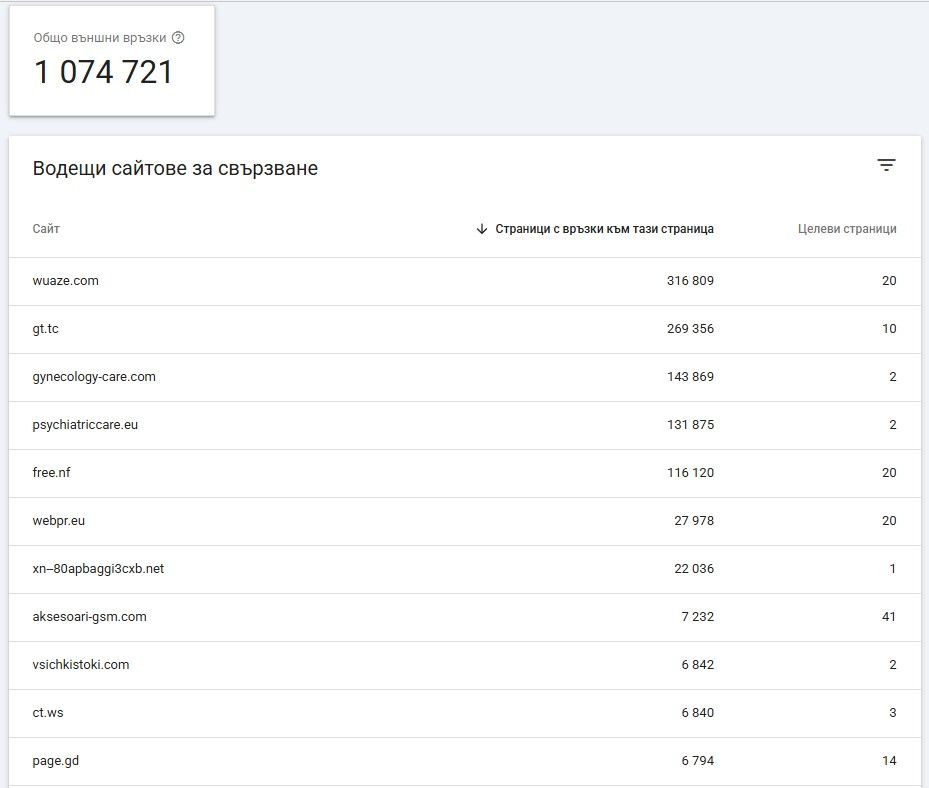
Backlinks may eventually appear in Google Search Console under the Links report, including referring pages and referring domains. However, Search Console does not display a ranking “priority” score for each domain, and it does not confirm that a particular backlink has transferred a specific amount of authority. The report is useful for monitoring discovery and the general shape of your link profile, not for proving that a link has a guaranteed SEO value.
This distinction matters because a link may be visible in Search Console without producing a measurable ranking improvement. Google evaluates many signals together, including relevance, page quality, internal linking, technical accessibility, competition, content usefulness, and the intent behind the search. A backlink can support discovery or referral traffic while having little direct effect on a competitive query.
When a link from a partner domain appears in Search Console, its presence confirms that Google has found and associated the link with your site. It does not mean that Google has assigned the referring domain a special priority, nor does it mean that the link will move a page to the first page of results. Use the data as evidence that the link is being observed, then compare it with broader performance data.
A sensible measurement routine includes:
- checking whether the referring page is indexed;
- checking whether the link is present and points to the intended destination;
- watching referral sessions in analytics;
- tracking impressions and clicks for the linked page in Search Console;
- comparing query groups before and after publication;
- reviewing whether the target page has improved internal links, content depth, and conversion paths.
Do not claim that every link is “reflected with the priority of its domain” in Search Console. That statement is not how the tool works. A more accurate explanation is that Search Console can show the referring domain and page after Google discovers the link, while the actual impact depends on relevance, quality, trust, and the wider SEO system.
Why the article and Partners link can work better together
An article creates context. A footer Partners link creates persistence. Used responsibly, the combination can give a website a more complete presence on the referring domain than a bare link placed in an isolated paragraph.
Imagine a software company publishing a practical article about choosing project management tools. The article links to a product comparison page and explains what readers should evaluate before buying. The footer link uses the company name and appears in the Partners section. The first link is tied to a subject and user need. The second communicates a broader relationship between the two websites. Neither placement guarantees a ranking gain, but together they can create more opportunities for discovery, brand recognition, and relevant referral visits.
Now compare that with a weak campaign. The publisher receives a generic 500-word article, the text contains three exact-match commercial anchors, the links point to unrelated pages, and the footer uses the same keyword as the article. The website publishes similar text for dozens of businesses. Search engines can ignore some or all of those signals, and users have no reason to trust the page.
Context is not decoration. It helps determine whether the link makes sense. A useful editorial article answers a question, explains a process, compares options, reports data, or offers a resource. It should have a clear page purpose and a logical next step for the reader.
Building a natural anchor text profile
Anchor text deserves planning, but not mechanical repetition. A natural backlink profile normally includes a mixture of brand names, URLs, generic references, partial matches, and descriptive phrases. The exact distribution varies by industry and by how a brand earns links organically.
For a website called Example, a reasonable campaign might use:
- Example;
- Example’s technical SEO resources;
- the company’s website;
- a guide to crawlability;
- this internal audit checklist.
That does not mean every anchor should be random. The words should accurately describe the destination and fit the sentence. If the linked page is a service page, “technical SEO consulting” may be natural in one article, while “learn more about our technical SEO process” may suit another. Repeating the same anchor across every placement is the mistake.
Links to your home page can build brand visibility, but a campaign may also support a carefully selected landing page or category page. Choose destinations that are indexable, useful, fast enough for users, and connected to the rest of your site through internal links. Sending every backlink to the homepage often wastes the opportunity to strengthen pages that already match a valuable search intent.
Choosing the right destination page
A backlink cannot repair a weak destination page. If visitors arrive at a thin service page with no proof, unclear pricing, poor navigation, or a mismatch with the article, referral traffic will not convert and user signals may be disappointing.
Before submitting an article, review the target page through four questions:
- Does the page answer the intent implied by the anchor text?
- Does it provide enough depth for the topic and funnel stage?
- Can users understand the offer within a few seconds?
- Does the page lead naturally toward an enquiry, purchase, signup, or next useful resource?
For an informational article, a guide or research page is often the most credible destination. For a commercial article, a relevant category or service page may be appropriate. Do not force a sales page into an educational paragraph if a useful guide would be a better first step. Link building is more effective when it supports the reader journey from awareness to consideration and, where appropriate, conversion.
How to select a suitable partner website
Use a short due-diligence checklist before choosing a placement. A site can have a displayed Domain Rating and still be a poor fit. Open several recent pages and inspect:
- whether the content is original or obviously spun;
- whether articles are grouped into coherent categories;
- whether authors, contact details, and editorial information are available;
- whether the website loads reliably and works on mobile devices;
- whether the domain has a stable publishing history;
- whether outbound links are excessive, irrelevant, or commercial in every paragraph;
- whether the site appears indexed for its stated market;
- whether the article will be placed on a page that users can find through navigation or search.
Look beyond the homepage. A polished homepage can hide category pages filled with unrelated guest posts. Review the actual section where your article will appear. Search the domain with site queries, inspect the latest publications, and examine the outgoing link pattern in Ahrefs or another independent tool.
The selected categories in this campaign include Bulgarian, international, and UK-oriented options. That can be useful for an international SEO strategy, but country targeting should match the landing page language, business availability, currency, shipping, and customer support. A UK placement pointing to a page written for Bulgarian customers may create a weak user experience even if the domain is technically available for Google.co.uk.
What makes a guest post useful rather than hollow
A useful guest post begins with an angle. It might explain a practical workflow, interpret original data, compare two approaches, document a real project, or answer a question that the host site’s readers already ask. The link should be a consequence of the explanation, not the reason the article exists.
For example, a weak outreach message says: “We can provide a high-quality SEO article with a dofollow backlink. Please send your price.” It says nothing about the audience, topic, expertise, or value of the proposed content.
A stronger message says: “Your readers have several articles about ecommerce growth, but the section on category-page optimization does not cover faceted navigation. We can provide an original guide with examples of crawl traps, internal linking decisions, and measurement in Search Console. The article would reference a practical resource on our site where the examples are documented.”
The second message gives the editor a reason to care. It also makes the intended link easier to assess. Even when using a paid submission platform rather than direct outreach, apply the same editorial standard to the article.
Risk management: where link campaigns go wrong
Massive volume is not a strategy. Buying hundreds of placements from loosely related sites can create a detectable pattern, waste budget, and leave you with a profile full of links that no one would choose editorially. A smaller set of relevant placements supported by strong content is easier to review and more defensible.
Mass publication and repeated footprints
When identical or lightly rewritten articles appear across many domains, the campaign may look manufactured. Avoid publishing the same copy everywhere. Adapt the topic, examples, title, introduction, and destination to the selected website and its readers.
Exact-match anchors
Exact-match commercial anchors can be useful in moderation, but repeated use creates an unnatural profile. Prefer brand and partial-match anchors, especially for paid placements. The wording should read naturally even if the link were removed.
Unrelated domains
A link from a website that has no connection to your market is difficult to justify. Geographic relevance can help, but it is not the same as topical relevance. A Bulgarian business may benefit from a Bulgarian publication, yet an article about medical equipment should still appear in a context where that topic makes sense.
Low-quality articles
Thin text, generic introductions, keyword stuffing, and unsupported claims reduce trust. They also waste the opportunity to earn referral visits. Include practical examples, clear explanations, original observations, and a useful structure. A reader should be able to learn something without clicking the backlink.
Footer overuse
A Partners link can be useful, but sitewide placement should not be treated as a shortcut to authority. Use a clear brand anchor, confirm where the link appears, and monitor whether the publisher changes the placement. If the site becomes overloaded with unrelated partner links, reassess the relationship rather than automatically renewing.
Do you need to disavow every suspicious link?
No. A strange link in a backlink report is not automatically harmful, and most site owners should not use the disavow tool as routine maintenance. First identify whether there is a manual action, a clear pattern of manipulative links created by your own campaign, or an unusual attack that cannot be addressed through removal.
If you purchased a placement, keep an internal record of the domain, URL, anchor, publication date, destination, payment, and renewal status. If a placement becomes problematic, request removal or modification from the publisher. Disavow should be considered only in the narrow situations where it is genuinely necessary and where you understand the risk of excluding legitimate links.
Technical checks before and after publication
Technical details determine whether a good article is actually accessible. Before payment, check that the selected site is reachable, uses HTTPS where expected, and does not block normal crawling through accidental robots directives. After publication, inspect the live URL and confirm:
- the article is available at a stable address;
- the intended link points to the correct URL;
- the anchor text has not been changed into a raw URL or irrelevant phrase;
- the page is linked from an accessible category, archive, or sitemap;
- the link has not been placed inside a broken widget or hidden element;
- the article remains readable on mobile devices;
- the optional Partners link appears in the agreed footer section.
Remember that indexing is not immediate or guaranteed. A published URL may take time to be crawled, and a page may remain excluded if the site has technical or quality problems. Search Console can help you inspect your own site’s discovered links and performance, but it cannot force Google to count a link or reveal the precise weight assigned to it.
Publication timing, duration, and renewal
Articles and selected links are normally added within a few hours after successful payment. The placement remains active for one year from publication. At the end of that period, you can renew the placement if the domain still meets your quality, relevance, and business requirements.
Renewal should be a review point, not an automatic subscription. Recheck the site’s indexing, outbound link profile, editorial consistency, traffic, and technical health. A domain that was suitable at the beginning of the campaign may later be filled with unrelated content or lose its audience. Keep the placement only if it continues to serve a reasonable SEO or referral purpose.
Recommended workflow for marketers and agencies
Agencies managing several campaigns can make the process more reliable with a simple approval workflow:
- Define the country, language, audience, page purpose, and target funnel stage.
- Choose a shortlist of partner websites rather than selecting the first available domain.
- Verify Domain Rating and inspect the live site independently.
- Map one primary destination page and one backup destination page.
- Prepare an original article with a clear angle and no unnecessary link stuffing.
- Use a natural anchor that describes the destination accurately.
- Decide whether the footer Partners placement adds legitimate value.
- Submit the article, image, website URL, email address, and selected links.
- Confirm payment and monitor email, including the Spam or Junk folder.
- Audit the published page and record the one-year renewal date.
- Measure referral visits, impressions, clicks, conversions, and relevant query movement.
For the best performance of the submission tool, use Google Chrome or Microsoft Edge. A current, supported browser generally handles forms, image uploads, payment redirects, and confirmation steps more reliably. Prepare an image between 600 x 350 and 1200 x 700 pixels in JPG, PNG, or WebP format. The image should belong to the article and should not be used as a disguised link container.
How to judge results without overclaiming
SEO results rarely arrive as a clean before-and-after line caused by one backlink. Rankings can change because competitors update pages, Google changes its systems, seasonality shifts demand, or your own content and internal links improve at the same time.
Set realistic expectations. A placement may help Google discover a new URL, generate referral traffic, diversify your backlink profile, support brand mentions, or contribute to a page’s broader authority signals. It may not move the target keyword at all. That does not make every placement useless, but it does mean that reporting should distinguish between publication, link discovery, traffic, visibility, and ranking impact.
Use a campaign dashboard with fields for:
- partner domain and market;
- published article URL;
- target URL;
- anchor text;
- contextual or footer placement;
- publication date and expiry date;
- indexing status;
- referral sessions and conversions;
- Search Console impressions, clicks, and average position;
- notes about quality, relevance, and renewal decision.
This makes it easier to identify placements that produce genuine value and remove those that exist only as rows in a spreadsheet.
A practical example of a balanced campaign
Suppose a new ecommerce site sells specialized equipment and wants visibility in English and Bulgarian search markets. Instead of buying ten identical articles, the marketing team selects one Bulgarian-oriented placement, one international placement, and one UK-oriented placement after reviewing each domain.
The first article explains how buyers compare equipment specifications. It links to a detailed buying guide with a branded anchor. The second article presents a maintenance checklist and links to a relevant product category with a partial-match anchor. The third article discusses procurement questions for UK customers and links to a localized landing page. A footer Partners link uses the brand name rather than a repeated product keyword.
The team then checks whether each page is indexed, monitors referral traffic, and compares query groups over several weeks. If one article attracts visitors while another receives no impressions and sits on a poorly maintained domain, the next budget goes toward the useful placement rather than toward repeating the same order.
That is the practical difference between link acquisition and link building. Acquisition is the act of placing a URL. Link building is the broader process of earning relevance, trust, visibility, and useful pathways through content and relationships.
Who can use this service
The service is suitable for businesses seeking additional online visibility, SEO specialists building diversified backlink profiles, website owners promoting products or services, and agencies managing international campaigns. It can be particularly convenient for teams that need a straightforward submission process without negotiating separately with every publisher.
It is less suitable for anyone expecting a guaranteed ranking increase from a single paid link. It should not replace technical SEO, useful content, internal architecture, digital PR, brand development, or conversion optimization. A backlink is one supporting asset in the system, not a substitute for a page that fails to satisfy its search intent.
Final checklist before submitting
- Is the selected website relevant to the intended country, language, or audience?
- Have you checked the actual domain independently rather than relying only on its displayed metric?
- Is the article original, readable, and useful without the link?
- Are there no more than three links in the article?
- Do the anchor texts sound natural and describe the destinations accurately?
- Are the target pages indexable, relevant, and ready to receive visitors?
- Would a branded footer Partners link make sense for the relationship?
- Have you prepared an image in the required dimensions and format?
- Have you recorded the publication date and one-year renewal date?
- Will you measure traffic and Search Console data without claiming guaranteed authority transfer?
For questions about the submission process or technical issues, contact [email protected]. A carefully selected article, a relevant destination, restrained anchor text, and a transparent review process provide a much stronger foundation than a large collection of random links. The goal is not to make a backlink exist. The goal is to make the mention credible enough to help users, fit the referring website, and support the rest of your SEO work.
Полезни връзки

Frequently Asked Questions
- How many links can an article contain?
You can add up to three links to the submitted article. Each link and its anchor text counts toward the limit, so use only destinations that genuinely support the article. - Can I add a link in the website footer?
After selecting an eligible website, an optional footer placement may appear. The link is placed in the dedicated Partners section and is separate from the contextual article links. - Will the backlink guarantee higher Google rankings?
No. A backlink may support relevance, discovery, referral traffic, and profile diversification, but no placement can guarantee a ranking improvement. - Does Search Console show the priority of the referring domain?
No. Search Console may show discovered referring pages and domains, but it does not display a priority score or confirm how much ranking value Google assigns to a specific backlink. - How long does publication usually take?
Publication normally takes place within a few hours after successful payment, although crawling and indexing by search engines may take longer. - How long does the placement remain active?
The article and backlink placement remain active for one year from the publication date. Renewal is available after that period if the placement remains suitable. - Can I use a full URL as the anchor text?
It is better to use proper branded or descriptive anchor text. A raw URL may be counted differently by the submission form and usually creates a less natural reading experience. - How should I choose between the available websites?
Compare the target market, language, topical fit, publishing quality, indexing, outbound link profile, and independently verified metrics. Price and Domain Rating alone are not enough. - Do I need to disavow every unfamiliar backlink?
No. Disavow is not routine backlink cleanup. Consider removal or disavow only when there is a clear, serious pattern of manipulative links or a relevant manual action. - What image can I upload?
Use an original or properly licensed image between 600 x 350 and 1200 x 700 pixels. JPG, PNG, and WebP formats are recommended.
Intended for:
- This service is useful for businesses that want relevant editorial exposure, SEO professionals building a more diversified backlink profile, website owners promoting products, services, landing pages, or useful resources, and agencies coordinating campaigns across English, Bulgarian, UK, and other international markets
- It is best suited to teams that can provide original content, choose realistic destination pages, and evaluate results through traffic, visibility, indexing, and conversions rather than relying on a single third-party metric
Useful practices
- Choose the partner domain according to audience, market, language, and topical relevance.
- Verify Domain Rating and inspect the live website independently before ordering.
- Write a genuinely useful article with a specific angle, practical examples, and a clear reader benefit.
- Use no more than three links and avoid filling every paragraph with commercial anchors.
- Mix branded, partial-match, descriptive, and naturally phrased anchors across the campaign.
- Use the footer Partners placement with a branded anchor and only when the relationship is credible.
- Check the published URL, link destination, indexability, category placement, and mobile rendering.
- Track referring domains, referral visits, Search Console discovery, impressions, clicks, and conversions separately.
- Do not interpret a Search Console link report as proof of domain priority or guaranteed authority transfer.
- Review each placement before renewal and remove or avoid domains that become irrelevant, overloaded, or technically unreliable.
- Keep a record of publication dates, target URLs, anchors, payment details, and the one-year expiry date.
- Use Google Chrome or Microsoft Edge for smoother form completion, image uploads, and payment steps.