

When I started working on my website’s SEO, I already had useful content, well-structured service pages, and a reasonable technical foundation. What I lacked was external trust. My backlink profile was thin, and the site struggled to compete with established domains in the same niche. This is the practical process I used to build a more balanced link profile, improve visibility, and avoid the shortcuts that usually create more risk than value.
The problem was not the content alone
My first assumption was that better content would eventually solve everything. That assumption was only partly correct. The website had pages that answered real questions, explained services clearly, and covered the basic technical requirements. The site was crawlable, the main pages were accessible, and the internal linking was not completely neglected.
Still, rankings were inconsistent. Some pages appeared for long-tail searches, but they rarely moved into positions that generated meaningful traffic. A few service pages reached the second or third page of Google and stayed there for months. The pages were not terrible. They simply lacked the external signals that helped search engines understand how the site compared with more established competitors.
This is where many website owners become frustrated. They publish five more articles, rewrite the same title several times, or add another paragraph to a service page without asking what the page is actually missing. In my case, the missing element was not another generic blog post. It was a stronger overall website profile supported by relevant references from other websites.
„`html
„`
That did not mean I needed hundreds of links. It meant I needed better links, better context, and a more natural distribution of referring domains. A backlink from a real website that publishes related content can be more useful than a large number of links from websites created only to sell placements.
What I tried before building a proper process
Before I had a clear method, I tested several common approaches. Some seemed inexpensive and convenient, but the quality was difficult to verify.
- Business directories with no clear editorial standards.
- Reciprocal link exchanges where both websites linked to each other without a genuine reason.
- Article offers that provided no information about the publishing site.
- Packages promising a large number of backlinks in a very short period.
- Pages with dozens of unrelated outbound links and almost no useful content.
The biggest problem was uncertainty. I often did not know whether the page would be indexed, where the link would appear, whether the article would remain online, or whether the domain had a real audience. A high-looking metric was not enough to answer those questions.
A weak outreach message usually looked like this: “Hello, I have an article. Please publish it with two dofollow links. What is your lowest price?” That approach treats every website as a container for a link. It says nothing about the readers, the subject, the proposed angle, or the value of the article. Unsurprisingly, the replies were either expensive, vague, or focused entirely on payment.
I also saw the opposite problem. Some websites accepted almost anything. Their pages contained articles about finance, pets, construction, software, health, gambling, and travel, all mixed together. Every post had commercial anchors, and the site had no clear editorial identity. A link from such a page might exist, but its context was weak and its long-term value was questionable.
That experience pushed me toward a more controlled approach. I wanted to review the available websites before ordering a placement and decide whether each one made sense for my business.
Why I chose a more transparent publishing workflow
I began using a page dedicated to publishing articles and building quality backlinks. The practical advantage was not simply that it offered placements. The useful part was being able to inspect the available sites and compare them before making a decision.
For each potential publishing site, I looked at information such as its Domain Rating, target market, language, and publication price. That made the process less blind. I could reject a domain that looked strong on paper but had no connection with my audience, and I could consider a smaller site if its content and market were a much better match.
This distinction matters because SEO metrics are filters, not guarantees. Domain Rating can help estimate the strength of a backlink profile, but it does not prove that a specific page has editorial value. I used the Ahrefs Website Authority Checker to compare domains independently, but I did not treat the number as the final decision-maker.
A site with a moderate authority score and a clear topical focus may be a better fit than a site with a higher score and a completely unrelated audience. For example, a backlink from a marketing publication to an SEO service page has an understandable connection. A backlink from a random entertainment blog to the same page may look artificial, even if the domain has stronger general metrics.
How I evaluated a potential publishing site
I used a simple review process before selecting a domain. It was not perfect, but it helped me avoid the most obvious mistakes.
Topical relevance
First, I checked whether the website had a clear relationship with my subject. The connection did not need to be identical, but it had to be defensible from a reader’s perspective.
A marketing website may naturally publish content about SEO, content strategy, analytics, web development, or online growth. A business publication may also be relevant if the article explains how companies can improve their digital visibility. The connection becomes much weaker when the same placement appears on a site with no meaningful relationship to the topic.
I asked a simple question: would a real reader understand why this article is published here? If the answer was no, the backlink was probably being forced.
Language and search market
Language was another practical consideration. A website targeting one country or language does not automatically provide the same value for every other market. I checked whether the publishing site’s audience, content, and search visibility matched the location I wanted to reach.
This was particularly useful for local and multilingual projects. A backlink from a site that reaches the same language market can support relevance more naturally than a random international domain. It is not a strict rule that every backlink must come from the same country, but a link profile made entirely of unrelated international sites can look disconnected from the business it is supposed to support.
Indexation and content quality
I reviewed recent articles to see whether the pages were accessible and appeared to be indexed. I also looked at the quality of the writing. Were the posts written for people, or were they thin pages created around anchors?
Several warning signs were easy to spot:
- Articles with almost identical introductions.
- Pages containing multiple unrelated commercial links.
- Very short posts with no clear purpose.
- Excessive use of exact-match keywords.
- Broken images, poor formatting, and outdated content.
- Large numbers of posts published with no visible editorial selection.
A website does not become authoritative merely because it has many articles. If the articles are empty, repetitive, or obviously written to sell links, the domain may have little ability to transfer trust.
Placement context
The location of a link mattered to me. A contextual link inside a paragraph that genuinely discusses the subject is usually more natural than a link placed in a list of unrelated sponsors. The surrounding text should explain why the linked page is worth visiting.
For example, a paragraph about evaluating an SEO provider could naturally reference a guide about checking domain authority. A paragraph about content distribution could mention a useful resource for publishing expert articles. The link works because the reader has a reason to click it, not because the anchor was inserted into an unrelated sentence.
How I prepared the first article
Once I had selected a suitable site, I did not reuse an old article or submit a lightly edited version of a post already published elsewhere. I prepared a unique article with its own angle, structure, examples, and conclusion.
The goal was to make the article useful even if nobody clicked the backlink. That test is revealing. If the article has no value without the link, it is probably not strong enough to publish. A good guest post or sponsored editorial should fit the host website, answer a real question, and give readers something they can apply.
I usually started with the reader’s problem rather than the keyword. Instead of writing “Best SEO backlinks” as a generic topic, I might focus on how to evaluate a backlink opportunity, how to avoid irrelevant placements, or how to balance authority with topical relevance. These angles create more room for practical information and make the article less promotional.
Each article had a clear page purpose. Some were designed to educate readers at the awareness stage. Others supported commercial consideration by explaining how a service worked. I avoided turning an informational post into a sales page. That mismatch is one of the main reasons sponsored content feels artificial.
How I used the available links
The publishing option allowed up to three links in one article. I treated that as a limit, not a target. Adding three links simply because three were available would have made some articles look commercial and over-optimized.
When three links made sense, I distributed them across different destinations:
- The homepage, when the brand itself was relevant to the paragraph.
- A core service page connected to the article’s subject.
- A useful internal resource that explained the topic in more depth.
This distribution supported a more balanced profile. Sending every external link to the homepage can make a campaign look disconnected from the pages that actually need authority. Sending every link to one money page with the same exact-match anchor can create a different problem – an unnatural anchor pattern and an obvious commercial intent.
I preferred branded anchors, plain URLs, descriptive phrases, and partial-match anchors. Exact-match commercial anchors were used rarely, if at all. An anchor such as “learn more about technical SEO audits” can be natural in a useful paragraph. Repeating an exact phrase like “best SEO agency” across many publications is much harder to justify.
Examples of natural and weak anchors
A natural anchor describes the destination without forcing a keyword into an awkward sentence. Examples include:
- the full name of the company;
- this technical SEO guide;
- an overview of the service;
- the complete checklist;
- visit the resource.
A weak anchor often looks like a phrase written for an algorithm rather than a reader. Examples include a repeated commercial keyword, a long string of exact-match terms, or several anchors in one paragraph that all point to different sales pages.
I also checked the sentence before and after every link. If removing the link made the paragraph read better, the placement needed to be rewritten. Context is not decoration. It is part of the reason the link exists.
The additional Partners placement
After choosing a site, I also had the option to add a link in the site’s footer through a dedicated Partners section. This type of placement is different from a contextual editorial link and should be evaluated differently.
A footer link that appears across many pages can provide visibility, but it does not have the same contextual strength as a link inside a relevant article. I therefore treated it as a supplementary placement rather than a replacement for useful content.
The combination worked best when the article explained the relationship between the sites and the Partners section provided a simple additional reference. It made less sense when the footer contained a long list of unrelated businesses or when the link was the only reason for the entire publication.
Sitewide links also require caution. If a partner link appears on hundreds of pages, search engines may interpret the repeated links differently from a single editorial reference. The anchor should be branded or neutral, and the placement should not be used to push an exact-match keyword across the entire site.
In my case, the publication and the additional partner placement were active for a defined period and could be renewed later. That made it possible to review whether the placement remained useful rather than assuming that every link should stay permanently.
Why buying many links at once was not my strategy
At one point, I considered ordering a large package because the price per link looked attractive. The problem was that volume would have forced me to accept sites I would not have selected individually.
Rapid growth from dozens of similar publications can create an unnatural pattern. The referring domains may have similar page layouts, similar article lengths, similar anchor text, and similar publication dates. Even when each link is technically live, the profile can look manufactured.
A gradual process gave me room to evaluate the results and improve the next campaign. I could see which topics attracted impressions, which pages received referral visits, and whether the new referring domains added useful diversity. I could also stop when the available opportunities no longer met my quality standards.
More backlinks do not automatically mean better SEO. A website with 500 weak links may be less competitive than a website with 50 relevant links from real publications, industry resources, and editorial pages. Quantity can be useful at scale only when quality control remains consistent.
How backlink building worked with the rest of SEO
Link building was not a substitute for fixing the website. Before investing in external placements, I reviewed the pages that would receive authority.
Content depth and search intent
A backlink cannot rescue a page that does not satisfy the query. I checked whether each target page matched the expected search intent. Informational searches needed clear explanations and useful examples. Commercial searches needed transparent service information, proof, process details, and a direct next step.
I expanded weak pages where necessary, but I did not add text simply to reach a word count. Content depth came from answering follow-up questions, clarifying limitations, comparing alternatives, and showing how the service worked in practice.
Internal linking
External links brought authority into the site, but internal links helped distribute and organize it. I connected supporting articles with relevant category and service pages. The links used descriptive language and appeared where the reader would naturally need more information.
For example, a blog article about SEO planning could link to a service page for technical audits and another guide about the time required to reach the first page of Google. That structure helps users move through the funnel and gives search engines clearer signals about the relationship between pages.
Technical SEO
I also checked indexation, canonical settings, redirects, page speed, mobile rendering, broken links, and sitemap coverage. A new backlink has limited practical value if the target URL returns an error, is blocked from crawling, or is replaced by a different canonical page.
Technical problems often hide behind attractive link reports. A campaign may show new referring domains while the linked page remains excluded from the index. That is why I reviewed the target URLs directly instead of assuming that a live backlink guaranteed a ranking improvement.
Brand and conversion intent
Some pages needed authority, but they also needed to convert visitors. I improved the clarity of service descriptions, added relevant evidence, simplified contact forms, and made calls to action easier to find.
Ranking improvements are not enough if visitors do not trust the business or understand what happens next. A backlink campaign should support the entire journey – discovery, evaluation, and conversion – rather than focus only on a position report.
What results I noticed
I did not expect the website to reach the top position overnight. SEO does not work that way, regardless of what someone with a sports car in their profile photo promises in a sales message.
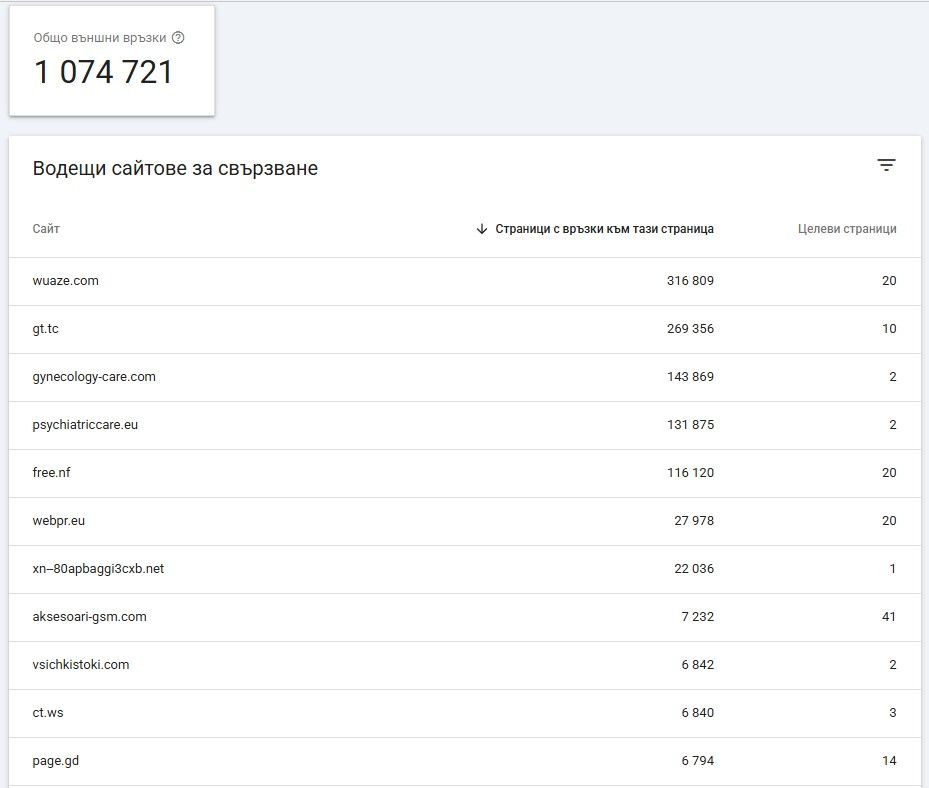
The first changes were not always ranking changes. I noticed that more pages were being discovered by external tools, the number of referring domains became more diverse, and some target pages appeared more consistently for relevant queries. Search Console impressions increased for several topics, although the progress was uneven.
Over time, I observed several useful signals:
- More external links pointing to the website.
- A broader distribution of referring domains.
- More frequent discovery of newly published pages.
- Higher impressions for selected commercial and informational queries.
- Improved positions for several terms that had previously remained stagnant.
- More organic visits to service pages and supporting articles.
- Additional enquiries from visitors who had found the site through search.
I would not attribute every improvement to backlinks. During the same period, I improved existing content, added internal links, corrected technical issues, and clarified page titles and descriptions. Google rankings are influenced by many connected factors, and isolating one variable is rarely possible in a live project.
The backlinks were still an important part of the improvement because they strengthened the external side of the website’s profile. They helped the site compete more credibly for queries where the content was already relevant but the domain lacked authority signals.
How I measured whether a placement was useful
I used several types of data rather than relying on one third-party metric.
- Whether the publishing page was accessible and remained live.
- Whether the page was indexed or at least discoverable through normal crawling.
- Whether the link pointed to the intended URL.
- Whether the anchor text looked natural in context.
- Whether the referring site generated referral visits.
- Whether impressions changed for the linked page.
- Whether rankings improved for a relevant group of queries.
- Whether the page contributed to enquiries or other business actions.
Referral traffic was not the only measure of success. Some high-quality industry links send very few direct visitors but still make sense as references. At the same time, a link that produces no traffic, no relevance, and no credible editorial context is difficult to defend simply because it is live.
I documented each placement in a spreadsheet with the domain, URL, publication date, target page, anchor, topic, cost, and follow-up observations. This prevented me from repeating the same anchor or targeting the same page too frequently.
Why subdomains should be evaluated separately
Some publishing networks may include websites operating on subdomains. I did not automatically reject them. A subdomain can function as a genuine independent site with its own content, indexation, backlinks, audience, and search visibility.
At the same time, a subdomain does not automatically inherit the full ranking strength of the root domain. Its value depends on what has been built on that subdomain. I checked whether it had a clear purpose, unique content, indexed pages, and a history that looked legitimate.
For site owners managing several subdomains, a correctly configured Domain property in Google Search Console can provide a unified view of the domain, protocols, and subdomains. That makes monitoring easier and helps identify indexation or performance issues across the broader structure.
A Domain property is useful for oversight, but it does not merge the ranking signals of every subdomain into one automatic authority pool. Each subdomain still needs to earn trust through its own content, technical quality, links, and user value.
I used the following checks when reviewing a subdomain:
- Are important pages indexed?
- Does the subdomain have a clear topic or audience?
- Are there genuine internal and external links?
- Does the content look maintained?
- Are articles written for readers rather than only for placements?
- Does the site have signs of real search visibility?
A subdomain with a coherent purpose can be a reasonable publishing environment. A subdomain filled with thin articles and unrelated commercial links is still a weak opportunity, regardless of how professional the root domain looks.
What made a guest post useful instead of empty
A useful guest post starts with a subject that belongs on the host website. It has a specific reader, a clear angle, original examples, and a conclusion that does not suddenly become a sales pitch.
For example, an article about evaluating SEO suppliers could explain how to review case studies, identify vague promises, check reporting practices, and compare technical deliverables. A relevant link to an SEO resource can then support the explanation. The article remains valuable even for readers who never visit the linked site.
An empty guest post often follows a different pattern. The title contains a broad keyword, the introduction repeats that keyword several times, the body contains generic definitions, and the final paragraph says that the linked company is the best solution. There is no data, no experience, no original point, and no reason for the host site’s audience to read it.
That type of article may pass an initial publishing check, but it contributes little to topical authority or brand trust. It can also make the backlink campaign easier to recognize as artificial.
How I avoided risky anchor text patterns
Anchor text was one of the areas where I made the most deliberate changes. My early links were too focused on target keywords. The profile looked more commercial than a normal brand’s profile should look.
I corrected that by using a mixture of:
- Branded anchors.
- Brand plus service phrases.
- Partial-match descriptive anchors.
- Natural language such as “this guide” or “the full resource.”
- Plain URL anchors where they fit the format.
The exact distribution depends on the brand, industry, and existing profile. There is no universal percentage that makes an anchor profile safe. The sensible question is whether the profile resembles how independent writers would naturally reference the website.
I avoided forcing a phrase into a sentence just because it matched a keyword target. If the phrase sounded unnatural when read aloud, I changed it. Readers notice awkward anchors, and search engines do not need every link to repeat the same target phrase.
What I did when a link looked suspicious
Not every unwanted backlink requires an immediate disavowal. Websites collect strange links naturally through scrapers, spam pages, old campaigns, and automated systems. Removing or disavowing links without a clear reason can create unnecessary work and may not solve the underlying issue.
I first separated ordinary low-quality noise from links connected to a deliberate manipulative campaign. I looked for patterns such as thousands of similar domains, repeated exact-match anchors, hacked pages, malware warnings, or a history of aggressive link schemes.
When a paid placement did not meet expectations, I contacted the publisher and asked for a correction or removal if appropriate. I kept records of the communication and the URLs involved. Disavowal was considered only when there was a serious, well-documented reason and the links could not be removed through normal channels.
The broader lesson was simple: risk management is better than panic. A backlink audit should lead to a reasoned decision, not an automatic reaction to every low authority score.
How I use the platform now
My current approach is slower and more selective than the way I started. I do not buy dozens of random links at once. I choose sites that fit the subject, prepare articles with a real reader benefit, and spread placements over time.
Before submitting an article, I confirm that:
- The topic fits the host site’s audience.
- The article is original and not a lightly rewritten duplicate.
- The target page satisfies the search intent behind its main queries.
- The number of links is justified by the text.
- The anchors are varied and readable.
- The landing pages are indexable and technically accessible.
- The publication does not look like part of a mass-generated link pattern.
After publication, I check the live page, test every link, review the formatting, and record the placement. I then monitor the target page in Search Console and analytics. I do not expect an immediate ranking jump, but I do look for changes in impressions, query coverage, referral visits, and conversions over a reasonable period.
This workflow also helps me identify which topics deserve more investment. If an article about technical SEO earns impressions and referral visits, it may support a deeper guide or a dedicated service page. If a placement receives no engagement and the topic feels disconnected, I do not repeat the same approach simply because the link was published.
The mistakes I would avoid if starting again
If I were building the profile from the beginning, I would make several decisions earlier.
I would not select domains by metric alone
A strong authority score cannot compensate for irrelevant content, poor indexation, or a website that sells every type of link. Metrics are useful for comparison, but they need to be combined with manual review.
I would not publish generic articles
Generic content creates weak placements. I would begin with a clear audience problem and add original examples, process details, or data wherever possible. A smaller but genuinely useful article is better than a long post written only to create space around an anchor.
I would not use the same anchor repeatedly
Repeated exact-match anchors can make a campaign look engineered. A natural profile usually contains brand references, descriptive phrases, URLs, and varied language.
I would not point every link to the homepage
The homepage is often the natural destination for brand references, but service pages and genuinely useful resources may need support too. The destination should follow the context of the article.
I would not ignore internal architecture
External links cannot fix a site where important pages are buried, orphaned, or poorly connected. I would plan internal links before starting outreach so that new authority has somewhere useful to flow.
I would not promise results from backlinks alone
Ranking depends on competition, content quality, technical health, intent matching, brand strength, and many other factors. A responsible campaign reports what changed without claiming that one placement caused every improvement.
My conclusion
Building a strong backlink profile was not a matter of finding the cheapest package or collecting the largest possible number of URLs. The progress came from combining relevant publishing sites, useful content, varied anchors, sensible target pages, and consistent monitoring.
The publishing platform gave me a more practical way to review available domains and place articles without negotiating separately with every website owner. The visible domain information, language and market details, contextual link options, additional Partners placement, and defined publication period made the process easier to manage.
That convenience still requires judgment. I reviewed each site, avoided obvious link farms, rejected irrelevant opportunities, and treated authority metrics as one part of the decision. I also kept improving the pages that received links, because a backlink has more value when it points to content that deserves to rank.
The result was a more diverse referring domain profile, stronger visibility for selected pages, and a better foundation for ongoing SEO work. I cannot claim that every ranking improvement came from backlinks. That would be inaccurate. The gains came from the combined effect of content improvements, internal linking, technical work, better page purpose, and external references.
For website owners considering the same approach, my advice is to start with relevance and quality control. Publish fewer articles if necessary, but make each one useful. Use anchors that sound normal. Spread links across appropriate pages. Review subdomains independently. Track indexation, impressions, rankings, referral visits, and enquiries.
A backlink should not merely exist. It should make sense in its environment, support a real reader, and fit the wider authority and conversion strategy of the website.
Explore publishing opportunities and build quality backlinks
Frequently Asked Questions
How many backlinks do I need to improve my rankings?
There is no reliable universal number. A small set of relevant links from real websites can be more useful than hundreds of low-quality placements. The right target depends on competition, content quality, site history, and the strength of competing pages.
Is a high Domain Rating enough to justify a backlink?
No. Domain Rating is a comparative third-party metric, not a guarantee of editorial quality or ranking value. Review topical relevance, indexation, content quality, outbound link patterns, traffic, and the context of the proposed placement.
Should every backlink use my main target keyword?
No. A natural profile usually includes branded anchors, partial matches, descriptive phrases, plain URLs, and neutral language. Repeating the same exact-match commercial anchor can create an unnatural pattern.
Are links from subdomains useful?
They can be useful when the subdomain is a genuine, maintained website with relevant content and independent visibility. A subdomain does not automatically inherit the full authority of its root domain, so it should be evaluated on its own signals.
How long does it take to see results from a new backlink?
Timing varies. The page must be crawled and indexed, and ranking systems need time to reassess the broader set of signals. Monitor changes over weeks and months rather than expecting an overnight result.
Should I disavow every low-quality backlink?
No. Many websites naturally collect irrelevant or low-quality links. Consider disavowal only in serious, well-documented cases involving manipulative patterns or links that cannot be removed, rather than reacting to every weak metric.
What makes a guest post valuable?
A valuable guest post fits the host site’s audience, answers a specific question, contains original insight, and remains useful without the backlink. A thin article written only to surround an anchor offers little editorial or business value.
Intended for:
- Website owners who have useful content but a weak or undeveloped backlink profile.
- SEO specialists planning a cautious link building campaign.
- Small businesses competing against older and more authoritative domains.
- Content marketers who need to create useful guest posts and editorial placements.
- Marketing managers comparing publishing platforms, domains, and backlink opportunities.
- Businesses managing multilingual sites or websites with relevant subdomains.
Useful practices
- Review topical relevance before checking authority metrics.
- Use third-party tools such as the Ahrefs Website Authority Checker as comparison tools, not as final quality judgments.
- Check whether recent articles are indexed, readable, maintained, and connected to a clear audience.
- Prepare original articles with a specific angle, practical examples, and a purpose that matches the host website.
- Use varied anchors, including branded, partial-match, descriptive, neutral, and plain URL formats.
- Distribute external links across the homepage, relevant service pages, and useful supporting resources where the context justifies it.
- Review the target URL for indexation, canonical settings, redirects, mobile usability, and crawlability before publishing.
- Use internal links to connect externally supported articles with important category, service, and conversion pages.
- Treat footer or Partners links as supplementary placements rather than substitutes for contextual editorial references.
- Evaluate subdomains independently by reviewing their content, history, indexation, audience, and referring domains.
- Record every placement, target URL, anchor, domain, cost, publication date, and follow-up result in a tracking sheet.
- Monitor Search Console impressions, queries, clicks, rankings, referral traffic, and conversions after publication.
- Stop placements that show obvious signs of a link farm, unrelated content, mass publishing, or repeated commercial anchor patterns.
