
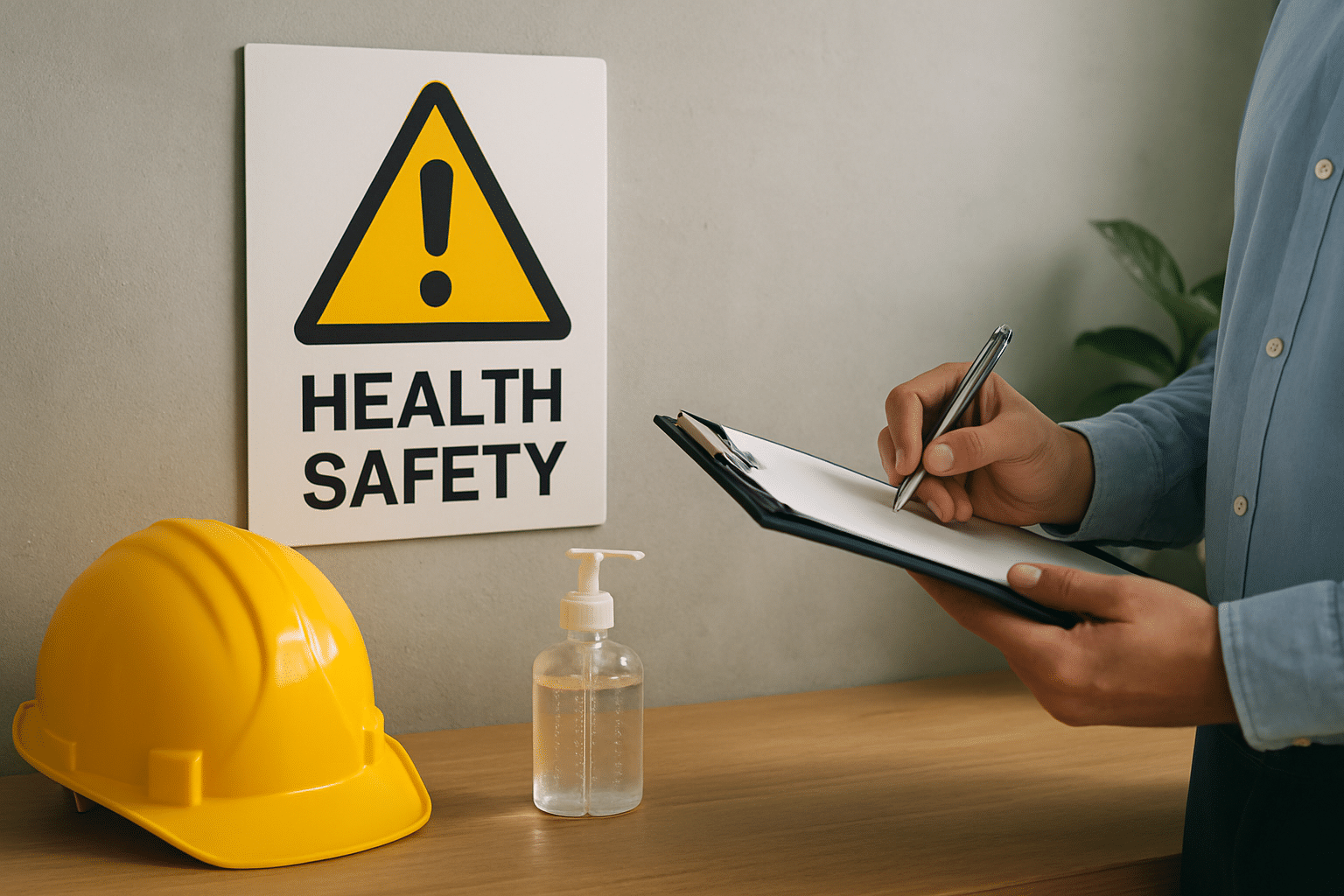
Health and safety compliance is more than a folder of policies. It is the practical system that protects your people, reduces operational risk and helps your business qualify for better contracts. With tailored documentation, clear procedures and regular reviews, compliance can support growth instead of becoming another administrative burden.
Why health and safety compliance supports business growth
Many small businesses only review health and safety when a client requests a policy, a tender asks for RAMS or an incident exposes a gap. That reactive approach often leads to rushed templates, unclear responsibilities and documents that do not reflect how work is actually carried out.
A stronger approach connects compliance with everyday operations. Suitable risk assessments, method statements, COSHH assessments, training records and emergency procedures help your team work consistently and give clients evidence that risks are being managed responsibly.
Good compliance can help a business:
- reduce accidents, disruption and avoidable costs;
- protect employees, contractors, visitors and customers;
- respond more confidently to client and supplier questionnaires;
- qualify for larger projects with reputable organisations;
- protect its reputation and demonstrate responsible management;
- create a repeatable operating system as the business expands.
It does not remove every risk or guarantee immunity from enforcement. It shows that the business has identified foreseeable hazards, selected sensible controls and reviewed whether those controls work.
Start with the way your business really operates
A generic policy may mention workplace safety, employee responsibilities and emergency arrangements. It may still be almost useless if it does not cover your actual premises, equipment, substances, staff, clients and working conditions.
For example, a cleaning company may need controls for chemical storage, manual handling, lone working, slips and trips, client premises and the use of ladders. A property maintenance business may need task-specific controls for work at height, power tools, electrical risks, asbestos awareness and public areas. A policy copied from an unrelated office business will not address those risks properly.
Before preparing documentation, map the business from the first task to the last. Consider:
- where work takes place and who has control of each location;
- the activities employees, contractors and visitors perform;
- machinery, vehicles, tools and personal protective equipment;
- hazardous substances and how they are stored and used;
- workers who may need additional protection or support;
- emergency arrangements, reporting routes and supervision;
- changes caused by new contracts, equipment or staff.
This operational picture is the difference between a document that sits on a server and one that guides decisions on site.
The documents a growing UK business may need
Risk assessments
Risk assessments should identify hazards, who may be harmed, existing controls, further actions and the person responsible for completing them. A general assessment can cover the workplace, while task-specific assessments deal with particular activities or contracts.
A useful assessment is neither a list of frightening possibilities nor a box-ticking exercise. If a control says “use appropriate PPE”, it should explain what PPE is required, when it must be used, how it is maintained and what training is needed.
Method statements and RAMS
Method statements explain how a task will be completed safely. When combined with risk assessments, they are commonly referred to as RAMS. A credible document sets out the sequence of work, equipment, responsibilities, exclusion zones, communication, emergency action and supervision.
A weak RAMS document often describes a different site or contains generic wording such as “work will be carried out safely”. That language offers little practical direction. A site-specific method statement should help a supervisor brief the team before work begins.
COSHH assessments
Under the Control of Substances Hazardous to Health framework, businesses need to assess exposure to hazardous substances and introduce suitable controls. This may include cleaning chemicals, dust, fumes, adhesives or biological agents.
The assessment should reflect the products actually used. Safety data sheets are useful, but attaching a folder of manufacturer documents is not the same as assessing how employees handle, dilute, store and dispose of the substances.
Premises, fire and emergency arrangements
A premises risk assessment should consider access, escape routes, housekeeping, lighting, electrical hazards, visitors, vulnerable people and the interaction between different activities. Fire safety duties depend on the premises and the relevant UK jurisdiction, so arrangements should be checked against current official guidance and local requirements.
Fire extinguishers and alarms are only part of the picture. People need clear evacuation instructions, suitable training, maintained equipment and a process for following up defects. A business that replaces an extinguisher but ignores blocked escape routes has not solved the underlying risk.
Training and wellbeing records
Training records should show what was covered, who attended, when refresher training is due and whether competence was checked. Records may include induction, manual handling, emergency procedures, equipment use, COSHH and role-specific instruction.
Mental health and wellbeing policies can support a safer working environment when they provide realistic reporting routes, manager guidance and reasonable support. A statement saying “the company supports wellbeing” is not a substitute for a process employees can use.
Why online templates often fail
Templates can provide a starting structure, but adapting them properly may take weeks. The real work is removing irrelevant sections, adding site-specific controls, checking legal references, assigning responsibilities and making sure staff understand the final version.
Consider a small contractor that downloads a construction RAMS template containing references to equipment it does not use. If the document omits its actual risks, the file may look professional while failing the practical test. During a client audit, inconsistencies between the paperwork and the work carried out can damage trust quickly.
Tailored documentation is more useful because it is built around the company, its processes and its clients. No two ventures operate in exactly the same way, even when they share an industry.
Compliance as part of your commercial strategy
Large clients and main contractors frequently ask suppliers for evidence of competent management. This may include health and safety policies, insurance, RAMS, training records, incident procedures and evidence of review. A well-organised compliance system can shorten procurement conversations and make the business easier to approve.
ISO certification is not automatically required for every company. ISO 45001 may be commercially valuable for organisations seeking a structured occupational health and safety management system, while ISO 9001 concerns quality management. Certification should support a real operational need, not be purchased as a badge without the systems to support it.
Internal linking and clear service architecture matter online as well. Businesses looking for local support should be able to find relevant resources without encountering a page filled with repetitive location phrases. Useful service pages can include RAMS Bicester, Health & Safety Compliance Bicester, Health & Safety Policy Oxford, Fire Risk Assessment Oxford, COSHH Assessment Oxford and RAMS Oxford.
Additional local resources include Health & Safety Compliance Oxford, Health & Safety Policy Abingdon, Fire Risk Assessment Abingdon, COSHH Assessment Abingdon, RAMS Abingdon and Health & Safety Compliance Abingdon.
A practical route to getting compliant
- Make contact. Explain the business, sector, locations, activities and immediate client requirements.
- Discuss the operation. Arrange a video or in-person meeting to identify hazards, responsibilities and documentation gaps.
- Receive a tailored quotation. The scope should identify the documents required and whether site visits, revisions or annual reviews are included.
- Implement the system. Brief staff, assign owners, store current documents where people can access them and remove obsolete versions.
- Review and improve. Revisit assessments after incidents, near misses, operational changes, new substances, new equipment or changes in legislation and guidance.
Health and safety compliance support can be provided as a one-off documentation project or through an annual policy and documentation review. The right choice depends on the complexity and pace of change in the business.
Choosing a practical compliance partner
Look for a provider that asks detailed questions instead of immediately sending a standard pack. Relevant experience, clear communication and a direct human contact are more valuable than impressive-sounding promises.
A team combining compliance knowledge with operational experience can understand both sides of the problem. Lindalva brings experience as an operations and compliance administrator, IOSH Managing Safely certification and involvement in health and safety, quality and environmental management systems. Kremena brings 15 years of business experience across cleaning, property and trade association environments, as well as first-hand experience of how difficult it can be to find documentation that genuinely fits a business.
For tailored support, contact Health and Safety Compliance at 01865 60 21 51, email [email protected] or use the contact form. The office address is 112 Church Road, Wheatley, OX33 1LU, Oxfordshire.
Frequently Asked Questions
Can I prepare my own health and safety documents?
Yes. However, adapting generic templates can take weeks and may leave important operational risks unaddressed. The final documents must reflect how your business actually works.
Does every business need ISO 45001 certification?
No. ISO 45001 can support tenders and structured management systems, but certification is not a universal legal requirement. Check the expectations of your clients and sector.
What is the difference between a risk assessment and RAMS?
A risk assessment identifies hazards and controls. RAMS normally combines risk assessments with a method statement explaining how a specific task will be completed safely.
How often should documents be reviewed?
Review them after incidents, near misses, significant changes, new equipment or substances, and changes to relevant guidance. A scheduled annual review is useful for many businesses.
Can support be arranged for one project only?
Yes. Documentation can be prepared as a one-off project, or reviewed through an ongoing or annual arrangement.
Intended for:
- Small and growing UK businesses that need practical health and safety documentation.
- Cleaning, property, maintenance, construction, trade and service companies preparing for larger contracts.
- Business owners who have downloaded generic templates but are unsure whether they reflect their real operations.
- Managers responsible for risk assessments, RAMS, COSHH, fire safety, training records and workplace procedures.
- Companies responding to client audits, supplier questionnaires or tender requirements.
Useful practices
- List every regular activity, work location, substance, piece of equipment and group of people exposed to risk.
- Replace generic wording with named responsibilities, specific controls and clear emergency actions.
- Keep current documents accessible to staff and remove superseded versions from shared folders.
- Brief employees and contractors on RAMS before work starts, then record attendance and understanding.
- Review COSHH assessments when products, quantities, storage arrangements or work methods change.
- Record incidents and near misses, investigate contributing factors and update controls instead of only filing the report.
- Use an annual review as a minimum planning point, while reviewing sooner after operational or regulatory changes.
- Ask a competent professional for help when the risks are complex, the business is expanding or a client requires evidence you cannot confidently prepare.
